
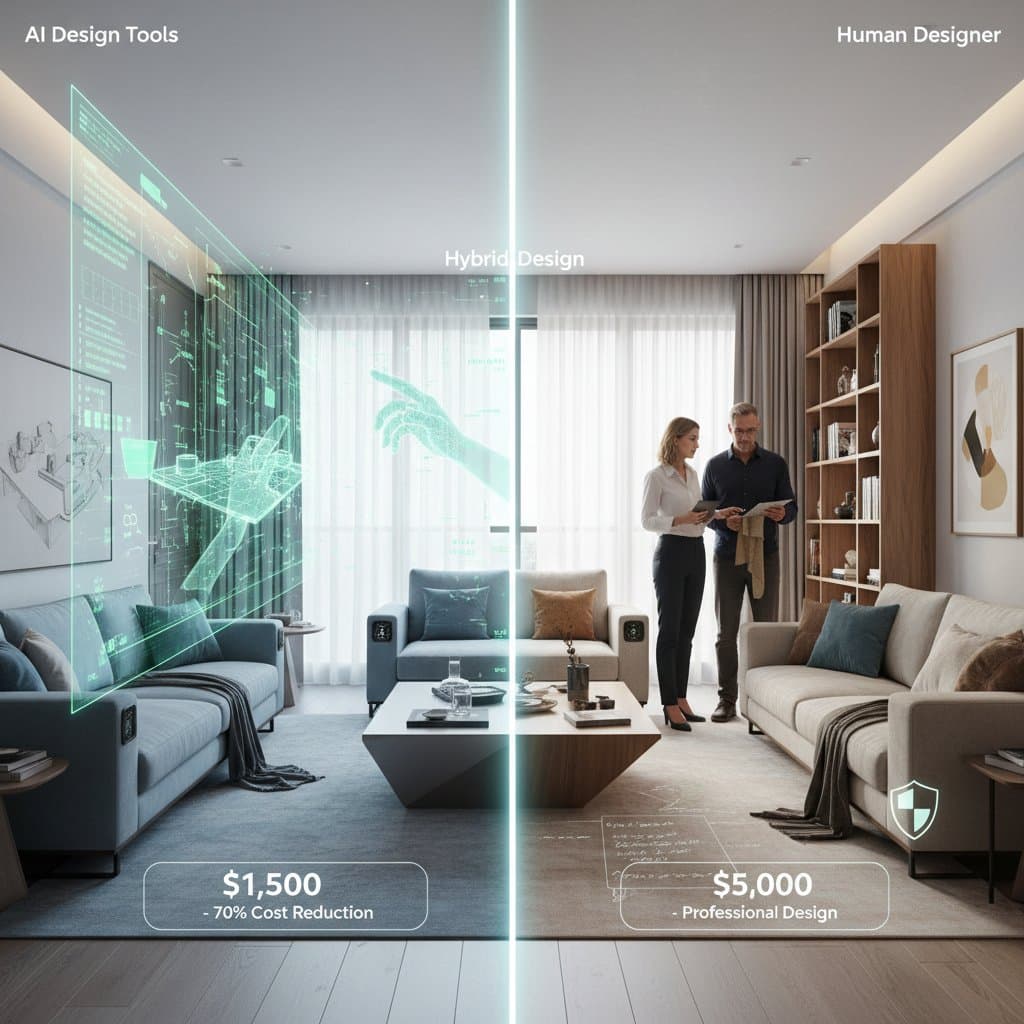
Comparing AI Tools and Professional Designers: Substantial Savings in 2026
Homeowners often face challenges when selecting paint colors or envisioning furniture arrangements in a refreshed living space. The process involves either investing in expert design services or spending extensive time browsing digital inspiration sources, which can prove both costly and fatiguing. AI-powered home design platforms address these issues by offering reduced expenses, accelerated project timelines, and direct creative input via devices such as laptops or smartphones. The question remains whether these tools can fully substitute for human designers or merely streamline the workflow.
This analysis examines the benefits of AI-driven design applications versus conventional designer services. It also provides guidance on selecting the method that maximizes financial savings while ensuring project success.
Benefits of Engaging Professional Designers
Professional designers maintain strong demand due to their specialized vision, sense of responsibility, and extensive experience with regulations, materials, and spatial dynamics. These experts harmonize visual appeal with practical utility, avoiding errors that automated systems might overlook and thereby preventing future expenses.
Hiring a designer includes access to project oversight and established supplier networks. Professionals identify dependable contractors, recommend durable finishes for daily use, and procure items that align with financial constraints. For kitchen renovations or custom cabinet installations, their input minimizes the risk of revisions that inflate budgets.
The primary drawback involves expense. A basic design consultation may cost thousands of dollars, excluding procurement or construction fees. For intricate undertakings or individuals who find spatial conceptualization difficult, this expenditure secures confidence and a refined end product beyond the capabilities of AI in isolation.
Designers also adapt to unique client needs, such as accommodating accessibility features for aging in place or integrating sustainable materials. They conduct site visits to assess existing conditions, ensuring proposals account for real-world variables like natural light patterns or uneven flooring. This level of personalization elevates the home beyond standard visualizations.
Embracing the Hybrid Design Approach
An increasing number of homeowners combine AI capabilities with professional expertise. They employ AI to develop initial concepts and then partner with designers to refine elements and address complexities. This integrated strategy diminishes required designer time while producing unified, workable results.
Consider generating multiple layout variations for a living room using an AI platform. After identifying a preferred option, a designer adjusts proportions, illumination, and selections for fabrics or surfaces. Such collaboration frequently halves professional fees without sacrificing quality, resulting in designs that authentically suit the residence.
Advantages of Hybrid Integration
- Efficiency Gains: AI handles rapid iterations, allowing designers to focus on high-value refinements.
- Cost Optimization: Initial AI exploration reduces consultation duration, targeting specific feedback sessions.
- Enhanced Creativity: Technology sparks ideas, while human intuition ensures emotional resonance and practicality.
In practice, this model suits mid-scale projects like bathroom updates or outdoor patios. Homeowners input preferences such as modern minimalism or cozy traditionalism, receive AI prototypes, and receive designer validations for feasibility. The result combines speed with sophistication, often completing designs in weeks rather than months.
Addressing Safety and Practical Elements
AI platforms simplify the creation of visual representations, yet they cannot substitute for evaluations of safety or regulatory adherence. Projects involving electrical modifications, plumbing relocations, or structural alterations require input from certified contractors or designers. AI proposes configurations, but professionals confirm aspects like structural integrity or electrical standards.
For instance, an AI-suggested open-plan kitchen might overlook ventilation needs or countertop load limits. A designer reviews these details, incorporating fire safety measures or ergonomic heights to comply with local codes. Neglecting such steps risks fines, delays, or hazards, underscoring the value of expert oversight in technical areas.
Homeowners should prioritize permits early. Consult local authorities for guidelines on renovations, and use AI outputs as discussion starters with professionals. This proactive stance integrates technology without compromising well-being.
Essential Strategies for Effective Design
- Define objectives precisely. Determine if the focus involves generating ideas, refining arrangements, or overhauling an entire area.
- Provide accurate data. Submit precise photographs and dimensions of the space to enhance AI accuracy.
- Evaluate various platforms. Different applications specialize in aspects like furniture positioning or palette simulations; test several to identify strengths.
- Allocate funds for refinements. AI aids planning, but professional execution or assessments remain necessary for installations.
- Remain adaptable. Allow technological suggestions to influence choices, yet rely on personal judgment for spatial harmony.
- Document progress. Maintain records of iterations to track decisions and facilitate professional reviews.
These steps empower users to leverage AI effectively. For beginners, start with simple rooms like bedrooms to build familiarity before tackling larger zones.
Realizing Lasting Value in Your Space
Upon project completion, the autonomy exercised throughout the process becomes evident in the tailored result. Whether relying primarily on AI or partnering with designers, the home embodies individual character and daily routines. Retain access to design software for ongoing tweaks, such as seasonal decor shifts.
Home design evolves through the synergy of advanced tools and human discernment. This balance fosters environments that inspire while serving practical needs. The choice between approaches ultimately hinges on project scale, budget, and desired involvement, leading to spaces that enhance quality of life.