
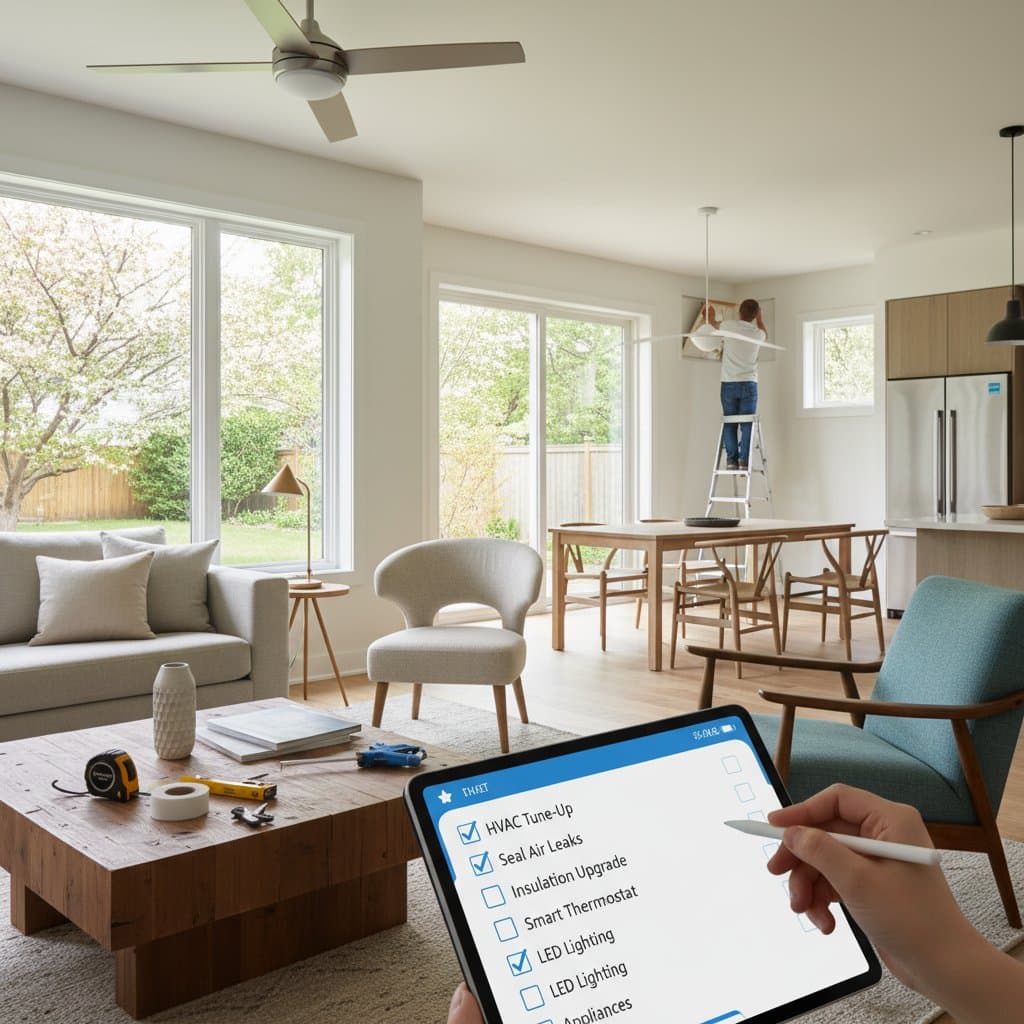
Reduce Energy Costs by 40% with This Spring Efficiency Checklist
Homeowners can reduce energy bills by up to 40 percent through a targeted seasonal assessment and select improvements. Spring provides ideal conditions for such work, with moderate temperatures that simplify inspections indoors and outdoors. Lower energy demands during this period allow focus on changes that yield benefits across all seasons.
This guide presents essential steps to decrease utility expenses, prolong equipment lifespan, and enhance overall home comfort. Each action targets common inefficiencies, supported by estimated costs and savings to guide decisions.
Step 1: Service the HVAC System
Heating, ventilation, and air conditioning systems often operate less efficiently due to accumulated dust or restricted airflow. A neglected filter alone can raise energy consumption by 15 percent. Professional servicing, priced from $120 to $250 based on location, involves coil cleaning, refrigerant verification, connection securing, and thermostat adjustment.
Homeowners can perform these immediate tasks:
- Replace or clean air filters every 30 to 60 days.
- Remove debris around outdoor condenser units.
- Ensure vents direct airflow evenly across rooms.
- Install programmable or smart thermostats to automate temperature adjustments during absences.
For systems over 10 years old, consider an energy evaluation to determine if replacement offers net benefits. Energy Star-certified models lower heating and cooling expenses by as much as 30 percent compared to older units.
Step 2: Seal Air Leaks and Drafts
Air infiltration through cracks and gaps accounts for 20 to 30 percent of home heating loss. Spring's mild weather facilitates thorough inspections of attics, basements, and exterior walls. Use caulk for small fissures around pipes and outlets, and apply foam sealant for larger gaps near windows and doors.
Key areas to address include:
- Foundation cracks and sill plates.
- Attic hatches and recessed lighting fixtures.
- Electrical outlets and switch plates on exterior walls.
- Door bottoms and window frames.
These measures cost under $100 in materials for a typical home and can reduce energy use by 10 to 20 percent. Combine sealing with draft stoppers for entryways to maximize impact without professional help.
Step 3: Enhance Window and Door Performance
Windows and doors represent significant energy escape points, even if they appear intact. Single-pane designs or degraded seals compel HVAC systems to compensate excessively for temperature fluctuations.
Effective solutions encompass:
- Interior window films that block summer heat gain.
- Thermal curtains or cellular shades to bolster insulation.
- Fresh weatherstripping on door frames and window sashes.
For dated wooden or aluminum frames, opt for double-pane vinyl or composite replacements with argon gas filling. Such installations cut energy loss by over 20 percent, with costs ranging from $500 to $900 per window. Immediate comfort gains accompany long-term payback through reduced utility payments.
Step 4: Upgrade Insulation Levels
Inadequate insulation in walls, attics, and floors leads to uneven temperatures and higher energy demands. Spring allows easy access to these areas before summer heat arrives. Aim for R-38 to R-60 values in attics and R-13 to R-19 in walls, depending on climate zone.
Practical upgrades involve:
- Adding blown-in cellulose or fiberglass to attics.
- Installing rigid foam boards in crawl spaces or basements.
- Using spray foam for hard-to-reach gaps around wiring and plumbing.
Professional installation costs $1,000 to $3,000 for an average home, but rebates often cover 20 to 50 percent. Improved insulation stabilizes indoor climates, potentially saving 15 percent on annual energy bills while preventing moisture issues.
Step 5: Convert to Efficient Lighting
Traditional incandescent bulbs consume far more electricity than modern alternatives. Transitioning to LEDs slashes usage by 75 percent and extends bulb life up to 25 times. Prioritize replacements in frequently used spaces such as kitchens, living areas, and entryways.
Incorporate controls for greater efficiency:
- Motion sensors in low-traffic zones like hallways and garages.
- Dimmer switches to match lighting to needs.
- Timers or smart hubs for automated operation.
A comprehensive LED retrofit with controls totals $200 to $600 for most homes. Savings typically recoup the investment within one year, with reduced heat output easing HVAC loads during warmer months.
Step 6: Modernize Appliances and Water Systems
Outdated appliances and water heaters contribute substantially to energy waste. Energy Star-rated refrigerators, washers, and dishwashers use 10 to 50 percent less power than models over 10 years old. Inspect for proper seals and settings to optimize performance.
Focus on these updates:
- Replace inefficient water heaters with heat pump or tankless models.
- Adjust dishwasher and washing machine cycles for energy-saving modes.
- Install low-flow showerheads and aerators to cut hot water use by 30 percent.
Appliance replacements range from $500 to $2,000 each, with incentives available through utility programs. These changes not only lower bills but also improve reliability and reduce maintenance needs over time.
Step 7: Conduct a Comprehensive Energy Audit
A professional energy audit establishes a clear improvement roadmap. Experts employ blower doors to measure airtightness, infrared cameras to detect heat loss, and meters to assess airflow. Fees span $300 to $600, revealing opportunities worth thousands in savings.
The audit delivers:
- A ranked list of recommendations with projected returns.
- Assessments of insulation depth and duct integrity.
- Evaluations of appliance safety and ventilation adequacy.
Utility providers frequently subsidize audits or offer free initial reviews. Retain the documentation for home valuation purposes and to demonstrate compliance with efficiency benchmarks.
Step 8: Establish Ongoing Maintenance Practices
Efficiency gains require consistent upkeep to endure. Develop a quarterly schedule that aligns with seasonal shifts, ensuring systems remain optimal.
Routine actions include:
- Annual HVAC inspections.
- Biannual filter changes and vent cleanings.
- Yearly checks on seals, insulation, and appliance efficiency.
This disciplined approach safeguards investments and sustains savings, turning one-time efforts into perpetual benefits.
Essential Strategies for Optimal Results
Begin with inexpensive modifications such as bulb replacements and thermostat adjustments prior to larger investments. Maintain records of all initiatives, including receipts and bill comparisons, to quantify progress. Select contractors with verified licenses, insurance, and client testimonials for specialized work like insulation or window installation. Regularly review utility statements to confirm reductions. Anticipate complementary tasks for autumn, such as furnace preparations, to build on spring achievements.
Sustaining Efficiency for Lasting Comfort
Efficiency upgrades transform daily living by creating balanced, cost-effective environments. Homeowners notice steadier temperatures, quieter operations, and diminished environmental impact. These enhancements not only curb expenses but also elevate property appeal and resilience against rising energy prices. Commit to these practices for a home that supports well-being year after year.