
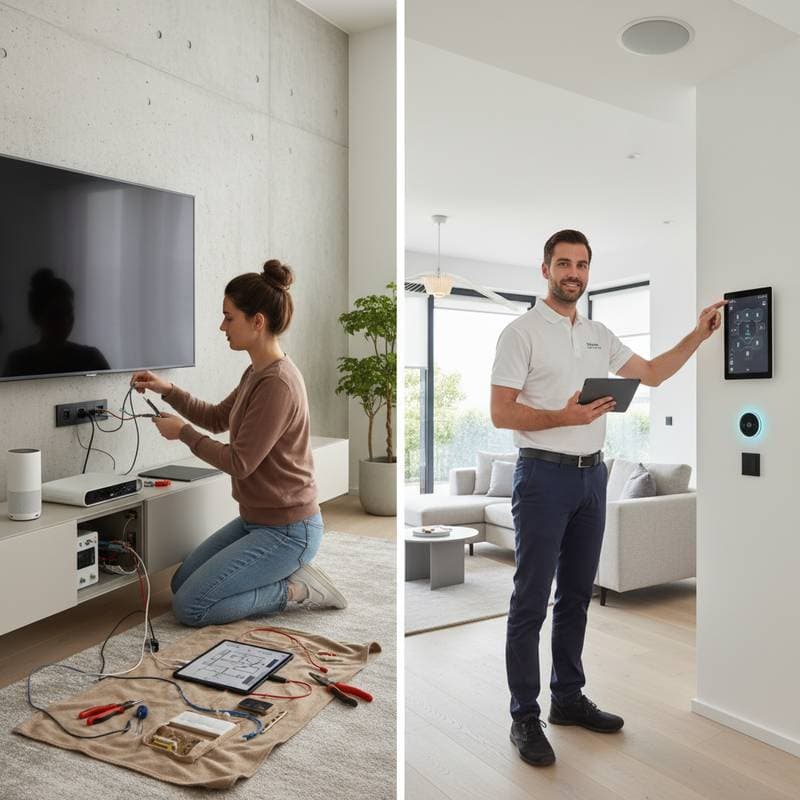
Smart Home Installation: DIY Benefits Versus Professional Advantages
Many homeowners contemplate the installation of smart devices, such as thermostats or lighting systems, and debate between handling the task personally or engaging a specialist. These technologies offer enhanced convenience, reduced energy consumption, and remote control capabilities through mobile applications. The decision hinges on individual technical proficiency, financial considerations, and tolerance for potential complications.
This article examines the advantages of each method, highlighting scenarios where one approach excels over the other. Readers gain insights to select the optimal strategy for their residence.
Advantages of Professional Installation
Engaging a certified installer provides assurance of quality execution, though it involves higher initial expenses. Fees typically range from $100 to $300 per device, influenced by the installation's intricacy, in addition to material costs. Comprehensive automation setups for an entire home may cost between $1,000 and $5,000, yet these include precise configuration and cohesive device integration.
Integrated System Design and Specialized Expertise
Professionals construct interconnected networks where components like illumination, heating, ventilation, air conditioning, and security operate in harmony. They address potential network constraints that frequently cause delays or disconnections in self-managed installations. For instance, an expert evaluates bandwidth requirements and positions routers to support multiple devices without interference, resulting in a tailored solution optimized for the home's layout.
Adherence to Safety Standards and Regulations
Certain smart installations interface with electrical circuits or access controls, presenting risks if not executed properly. Qualified installers adhere to municipal building codes and producer specifications to mitigate dangers, particularly in properties with outdated wiring or intricate panels. Many services extend warranties and ongoing support, safeguarding against future malfunctions and providing recourse for issues.
Efficiency in Time and Reduced Uncertainty
Individuals with demanding schedules benefit from professional services that complete setups swiftly, often within a single day. This eliminates the need to consult instructional videos or online discussions. Installers frequently conduct orientation sessions, enabling homeowners to master device operation and customization without performing the physical work.
Financial Analysis: Initial Outlay and Long-Term Returns
Evaluating expenses requires consideration beyond upfront payments; reliability and efficiency determine overall value. A basic DIY illumination system might total $300, whereas a specialist-managed equivalent could exceed $1,000. However, the professional version often yields savings through optimized performance and minimal upkeep.
Overlooked Expenses in Self-Installation
Amateur efforts may incur additional costs for specialized tools, spare components, or network enhancements to accommodate increased device loads. Failures demand personal repair efforts, potentially escalating expenses. Moreover, the investment of hours in diagnostics represents a significant indirect cost, especially for those unfamiliar with technical troubleshooting.
Sustained Benefits from Expert Setup
Specialists calibrate systems to achieve peak efficiency, such as programming thermostats to lower utility bills by 10 percent or more each year through precise temperature adjustments. Enhanced security features, like automated alerts for unusual activity, further contribute to value. These elements ensure dependable operation, offsetting the premium through durability and reduced intervention needs.
Selecting and Implementing Your Installation Strategy
For those inclined toward practical involvement, commence with straightforward tasks. Begin by replacing a standard light switch with a smart alternative: turn off power at the breaker, connect wires according to the device's diagram, and test functionality via the companion app. Progress to motion-activated sensors in high-traffic areas, monitoring performance before scaling to broader integrations.
Homeowners prioritizing flawless results without personal exertion should seek reputable installers through local directories or manufacturer recommendations. Request consultations to outline requirements, review portfolios of past projects, and obtain detailed quotes. Post-installation, explore app-based automations, such as scheduling lights to activate at dusk or linking security cameras to door sensors.
Integrating Approaches for Optimal Results
A hybrid model combines personal initiative with professional input for balanced outcomes. Handle simple additions like plug-in smart bulbs independently, then consult experts for complex wiring, such as whole-home audio distribution. This method controls costs while leveraging specialized skills where necessary.
Ultimately, the chosen path enhances living spaces with responsive technology that promotes comfort, conservation, and protection. Homeowners achieve a customized environment that aligns with daily routines, whether through self-directed efforts or guided expertise.