
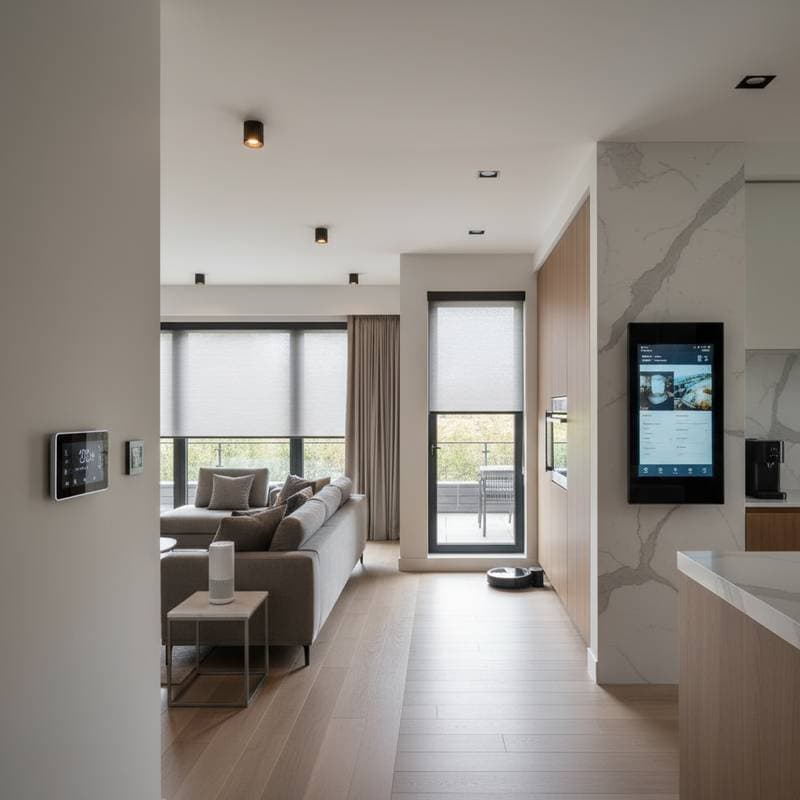
Costs of a 2026 Smart Home Upgrade
A residence equipped with intelligent systems responds intuitively to occupants' needs. Lights activate upon entry, temperatures adjust for optimal comfort, and appliances operate on schedule. As smart technology integrates into daily life, homeowners must evaluate expenses to achieve effective upgrades.
Upgrades vary from targeted enhancements to complete networked environments. Costs depend on the extent of integration, device quality, and installation requirements. This overview provides breakdowns to assist in aligning investments with practical goals.
Entry-Level Enhancements: Essential Devices with Rapid Returns
Begin with straightforward modifications to experience immediate benefits. Install smart bulbs or switches to enable remote control and energy optimization. These changes alter the atmosphere of living spaces efficiently.
Smart lighting offers an economical introduction. Individual bulbs range from $20 to $60, and switches or dimmers cost $40 to $120 each. Equipping a living room and kitchen typically totals $500, including basic setup. Users gain precise mood control and reduced energy consumption.
Smart plugs provide versatility at low expense, priced at $15 to $30 per unit. These adapters make standard devices responsive, ideal for lamps, fans, or small appliances. Deploying six units establishes a core automation framework across key areas.
Voice-activated hubs unify operations. Entry models cost less than $100, while advanced units with enhanced audio and multi-room support reach $300. Positioning one device per main zone optimizes functionality without excess spending.
Complete these installations over a weekend for under $1,000. Such steps foster familiarity and pave the way for advanced expansions.
Advanced Integration: Seamless Whole-Home Systems
Homeowners seeking elevated control opt for unified platforms that link multiple functions. These systems synchronize lighting, climate, security, and media for effortless operation.
Professional whole-home setups begin at $5,000 for compact areas and surpass $25,000 in expansive homes. Factors include zone count, component durability, and customization depth. Additions like motorized blinds or surveillance elevate expenses yet deliver fluid experiences.
Professional design and setup account for significant portions of budgets. Experts ensure interoperability among brands, promoting dependable results. Although self-assembly options exist, certified services provide warranties and ongoing maintenance.
Luxury features enhance routines subtly. Mornings might feature gradual illumination, ambient sounds, and heated floors. These elements create responsive environments tailored to personal patterns.
Strategic Budgeting for Smart Upgrades
Approach planning in phases to manage expenditures effectively. Initiate with core safety and efficiency improvements, then incorporate comfort enhancements progressively. Allocate 1 to 3 percent of property value to establish feasible limits.
Unforeseen expenses emerge from technical mismatches or infrastructure gaps. Legacy structures often need electrical updates or improved wireless coverage. Reserve $300 to $800 for mesh networks or signal boosters.
Recurring fees apply to certain services. Security platforms charge $5 to $30 monthly for data storage and alerts. These options enable remote monitoring and detailed insights, justifying their inclusion for many users.
Addressing Security, Privacy, and Expert Assistance
Connected devices enhance usability but demand vigilance. Data transmission requires safeguards like encryption and multi-step verification. Schedule firmware updates routinely to address risks and refine operations.
Engage specialists for intricate installations involving power systems or climate controls. Self-guided efforts suit simple plugs and lights, but structural integrations necessitate licensed professionals. Labor typically comprises 10 to 20 percent of overall costs.
Environmental Benefits and Resale Advantages
Intelligent systems promote resource conservation beyond convenience. Automated controls minimize lighting overuse, optimize heating, and detect water issues early. These measures yield financial savings and ecological gains over years.
From a market standpoint, such features boost property desirability. Prospective buyers prioritize integrated kitchens, secure entrances, and efficient utilities. Investments often recoup 40 to 60 percent upon sale, depending on local trends.
Practical Strategies for Effective Implementation
- Align with daily habits. Map routines to pinpoint automation opportunities before acquiring hardware.
- Focus on interoperability. Choose devices supporting standards like Zigbee, Z-Wave, or Matter for unified performance.
- Pilot in limited areas. Test a single space to confirm dependability prior to broader rollout.
- Strengthen connectivity foundations. Upgrade to reliable Wi-Fi or Ethernet early to support device demands.
- Quantify efficiency gains. Monitor consumption via apps to calculate ongoing returns.
Realizing Lasting Value from Smart Investments
Phased upgrades ensure adaptability to evolving needs. Regular evaluations maintain system relevance and performance. Homeowners who invest thoughtfully enjoy enhanced living standards and financial prudence well into the future.