
Spring HVAC Checks That Slash Energy Costs
If you have walked inside on a warm spring afternoon expecting cool relief, only to find your home feeling stuffy and unevenly cooled, you know how frustrating HVAC issues can be. The good news is that spring provides the perfect time to catch small problems before they turn into expensive breakdowns. A few hours of maintenance can mean lower energy bills, cleaner air, and a system ready for the heat ahead.
You do not need to be an HVAC technician to achieve meaningful results. With a smart checklist, a few basic tools, and an understanding of what to look for, you can make a noticeable difference in comfort and cost. Whether you are a DIY enthusiast or prefer to leave the heavy lifting to professionals, this seasonal guide will help you prepare your system to run at peak efficiency all year long.
Key Points for Your Spring HVAC Tune-Up
Before diving into the details, here is a quick overview of what makes the biggest difference:
- Replace or clean air filters every one to three months to keep airflow steady and reduce strain on your system.
- Clear debris around outdoor units to improve ventilation and prevent overheating.
- Inspect ducts and vents for dust, leaks, or disconnections that waste cooled air.
- Check thermostat settings and calibration for accuracy and energy-saving consistency.
- Schedule professional service if your unit shows signs of wear, noise, or reduced performance.
These steps not only improve comfort but also extend your system lifespan, saving you from costly replacements later.
Step 1: Replace or Clean Air Filters
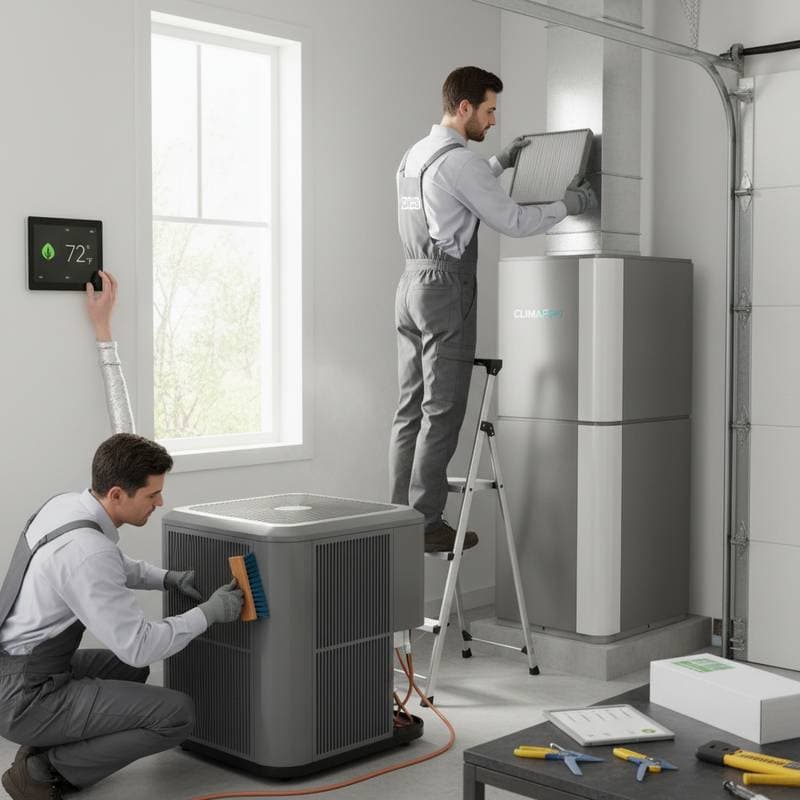
Air filters trap dust, pollen, and other particles that can clog your system and reduce efficiency. Dirty filters force the blower to work harder, increasing energy use by up to 15 percent. Check your filter monthly during spring, as pollen levels rise.
Locate the filter in the return air duct or your air handler unit. If it is disposable, replace it with a new one rated MERV 8 to 13 for balanced filtration without restricting airflow. For reusable filters, vacuum them gently or wash with mild soap and water, then allow them to dry fully before reinstalling.
Install the filter with the airflow arrow pointing toward the blower. This simple task can improve indoor air quality and lower your electricity bills immediately.
Step 2: Clear and Clean the Outdoor Unit
Your outdoor condenser unit collects leaves, dirt, and debris over the winter. A blocked condenser cannot exchange heat effectively, which forces your system to run longer and use more electricity. Start by shutting off power at the disconnect box, then remove large debris by hand or with a soft brush.
Next, use a garden hose with gentle pressure to rinse off dirt from the fins. Avoid using a pressure washer, which can bend the delicate metal. If fins are already bent, straighten them with a fin comb available at most hardware stores for less than 20 dollars.
Make sure there is at least two feet of clear space around the unit for proper airflow. Trim back bushes or tall grass, and avoid storing equipment nearby. Once clean, let the unit dry completely before restoring power.
Step 3: Inspect Ducts and Vents
Ducts and vents accumulate dust and may develop leaks over time, allowing conditioned air to escape and pulling in unfiltered outdoor air. This inefficiency can increase energy costs by 20 to 30 percent. Begin by turning off the system and removing vent covers to check for visible dust buildup.
Vacuum vents and registers with a brush attachment on your vacuum cleaner. For ducts, look for disconnected sections, holes, or flattened areas, especially in attics or crawl spaces. Use foil tape or mastic sealant to repair small leaks; avoid cloth duct tape, which deteriorates quickly.
After cleaning, ensure all vents are open and unobstructed by furniture or rugs. This step enhances airflow distribution and prevents hot spots in your home.
Step 4: Check the Thermostat for Accuracy
A thermostat that is off by just a few degrees can throw off your energy usage. If your home feels cooler or warmer than the display suggests, place a separate digital thermometer nearby to compare readings. If there is more than a two-degree difference, the thermostat may need recalibration.
Smart thermostats can save around 8 percent on heating and cooling costs by automatically adjusting temperatures when no one is home. Models range from 100 to 250 dollars, and many utility companies offer rebates. Even if you prefer manual controls, double-check that your thermostat is away from direct sunlight or heat sources, which can cause false readings.
Set your thermostat to 78 degrees Fahrenheit in summer for optimal efficiency, or lower it when away. Programmable models allow you to create schedules that align with your daily routines.
Step 5: Test System Performance
Once everything is clean and connected, turn your system back on and observe how it runs. Listen for unusual noises, check that air is blowing evenly, and notice how long it takes to reach your preferred temperature. The system should cycle on for 10 to 15 minutes before shutting off.
If you notice short cycling, weak airflow, or unusual smells, shut the system off and consult a professional. Sometimes these symptoms point to electrical issues, refrigerant leaks, or motor problems that require certified repair. Avoid trying to service refrigerant lines yourself, since handling them without proper training can be hazardous and may void warranties.
Monitor your energy usage over the next week to confirm improvements. A well-tuned system should cool your home faster and more evenly than before.
Step 6: Seal Air Leaks Throughout Your Home
Your HVAC system can only do so much if cooled air escapes through cracks and gaps. Check window frames, door seals, and attic access panels for drafts. A simple candle test works well: move a lit candle near suspected gaps, and if the flame flickers, you have found an air leak.
Use weatherstripping for doors and silicone caulk for stationary gaps. For attic insulation, aim for at least 10 to 14 inches of insulation to maintain consistent indoor temperatures. These improvements not only help your HVAC system but also make your entire home more energy efficient.
Focus on high-impact areas like the attic hatch and recessed lights, which often leak the most air. Sealing these can reduce cooling needs by up to 10 percent.
Step 7: Schedule Professional Inspection
While DIY steps handle routine care, a professional inspection uncovers issues like refrigerant levels or electrical faults that require expertise. Look for signs such as inconsistent temperatures, high humidity indoors, or rising energy bills. Certified technicians use specialized tools to measure airflow, pressure, and efficiency.
Book an appointment early in spring to avoid summer wait times. Expect a tune-up to include coil cleaning, lubrication of moving parts, and safety checks. Costs typically range from 75 to 200 dollars, but it prevents breakdowns that could cost thousands.
Ask the technician for a performance report and recommendations tailored to your system age and usage. This ensures long-term reliability and compliance with manufacturer guidelines.
Ongoing Maintenance Practices
Spring maintenance sets the foundation, but ongoing habits sustain efficiency. Keep debris away from the outdoor unit, check filters regularly, and pay attention to your energy bills. A sudden increase often signals a developing issue that is cheaper to fix early.
Consider enrolling in a maintenance plan through a reputable HVAC company. These plans often include spring and fall inspections, priority scheduling, and discounts on repairs. They typically cost between 150 and 300 dollars annually but can extend your system life by several years.
With consistent attention, your HVAC system can operate efficiently for 15 years or more. That means more comfortable summers, fewer emergency calls, and lower monthly bills.
Pro Tips for Effective Tune-Ups
- Listen to your system. If you hear rattling, buzzing, or clicking, investigate early before it becomes a costly repair.
- Record your maintenance dates. A simple log helps track filter changes, service visits, and warranty coverage.
- Use quality materials. Cheap filters and sealants often fail faster, leading to more frequent replacements.
- Stay safe. Always cut power to the unit before cleaning or inspecting any components. Wear gloves and eye protection when handling coil cleaner or bleach.
- Know when to call a pro. Electrical issues, refrigerant leaks, and motor failures should always be left to licensed technicians.
Securing Year-Round Comfort
There is something satisfying about walking into a home that feels perfectly balanced, not too hot or too cold, with clean air and quiet operation. By taking time this spring to give your HVAC system the care it deserves, you are not just saving money, you are protecting your comfort and peace of mind.
Whether you handle the checklist yourself or schedule a professional tune-up, the results show up in cooler rooms, lower costs, and fewer breakdowns. Treat your HVAC system like an investment in your home health, and it will reward you with reliable comfort through every season ahead.