
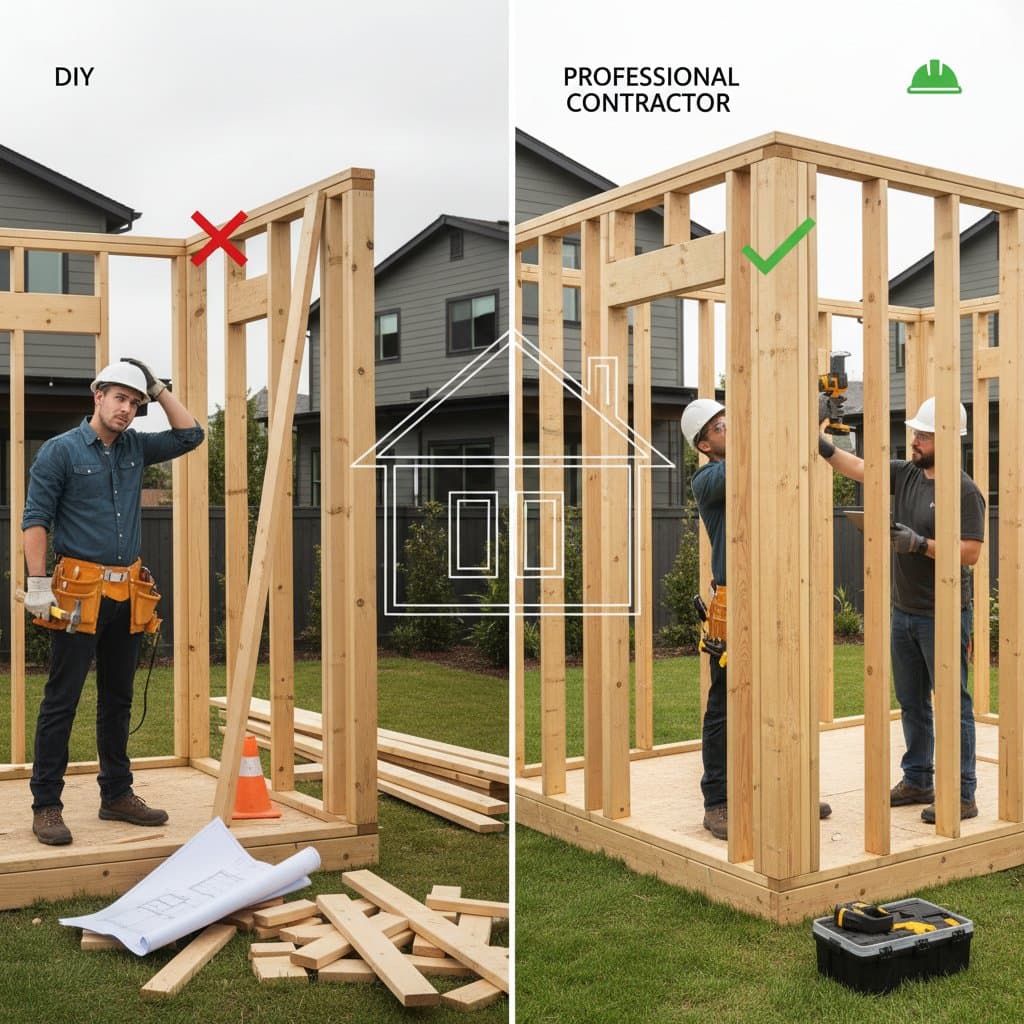
Why Professional Framing for ADUs Outperforms DIY Efforts
Framing forms the structural core of any accessory dwelling unit (ADU). Homeowners often view DIY framing as a way to reduce expenses, yet errors in this phase lead to extensive rework, inspection failures, and project delays. These issues frequently result in higher overall costs than hiring experienced professionals.
Professionals deliver precision that ensures compliance with building codes and structural integrity. Their expertise minimizes risks such as uneven walls that complicate subsequent installations or foundations that fail under load. Understanding these differences helps homeowners make informed decisions for their backyard studios or rental units.
The Intricacies of ADU Framing and Building Codes
ADU framing extends beyond basic assembly of studs and beams. Each element, from load-bearing walls to window headers, must adhere to local regulations. Inspectors scrutinize details including stud spacing for load support, nailing schedules for shear strength, header dimensions over openings, and anchor bolt positions securing the frame to the foundation.
Non-compliance triggers immediate work stoppages. Homeowners then face the expense of demolition, material replacement, and labor to correct issues. Professionals maintain close familiarity with these standards and collaborate with engineers and inspectors to achieve approval on the initial attempt.
Inexperienced builders may overlook subtle violations until an inspection reveals them. Such discoveries expose the project to environmental damage or security risks during corrections, extending timelines significantly.
Indicators That Warrant Professional Intervention
Certain challenges signal the need for expert assistance, even for dedicated DIY enthusiasts. Recognize these to avoid compounding problems:
- Uneven foundation: An unlevel slab or pier setup amplifies framing inaccuracies throughout the structure.
- Ambiguous load paths: Misidentifying bearing walls risks collapse; always consult plans or experts.
- Complex roof designs: Accurate cuts and alignments prove essential for gable or hip roofs.
- Local code variations: Municipal checklists differ, demanding region-specific knowledge.
- Tight schedules: Weather or funding pressures make DIY delays financially burdensome.
Addressing these by engaging licensed contractors represents strategic oversight rather than defeat.
Integrating DIY Elements with Expert Structural Work
Homeowners can participate actively without tackling the framing. Delegate structural tasks to professionals while handling non-critical phases. This method controls costs and upholds safety.
Consider these allocations:
- Professional framing and roofing: Guarantees code adherence and weather resistance.
- DIY finishing tasks: Apply paint, install fixtures, lay flooring, or fit cabinetry in controlled settings.
- Oversight role: Monitor timelines, source materials, and facilitate inspections.
Such division leverages personal involvement for creativity in aesthetics while safeguarding the build's foundation.
Financial and Legal Implications of Framing Choices
Improper framing carries lasting repercussions. Structural failures from DIY errors often fall outside homeowner insurance coverage, as policies demand licensed supervision for such work. Repair costs then burden the owner directly.
Contractors provide liability and workers' compensation insurance, shielding all parties from accidents or damages during construction. Personal accountability in DIY scenarios heightens exposure to lawsuits or out-of-pocket expenses. Selecting insured professionals mitigates these vulnerabilities.
Safeguarding Long-Term Value
Correct framing establishes a reliable base for enhancements like insulation, sound barriers, and moisture management. It bolsters the property's market appeal, as buyers and appraisers verify permits for structural components. Rental applications benefit from documented compliance, easing approvals from insurers and authorities.
Practical Strategies for ADU Projects
- Select credentialed experts: Confirm licensing and coverage before commitment.
- Evaluate comprehensive proposals: Assess labor, supplies, and schedules to uncover potential fees.
- Engage actively: Review site developments and sustain dialogue with the team.
- Record all documentation: Retain permits, approvals, and receipts for reference.
- Account for environmental factors: Time framing to evade moisture exposure that causes warping.
Implementing these steps fosters efficient, compliant construction that enhances property utility and worth.