
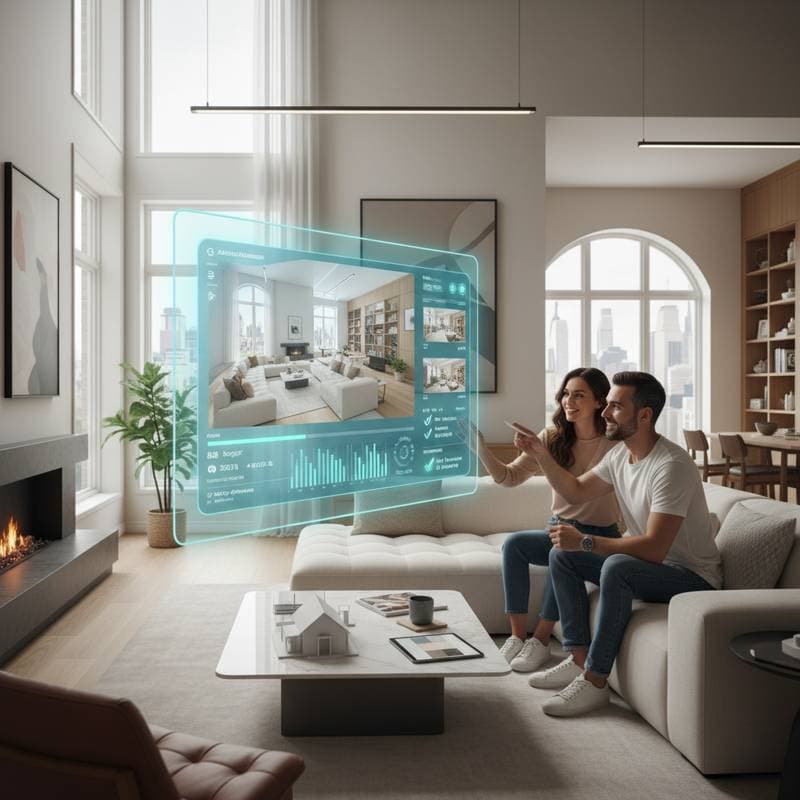
Top AI Tools Shaping Home Remodeling in 2026
Homeowners often face the challenge of envisioning a remodel before committing resources. Standing in an outdated kitchen and imagining new cabinets can feel daunting. Artificial intelligence addresses this by enabling precise 3D visualizations, cost predictions, and streamlined planning. These advancements allow individuals to explore designs without initial construction.
Key Benefits of AI in Remodeling
- AI platforms generate realistic 3D models from simple inputs like photos or descriptions.
- Predictive algorithms forecast project costs and potential returns on investment.
- Integrated apps facilitate collaboration between homeowners and contractors.
- Overall processes become more efficient, reducing time, risks, and expenses.
Entering the Age of Intelligent Design
Picture navigating a redesigned bathroom virtually prior to any demolition. Users adjust tile shades, lighting intensity, and fixture positions on demand. AI tools deliver this interactivity to novices and seasoned renovators alike. Tasks once dependent on expert designers and intricate software now occur swiftly via user-friendly applications that adapt to personal tastes.
Remodeling combines artistic vision with practical coordination. AI eliminates traditional hurdles by leveraging data-driven insights for informed choices. Homeowners avoid prolonged material comparisons or uncertain labor estimates. Projects proceed with minimal disruptions and superior outcomes.
Visual Design Platforms: See Your Vision Realized
AI excels in creating immersive 3D renderings from basic uploads. Machine learning processes images or sketches to produce detailed models rapidly. Users describe desired changes, and the system constructs accurate representations.
Leading options include:
- Planner 3D AI - This application employs object detection to outline current spaces. It simulates material applications and lighting effects. For instance, observe seasonal sunlight variations in a living room or evaluate flooring reflections under different conditions.
- RemodelVision - Renowned for intelligent recommendations, it analyzes photos to suggest layouts, furnishings, and colors. Proposals align with current trends and financial constraints.
- BuildMate Virtual Studio - Suited for joint efforts between clients and experts, it supports real-time modifications and collaborative sessions. The interface resembles an online conference for design exploration.
Such platforms accelerate decision-making. Users iterate designs immediately rather than awaiting professional drafts. Early identification of flaws prevents costly adjustments during building.
Precise Cost Forecasting with AI
Financial planning influences every aspect of a remodel, from selections to scope. AI integrates current market prices, local wages, and inventory levels for reliable projections. These systems evolve beyond basic calculations to offer comprehensive oversight.
Prominent solutions encompass:
- CostPilot - It produces itemized estimates and value assessments tailored to specifics. In a kitchen overhaul, it details appliance expenses, installation fees, and enhanced property worth.
- SmartQuote AI - Ideal for bid evaluations, it scrutinizes submissions for discrepancies or concealed charges. Complex terms convert to straightforward explanations, aiding sound judgments.
- BudgetFlow - Tailored for self-directed projects, it links to transaction records and e-commerce to monitor expenditures against forecasts.
Beyond arithmetic, these aids avert funding shortfalls. Anticipation of supply interruptions or rate shifts maintains project viability.
Streamlined Execution Through AI Management
With designs and finances established, implementation demands organization. AI applications manage timelines, procurement, and interactions dynamically. They adapt to variables like transport setbacks or climate impacts using historical patterns.
Key systems feature:
- RenovateSync - It aligns worker timetables, shipments, and approvals. Proactive notifications resolve scheduling overlaps promptly.
- HomeTask AI - Geared toward independent workers, it divides undertakings into daily segments with hazard alerts and equipment lists.
- ProjectFlow Home Edition - For mixed teams, it unifies messaging, file management, and progress monitoring.
Centralized interfaces replace fragmented correspondence. Projects remain visible and aligned throughout.
Enhancing Safety and Regulatory Adherence
Preventive measures often receive attention only after incidents. AI introduces proactive evaluations and directives. Automated reviews highlight risks, confirming alignment with standards.
Effective tools consist of:
- SafeBuild AI - It examines plans for violations, including egress pathways or wiring configurations.
- InspectoBot - Image processing identifies deterioration, dampness, or electrical faults in assessments.
- PermitPath - It correlates project details with regional codes and assembles electronic applications.
Early interventions conserve resources, limit exposures, and safeguard assets. Integration suits both solo and supervised endeavors.
Immersive Experiences: VR and AR Integration
AI paired with virtual and augmented reality elevates conceptualization. Headsets enable physical traversal of proposed areas. Algorithms respond to inputs, permitting on-the-fly alterations like hue shifts or repositioning.
Innovative platforms offer:
- DreamSpace AR - Leveraging mobile sensors and depth analysis, it superimposes concepts onto live views.
- VisionHome Studio - Compatible with vendors, it previews authentic items in context prior to acquisition.
- RoomPilot - Emphasizing usability, it models routines to validate spatial harmony.
This fusion translates concepts into tangible previews, minimizing uncertainties.
Integrating Professional Expertise
AI supports but does not supplant manual skills. Engage specialists for intricate tasks like wiring, piping, or framework alterations. Tools assist in preliminary phases, yet human oversight ensures regulatory fidelity.
Seek partners proficient in digital methodologies. Many utilize automated blueprints and tracking for enhanced efficiency. Such alliances foster clarity and precision.
Sustaining AI Benefits Post-Completion
After finishing, AI optimizes ongoing functionality. Automation regulates ambiance and efficiency per habits. Monitoring detects maintenance needs preemptively. Adaptive devices navigate spaces intelligently.
The residence functions as an evolving system. Stored information streamlines future modifications, building on prior experiences.
Practical Strategies for Effective Use
- Begin with accessible trials to familiarize with capabilities.
- Pair visualization with financial tools for holistic insights.
- Cross-check AI outputs against expert validations and specifications.
- Prioritize safeguards through regulatory scans and protocols.
- Organize digital records of visuals, finances, and approvals centrally.
Advancing Your Project Forward
Leverage these AI resources to transform remodeling from speculation to strategy. Initiate with a single tool to build confidence. Soon, your space reflects precise intentions, delivered efficiently and economically.