
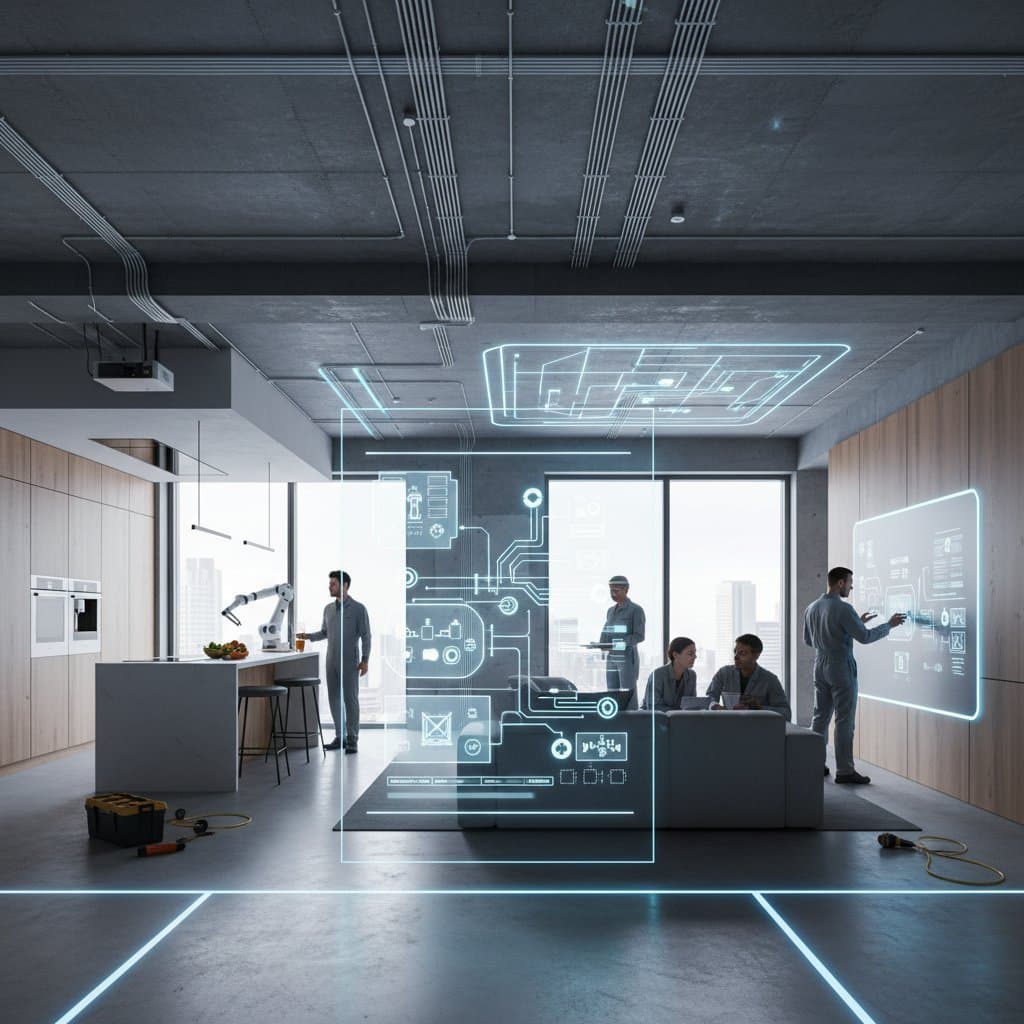
Essential Smart Infrastructure for 2026 Home Remodels
Homeowners planning remodels in 2026 face a pivotal choice: isolated gadgets or integrated infrastructure. The latter approach embeds technology into the home's core, enabling seamless operation across devices and platforms. This strategy not only anticipates daily needs but also delivers substantial energy savings and adaptability to future innovations.
Integrated systems outperform standalone gadgets by creating a cohesive environment. They connect lighting, climate controls, and security without visible clutter. Budget-conscious remodels benefit from this focus, as upfront infrastructure investments yield long-term returns through reduced utility bills and enhanced property value.
Core Principles for Implementation
- Select platforms compatible with major standards like Matter or Zigbee to ensure interoperability.
- Integrate energy monitoring tools during the design phase to track and optimize consumption.
- Install robust networking, including Cat6 wiring and mesh Wi-Fi, before enclosing walls.
- Combine user-friendly apps with professional oversight for installations involving electrical or structural changes.
These principles guide upgrades that balance innovation with practicality. The following sections detail key areas where smart infrastructure excels.
Intelligent Climate Management Systems
Effective climate control forms the backbone of a comfortable, efficient home. Advanced systems go beyond basic temperature adjustments by incorporating sensors for occupancy, humidity, and external weather data. They optimize settings in real time, minimizing energy use while maintaining ideal conditions.
Advanced Thermostats
Devices from brands such as Ecobee, Nest, and Honeywell integrate with home automation hubs. These units learn routines over weeks, adjusting temperatures proactively to avoid overcooling empty rooms. Installation costs range from $150 to $350 for the device, plus $100 for wiring if required; users often see 10 percent reductions in HVAC expenses shortly after setup.
Zoned Temperature Regulation
For larger residences, zoned systems employ smart dampers in ductwork or independent mini-split units per room. A centralized app allows customization, directing heat or cooling only where needed. This setup prevents energy loss in unused areas, such as guest rooms or basements, and supports schedules tied to occupancy sensors.
Air Quality and Ventilation Enhancements
Integrated sensors monitor pollutants, allergens, and CO2 levels, triggering ventilation fans or purifiers as necessary. Models suitable for pet-heavy or allergy-prone homes cost $200 to $700 based on coverage area. These systems maintain fresh air circulation without manual intervention, contributing to healthier indoor environments.
Comprehensive Security Networks
Security in 2026 remodels emphasizes layered, interconnected defenses rather than isolated components. A unified network links cameras, locks, and alarms, providing remote monitoring and automated responses. This infrastructure scales easily as new threats emerge, offering robust protection without frequent overhauls.
Integrated Video Surveillance
Video doorbells and outdoor cameras form the first line of detection. Reliable options priced at $100 to $250 for doorbells and $150 to $400 per camera include features like motion-activated recording and two-way audio. Prioritize units with on-device storage to enhance privacy and reduce reliance on cloud services.
Electronic Access Controls
Smart locks replace traditional keys with keypad, app, or biometric entry. Priced from $150 to $300, they install quickly on existing doors and allow time-limited codes for visitors or contractors. Integration with the home network enables alerts for unauthorized attempts and coordination with interior lights for added deterrence.
Holistic Alarm Ecosystems
Systems from providers like SimpliSafe or Ring unify sensors, sirens, and automations. They trigger lights or adjust thermostats to mimic occupancy during absences, deterring intruders. Opt for open-protocol systems that integrate across brands, avoiding vendor lock-in and facilitating future expansions.
Immersive Entertainment and Wellness Integrations
Entertainment infrastructure elevates daily life by embedding audio, video, and ambient controls into the home's design. These systems foster relaxation and productivity through subtle, responsive features. During remodels, concealed wiring ensures a polished aesthetic while enabling multi-room synchronization.
Multi-Room Audio Solutions
Whole-home audio distributes sound via wired or wireless networks. Entry-level speakers start at $150, while comprehensive Sonos or Bose setups reach $2,000 for full coverage. In-wall or ceiling installations during renovations hide components, allowing voice commands to play personalized playlists across zones.
Centralized Media Hubs
For televisions and streaming, plan for recessed outlets and structured cabling behind mounts. A single hub or universal remote consolidates control over devices, including sound systems and ambient lighting. This setup streamlines operation, reducing the need for multiple remotes and enhancing viewing experiences.
Ambient Wellness Features
Circadian rhythm lighting adjusts color temperatures to mimic natural daylight cycles, promoting better sleep and focus. Paired with automated diffusers for scents or dynamic digital displays, these elements create adaptive spaces. Such integrations, often under $500 per room, personalize environments for wellness without dominating the design.
Sustaining and Evolving Your Smart Setup
Longevity requires proactive care for smart infrastructure. Regular maintenance prevents disruptions and extends device lifespans. By addressing updates and contingencies, homeowners ensure reliability amid evolving technology.
Scheduled Maintenance Protocols
Conduct quarterly inspections of sensors, cameras, and locks to verify functionality. Update firmware through app notifications and replace batteries in wireless components annually. Review access logs and privacy configurations to maintain security standards.
Resilience Strategies
Prepare for outages with manual overrides on critical systems like locks and thermostats. A compact uninterruptible power supply safeguards routers and key devices during brief blackouts. These measures preserve core functions, avoiding full system resets.
Adaptation for Technological Advances
Design with modularity in mind, using removable panels for hubs and flexible conduits for wiring. This approach accommodates emerging standards without major renovations. As protocols like Matter mature, your infrastructure remains compatible, safeguarding the remodel's forward-thinking foundation.
Maximizing Returns on Your Remodel Investment
Smart infrastructure transforms remodels into enduring assets. It delivers immediate benefits in efficiency and convenience while positioning the home for tomorrow's innovations. Homeowners who prioritize these integrations enjoy not only enhanced living but also increased market appeal and operational savings over time.