
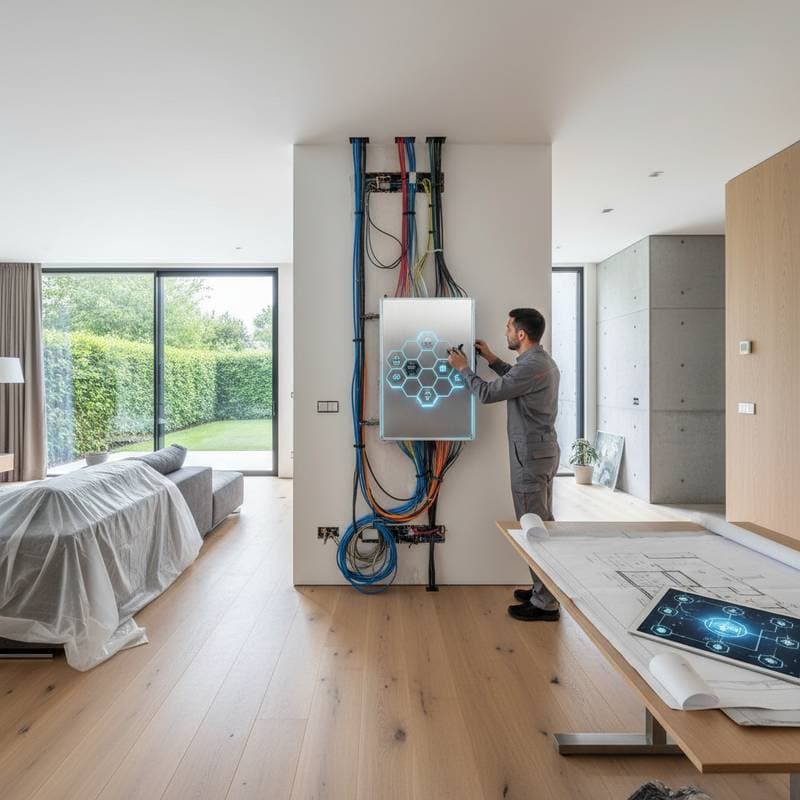
Smart Wiring Now Saves Thousands in Retrofit Costs
Planning a home remodel for 2026 requires forward-thinking decisions that enhance long-term value. Integrating smart wiring from the outset positions your property for the connected future, avoiding expensive retrofits later. This approach not only streamlines daily living but also increases energy efficiency and security.
Homeowners often overlook the foundational infrastructure during renovations. Smart wiring serves as the backbone for devices like automated lighting, climate controls, and surveillance systems. By installing it during the initial build phase, you eliminate the need for disruptive wall openings and rewiring in subsequent years.
Understanding Smart Wiring Basics
Smart wiring involves structured cabling systems designed to support high-speed internet, voice, video, and automation protocols. Unlike traditional electrical setups, these systems use Category 6 or higher cables, fiber optics, and low-voltage lines to handle data-intensive applications. This infrastructure ensures compatibility with emerging technologies such as 5G integration and AI-driven home assistants.
The core components include Ethernet runs to every room, centralized media panels, and PoE (Power over Ethernet) capabilities. These elements allow devices to communicate seamlessly without relying on wireless signals alone, which can suffer from interference. Professional assessment during the planning stage identifies optimal cable routes and outlet placements.
Key Benefits of Early Integration
Investing in smart wiring yields immediate and future advantages. Energy efficiency improves through automated systems that optimize heating, cooling, and lighting based on occupancy. For instance, smart thermostats connected via wired networks reduce utility bills by up to 20 percent annually.
Resale value rises significantly in a market favoring tech-savvy homes. Properties with pre-installed smart infrastructure appeal to buyers seeking convenience and modernity. Security enhancements, such as wired cameras and door locks, provide reliable monitoring without Wi-Fi vulnerabilities.
Comfort levels elevate with intuitive controls accessible from any location. Imagine adjusting shades or music zones through a unified app, all powered by stable wired connections. These features transform a standard remodel into a premium, future-ready living space.
Planning Your Smart Wiring Layout
Begin the process with a comprehensive site survey. Engage a certified electrician or smart home specialist to map out your home's layout, considering room functions and usage patterns. Identify high-traffic areas for robust networking and quiet zones for specialized audio-visual wiring.
Prioritize scalability in your design. Install extra conduits and junction boxes to accommodate future expansions, such as home offices or entertainment hubs. This foresight prevents costly additions down the line, potentially saving thousands in labor and materials.
Incorporate zoning for different systems. Separate power lines from data cables to minimize interference, following National Electrical Code standards. Document the entire setup with labeled diagrams for easy maintenance and upgrades.
Essential Smart Technologies to Include
Focus on versatile systems that integrate effortlessly. Whole-home audio distribution uses wired speakers for crystal-clear sound without signal dropouts. Lighting controls with dimmers and motion sensors create customizable atmospheres while conserving energy.
Network planning extends to mesh-ready routers and access points for blanket coverage. Include provisions for EV charging stations, which demand dedicated circuits compatible with smart metering. Security setups benefit from hardwired sensors that detect motion, smoke, and leaks with precision.
Energy management tools, like smart panels, monitor consumption in real time. These devices alert you to inefficiencies and automate shutdowns for unused appliances. Selecting modular components allows customization to your budget and lifestyle.
Budgeting for Smart Upgrades
Allocate 10 to 15 percent of your remodel budget to smart infrastructure. Basic setups for a 2,000-square-foot home range from $5,000 to $10,000, covering cabling and panels. Advanced features, including automation hubs, may add $3,000 to $7,000.
Compare costs by obtaining multiple quotes from licensed professionals. Factor in long-term savings: wired systems reduce reliance on battery-powered devices and lower repair frequencies. Tax incentives for energy-efficient installations can offset initial expenses.
Strategic phasing helps manage funds. Install core wiring first, then add devices incrementally. This method ensures your remodel stays on track while building a solid tech foundation.
Professional Installation Best Practices
Hire experts certified in smart home technologies, such as those trained by CEDIA or BICSI. They ensure compliance with local building codes and integrate systems without compromising aesthetics. Coordinate installation with other trades to avoid delays.
Testing forms a critical step post-installation. Verify connectivity, power distribution, and device interoperability through simulated scenarios. Address any issues immediately to guarantee reliability.
Ongoing support includes firmware updates and compatibility checks for new gadgets. Choose providers offering warranties and maintenance plans for peace of mind.
Maximizing Returns on Your Investment
Smart wiring elevates your 2026 remodel into a resilient, efficient home. The upfront costs pale in comparison to retrofit expenses, which can exceed $15,000 for comprehensive updates. Enjoy enhanced daily living while positioning your property for premium market value.
Homeowners who prioritize this infrastructure report higher satisfaction and fewer disruptions. Your connected space becomes a hub of innovation, adapting seamlessly to technological advances. Start planning today to secure these enduring benefits.