
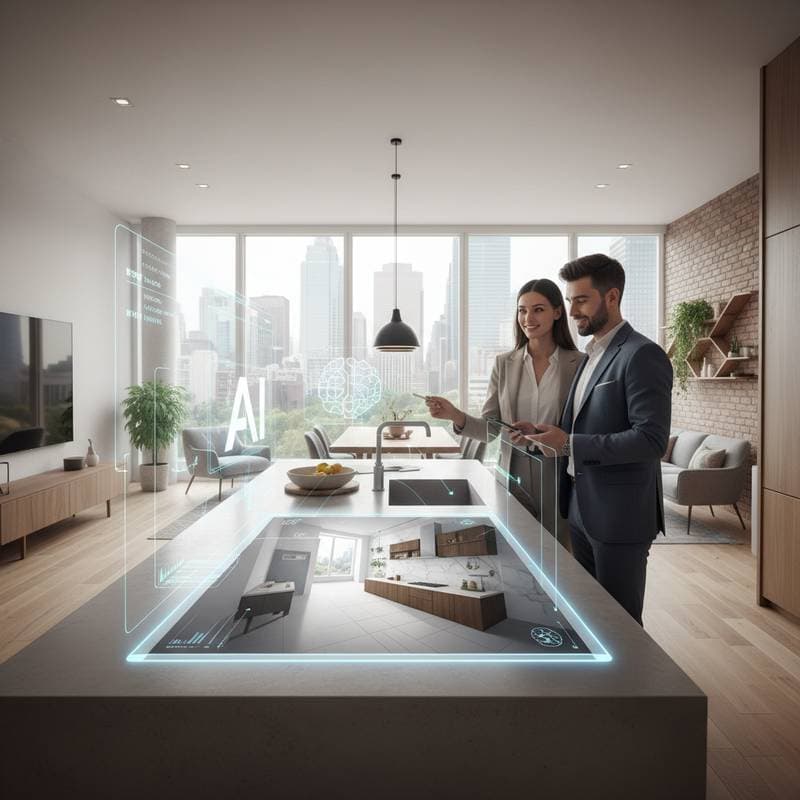
AI Transforms Virtual Remodel Concepts into Actual Homes
Homeowners no longer need to envision a dream kitchen or living room from the ground up. Artificial intelligence enables the design, testing, and visualization of every detail in a remodel prior to any physical work. Tasks that previously demanded professional designers, costly renderings, and repeated adjustments can now occur over a single weekend using a laptop or smartphone. These AI remodeling tools convert digital plans into physical homes more rapidly, economically, and with reduced errors.
Essential Benefits
- AI design applications allow homeowners to develop realistic remodel strategies without engaging a complete design team.
- Virtual modeling features minimize expensive oversights and enhance dialogue with contractors.
- AI supports budget projections, material choices, and layout configurations.
- Many platforms provide free or inexpensive options ideal for do-it-yourself remodelers.
- The primary advantage lies in assurance, as users know their remodel will match expectations in appearance and performance.
Preparing for an AI-Assisted Remodel
Effective use of AI in remodeling begins with thorough preparation. Collect precise room measurements, lighting details, and photographs from various perspectives before starting any software. Accurate data forms the foundation, as AI relies on it to produce lifelike outcomes.
Select a suitable platform once data collection concludes. Popular virtual design options include:
- Planner 5D: Ideal for novices seeking intuitive drag-and-drop functionality and rapid room previews.
- HomeByMe: Delivers lifelike 3D representations and automatic furniture adjustments.
- RoomGPT: Applies AI to convert uploaded images into redesigned versions of the identical area.
- Houzz Pro: Integrates design capabilities with contractor connections and expense evaluations.
- Morpholio Board: Facilitates visualization of surfaces, materials, and color schemes for expert-level design presentations.
These platforms typically feature free trials or budget-friendly starter subscriptions. Basic access ranges from no cost to fifty dollars, whereas premium options like high-quality renderings, financial breakdowns, or professional linkages may require fifty to two hundred dollars per month.
Preventing Design Errors in Advance
Remodels that appear ideal in sketches often disappoint in execution, such as an island positioned too near the refrigerator or insufficient illumination for meal preparation. AI addresses these issues by replicating actual usage scenarios.
Advanced platforms incorporate flow simulation to forecast movement within a space. The system highlights any cramped or suboptimal arrangements. Certain tools model daylight variations throughout the day, aiding decisions on window positions or fixture placements to optimize comfort and efficiency.
Such predictive capabilities prove invaluable for open-concept layouts. AI suggests methods to delineate areas using hues, furnishings, or ceiling modifications, maintaining unity and utility.
Integrating Professional Expertise
AI remodeling tools advance projects significantly, yet they cannot substitute for specialized knowledge. Structural modifications, electrical updates, or plumbing adjustments necessitate licensed specialists.
Present themodel as a detailed guide to contractors or architects. Digital visuals clarify intentions, decreasing miscommunications and revisions. Contractors benefit from direct measurements and planning via the 3D framework, leading to precise quotations.
When selecting professionals, confirm their credentials, coverage, and endorsements. Competent contractors value preliminary conceptual efforts, allowing focus on implementation rather than interpreting ambiguous drawings.
Addressing Safety and Regulatory Needs
Virtual remodels, no matter how refined, must comply with local codes. Verify permit requirements for every design. While AI may identify issues like improper ceiling clearance or outlet distribution, it cannot supplant official reviews.
Consult a qualified expert familiar with area regulations before proceeding. This ensures protection of resources and avoids inspection-related setbacks.
Examine load-bearing walls meticulously prior to alterations. AI offers preliminary structural assessments, but engineers or inspectors provide definitive clearance. Prioritize safety beyond software evaluations.
Experiencing the Completed Design
After finishing the remodel, the process reveals enhanced efficiency from AI involvement. Virtual previews limit unexpected outcomes and bolster decision-making confidence. Selected colors, items, and surfaces align with visions, yielding a space that embodies personal aesthetics accurately.
Retain access to the AI platform for future adjustments or upkeep planning. Features for tracking inventories of paints, floors, and brands simplify reordering. In the event of selling the property, digital documentation highlights quality and enhancements for prospective purchasers.
Strategies for Optimal Results
- Initiate modestly. Focus on a single room to master the application before addressing the full residence.
- Incorporate precise illumination information. Capture images in daylight and nighttime settings to supply authentic light data to the AI.
- Evaluate several visualizations. Generate and retain at least three design alternatives prior to selections.
- Confirm material selections. Compare virtual representations against physical specimens before acquiring.
- Engage specialists promptly. Distribute AI models to contractors to synchronize visions and finances.
Executing Your AI-Enhanced Remodel Plan
With AI tools in hand, transition from digital concepts to construction seamlessly. Follow the outlined preparations and simulations to maintain control throughout. This approach not only curbs expenses and errors but also realizes personalized living environments with professional polish.