
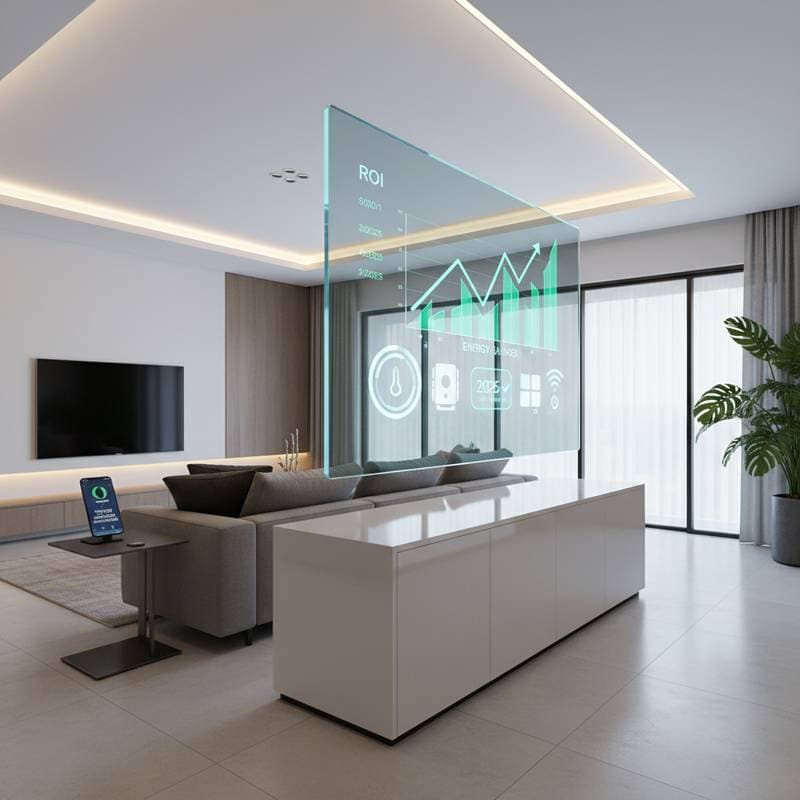
Unlock 2025 ROI: Smart Home Tech Upgrade Calculator
When the house quiets down at night, lights dim automatically, and the thermostat adjusts to a preferred sleep temperature, that moment of comfort exceeds mere convenience. It represents a home that operates efficiently on behalf of its occupants. Smart home technology has evolved from novelty to a quantifiable investment in comfort, efficiency, and property value. Homeowners often question the financial boundaries: which upgrades yield genuine returns, and which serve only as desirable additions?
The Smart Home Tech Upgrade Calculator serves as a framework to forecast how individual smart systems, from energy management to security automation, convert into concrete ROI. This approach modernizes the home with deliberate consideration of costs and sustainability. Homeowners gain tools to evaluate investments that align with long-term goals.
Origins of Strategic Smart Home Investments
Picture the kitchen in the morning light, coffee in hand, as energy-efficient smart blinds rise to admit sunlight. They synchronize with daily schedules and adapt to external light conditions. The thermostat preempts routine patterns, optimizing energy consumption while preserving comfort. Such scenarios have transitioned from speculative visions to practical implementations.
Smart home investments offer dual advantages: instant usability and enduring worth. Energy reductions build steadily, and appraisers now incorporate automation and eco-friendly features into valuations. The key lies in assessing these benefits prior to committing to installations.
To begin, identify high-priority areas such as heating costs or security needs. Gather data on current utility bills and local energy rates. Use the calculator framework to project savings based on device specifications and usage patterns.
Essential Smart Upgrades for Maximum Returns
Smart Thermostats
Smart thermostats mark an ideal entry for automation enthusiasts. These devices reduce heating and cooling expenses by 10 to 15 percent through learning algorithms that adapt to occupancy. Installation costs range from 150 to 300 dollars, with payback periods under two years for most households.
Select models compatible with existing HVAC systems to minimize wiring needs. Program schedules via mobile apps to align with work hours and weekends. Track monthly savings through built-in reports to verify performance and adjust settings.
Lighting Automation Systems
Options span simple bulb swaps to comprehensive networks that react to motion and natural light. Per-bulb prices start at 20 dollars, while hub-inclusive setups climb to several hundred dollars. Automation curbs energy draw, as lighting constitutes about 10 percent of residential power use, while enhancing interior aesthetics.
Integrate with voice assistants for hands-free control in kitchens or hallways. Set geofencing to activate lights upon approach, reducing forgotten switches. Calculate ROI by comparing pre- and post-installation electricity statements.
Security and Monitoring Solutions
Components include video doorbells, motion detectors, and app-linked locks, providing reassurance and boosting marketability. Buyers prioritize security among smart amenities. System expenses vary from 200 to 1,500 dollars, with potential insurance reductions covering initial outlays.
Position cameras to cover entry points without privacy intrusions. Enable remote access for family members during absences. Review footage analytics to identify usage trends and refine alert thresholds.
Centralized Energy Management Hubs
These platforms oversee electrical loads, pinpoint waste, and streamline appliance operations. Upfront investments may reach thousands of dollars, yet they slash yearly energy bills. Additional gains include prolonged HVAC and wiring durability.
Choose hubs that support multiple protocols like Zigbee or Z-Wave for broad device integration. Monitor real-time data dashboards to spot peak usage times. Schedule automated shutoffs for idle electronics to amplify savings.
Integrating Sustainability into ROI Calculations
Financial returns extend to environmental impacts. Automation curtails resource depletion and promotes eco-conscious habits. Smart irrigation, for instance, halves exterior water demands by adjusting to weather forecasts and soil moisture.
Connected appliances eliminate phantom power draws, which account for up to 10 percent of household electricity. This perspective frames smart tech as an ecological commitment. Homeowners who value stewardship find amplified justification for targeted implementations.
Assess sustainability by estimating carbon footprint reductions via online tools tied to energy data. Pair upgrades with renewable sources like solar panels for compounded benefits. Document these metrics to appeal to environmentally aware buyers.
Avoiding Pitfalls in ROI Projections
Planning encounters hurdles like unforeseen expenses or integration challenges. Homeowners sidestep errors through proactive measures.
- Overlook Upkeep Needs: Allocate funds for yearly software patches and sensor alignments to sustain efficiency.
- Disregard System Harmony: Verify cross-device compatibility to prevent extra expenditures on adapters.
- Emphasize Style Over Substance: Target upgrades with proven metrics, such as thermostats, rather than decorative elements like automated faucets.
Maintain records of setups and efficiencies to guide adjustments. This documentation bolsters home listings by evidencing tangible enhancements.
Experiencing the Benefits of Integrated Automation
With systems operational, daily life reveals subtle transformations: welcoming illumination upon entry, proactive security notifications during trips, and intuitive climate adjustments. These elements foster a sense of security and ease.
The true value transcends fiscal outcomes. It resides in a residence that anticipates needs, conserves resources, and elevates quality of life. Initiate the process by outlining objectives, budgeting accurately, and applying the calculator to simulate scenarios. Thoughtful upgrades create homes that endure and adapt.