
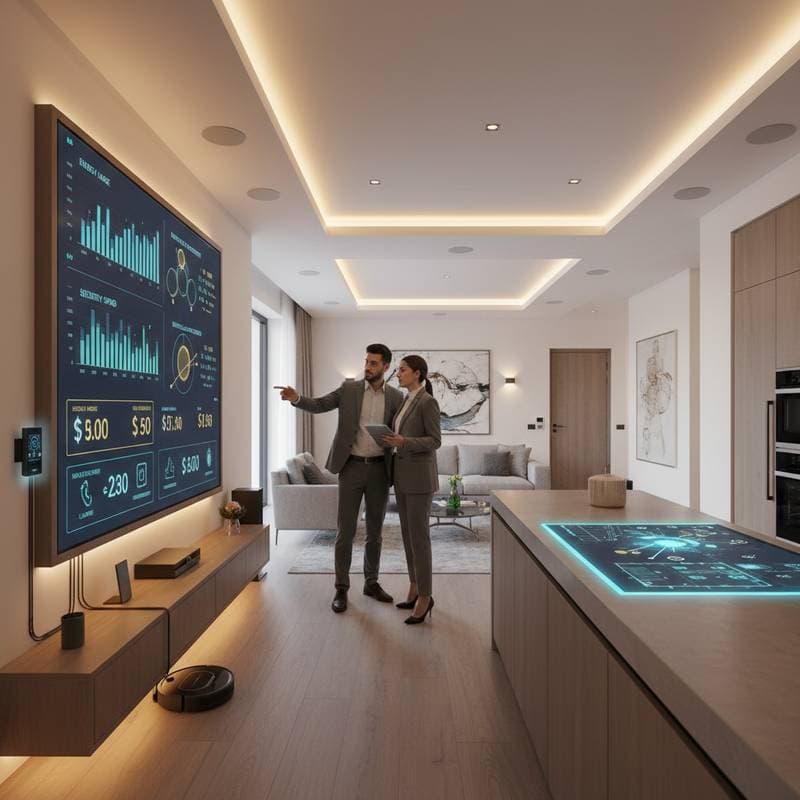
Unveiling the True Costs of Smart Home Upgrades
Imagine entering a residence where lights activate on command, thermostats adjust to personal preferences, and shades align with natural light cycles. This integration of technology and daily life sets a standard for contemporary residences. However, the seamless operation of these systems prompts a key inquiry: what are the actual expenses involved in implementing such intelligence?
The response involves multiple layers. A comprehensive smart home upgrade constitutes a holistic investment encompassing electrical wiring, data protection, visual harmony, and continuous upkeep. Grasping these elements allows for strategic planning that combines innovative features with economic viability.
Overlooked Expenses in Smart Home Transformations
Device pricing appears straightforward, yet effective budgeting demands evaluation of ancillary and recurring outlays. These concealed factors often dictate whether the upgrade enhances life or creates ongoing challenges.
Network Foundation
Smart homes rely on robust, protected connectivity. Enhancing routers, installing signal boosters, or incorporating a specialized control center ranges from $300 to $1,000. In expansive properties, mesh networks ensure consistent performance across multiple levels and exterior spaces.
Privacy Protection and Cyber Defense
Every linked appliance serves as a possible entry for unauthorized access. Allocating funds for security software, protective barriers, and secure routing devices amounts to $150 to $500 yearly. Experts advise isolating smart components on a distinct network to safeguard sensitive information.
Upkeep and System Refinements
Technological advancements in automation occur rapidly. Costs for software patches, service fees, and device renewals total $200 to $500 each year. Reliance on remote servers poses risks of obsolescence should support end, underscoring the need for enduring interoperability.
Seamless System Unification and Expert Configuration
Amateur setups suit basic installations, but comprehensive networks gain from licensed technicians. Such specialists guarantee fluid interaction among varied manufacturers. Rates for configuration stand at $75 to $150 hourly, with complete projects spanning $1,000 to $5,000 based on intricacy.
Calculating Returns from Smart Home Investments
Evaluating financial returns elevates smart home expenditures from indulgences to calculated choices.
Reduced Energy Consumption
Intelligent climate controls, automated shading, and programmed illumination lower yearly utility expenses by 10 to 25 percent. These reductions frequently recoup upfront expenditures over time, especially in areas with elevated energy tariffs.
Enhanced Real Estate Appeal
Property specialists emphasize automation in marketing. Residences featuring unified controls fetch 3 to 5 percent premiums at sale, particularly in bustling city environments. Prospective owners value the ease and optimization these systems provide.
Potential Insurance Savings
Certain insurers provide premium cuts for properties with advanced monitoring, water alerts, and fire detection. Reductions range from 5 to 10 percent annually, contingent on the company and equipment validation.
Elevated Daily Comfort
Though difficult to measure in dollars, the ease of verbal commands for illumination, distant surveillance viewing, and resource tracking boosts overall well-being. Homeowners frequently regard these gains as invaluable after adoption.
Prioritizing Durability and Ecological Balance
Advanced residences integrate connectivity with environmental stewardship. Selecting components from reclaimed sources, energy-efficient detectors, and platforms with extended software support minimizes ecological footprints.
Consider these brand evaluation criteria:
- Energy Star ratings for minimized electricity use
- Modular architectures permitting partial renewals over total overhauls
- Accessible local servicing to prolong equipment durability
- Open standards ensuring alignment with emerging innovations
Such choices foster systems that adapt progressively without swift datedness.
Sustaining Your Automated Environment
With a well-functioning smart setup, technology integrates into routine patterns. The primary benefit lies in dependable operation rather than fleeting excitement. Climate systems activate upon rising, appliances initiate autonomously, and coverings respond to dawn.
To preserve this balance:
- Conduct regular assessments of usage data to optimize performance.
- Update legacy units with eco-friendly alternatives.
- Maintain duplicates of configurations and sequences.
- Schedule enhancements biennially to align with evolving standards.
Engaging with automation focuses on tailoring ease to individual routines rather than chasing fads.
Implementing Your Smart Home Strategy
Constructing an intelligent residence represents both capital commitment and progressive endeavor. Initiate with core elements yielding prompt benefits and quantifiable efficiencies. Incorporate advanced layers solely after establishing a solid base.
Thoughtful automation yields a dwelling attuned to behaviors and principles, not merely directives. Beyond hardware and setup, the essence of smart upgrades manifests in sustained responsiveness.
Executed properly, these modifications yield ongoing returns via enhanced livability, operational savings, and tranquility. The optimal allocation supports an evolving space that nurtures daily existence.