
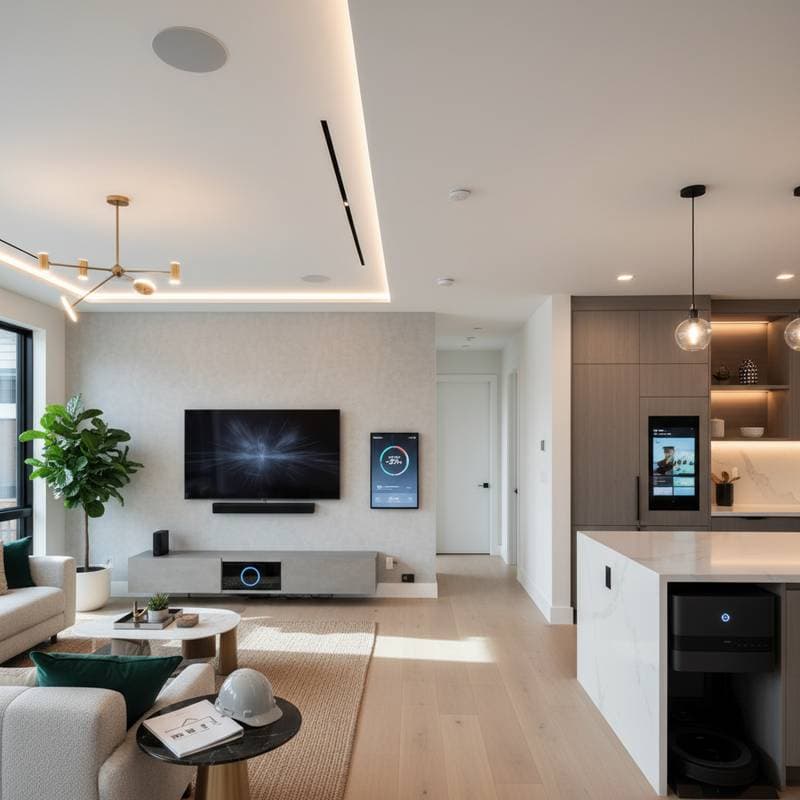
The Real Costs of Smart Home Technology in 2026 Remodels
Homeowners undertaking a remodel in 2026 face a compelling opportunity to incorporate smart technology. This integration enhances daily comfort, reduces energy consumption, and increases property value. The key lies in strategic planning to align innovation with financial realities, avoiding unnecessary expenses while maximizing benefits.
Key Components of Smart Home Expenses
Smart home upgrades divide into three primary areas: infrastructure, devices, and integration. Infrastructure encompasses essential wiring, sensors, and network enhancements that enable secure device communication. Devices represent the user-facing elements, such as thermostats, lighting controls, and door locks. Integration involves software platforms, central hubs, and automation setups that unify the system.
In a typical mid-sized home remodel, infrastructure expenses range from $1,500 to $5,000. This figure accounts for factors like new cabling runs or upgraded power outlets. Individual devices cost between $100 and $800 apiece, though advanced options like intelligent refrigerators or comprehensive security suites may exceed several thousand dollars. Integration efforts, including professional programming and voice-activated configurations, add $500 to $2,500, depending on the level of customization.
Strategies for Effective Budget Allocation
Homeowners often err by purchasing devices without first mapping the overall system architecture. A better method involves outlining the automation framework upfront, then choosing interoperable hardware. This sequence minimizes incompatible acquisitions and promotes seamless interaction among lighting, heating, ventilation, air conditioning, and security components.
Consider this sample budget for a moderately automated home remodel:
- Smart lighting systems: $600 to $2,000, covering wired fixtures or wireless bulbs
- Thermostats and HVAC controls: $250 to $1,000, including zoning capabilities
- Security cameras and electronic locks: $400 to $2,500, with motion detection features
- Voice assistants and central hubs: $150 to $600, supporting multi-protocol connectivity
- Network and wiring enhancements: $800 to $3,000, such as mesh Wi-Fi extenders or Ethernet backbones
A fully automated whole-home setup may total $10,000 to $25,000. Partial implementations, focusing on high-impact areas, achieve substantial gains for $2,000 to $5,000.
Deciding Between Professional Installation and DIY Approaches
While many smart devices promise straightforward setup, certain installations demand expert intervention. Tasks involving electrical wiring, hardwired sensors, or HVAC integrations necessitate a licensed professional to comply with building codes and preserve warranties. The guideline remains clear: engage experts for any connection to electrical panels or gas lines.
DIY suits simpler installations, such as smart plugs, LED bulbs, or battery-powered cameras, which require only basic tools and take mere minutes. Professional services prove indispensable for complex elements like recessed lighting networks, alarm system wiring, or extending coverage to remote areas such as attics or basements. Early consultation with certified installers ensures compatibility and safety from the outset.
Evaluating Long-Term Financial and Practical Benefits
Properly implemented smart technology elevates a home's market appeal, provided the system remains intuitive and maintainable. Potential buyers value connectivity but may hesitate over overly intricate setups that demand ongoing subscriptions or technical expertise. Opt for hardware with broad compatibility standards and robust vendor backing to future-proof the investment.
Energy conservation represents a significant ongoing advantage. Intelligent thermostats and automated lighting reduce utility bills by 10 to 20 percent annually, often recouping initial outlays within three to five years. Additionally, insurers increasingly provide premium reductions for properties equipped with monitored security and water leak prevention, further enhancing economic returns.
Identifying and Mitigating Overlooked Expenses
Budget planners must account for recurring elements like software updates, service subscriptions, and periodic hardware refreshes. Monthly fees for cloud-based video storage or advanced automation features range from $10 to $30. Most devices endure five to seven years before requiring replacement, so allocate a 10 percent buffer for emerging technologies.
Watch for warning signs such as ambiguous data protection protocols, unqualified technicians, or setups reliant on constant internet access. Prioritize products certified by organizations like UL for safety or Energy Star for efficiency to safeguard both the home and its occupants.
Steps to Integrate Smart Technology Successfully
Begin by pinpointing core objectives, whether energy optimization, enhanced security, or everyday convenience. Establish a comprehensive budget and prioritize elements aligned with the remodel timeline. Engage electricians and network experts during the planning phase to embed wiring infrastructure before enclosing walls.
This methodical process transforms smart technology from a potential burden into a reliable asset. Homeowners gain sustained comfort, protection, and efficiency that endure far beyond the project completion.