
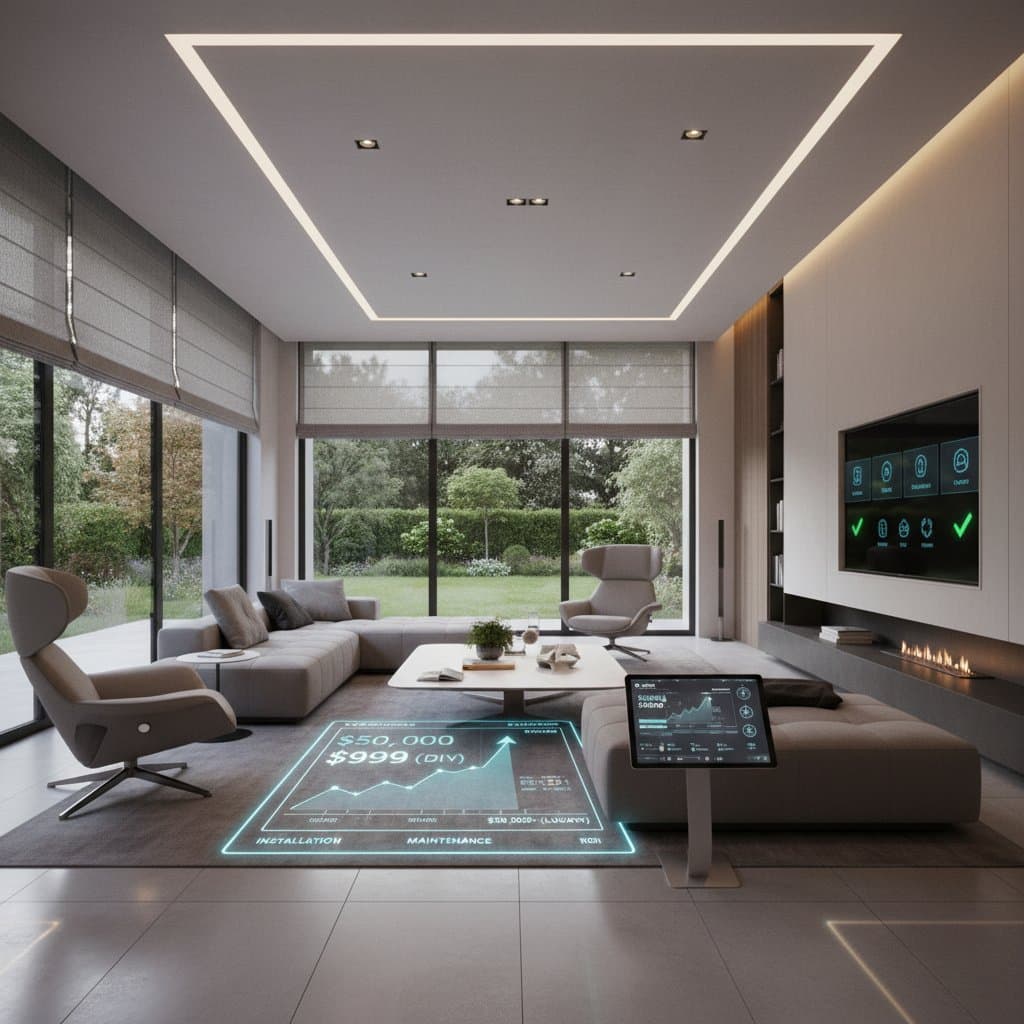
What 2026 Smart Home Tech Integration Really Costs
If your living room lights still rely on a wall switch and you grow weary of fumbling for your phone charger at night, you may have considered transforming your home into a smart space. Glossy magazine images portray effortless automation, yet real-world integration demands more than voice commands and sleek devices. Understanding actual expenses enables informed planning, whether you pursue a budget-friendly DIY approach or a fully automated custom system.
Key Points
- Basic smart home setups begin around a few hundred dollars and scale into tens of thousands based on customization levels.
- Installation costs fluctuate depending on DIY efforts or professional services.
- Hidden expenses, including subscription fees, network upgrades, and compatibility challenges, frequently catch first-time buyers off guard.
- Return on investment emerges from energy efficiency, enhanced convenience, and elevated home value.
This guide details smart home integration costs, identifies tasks suitable for DIY, and provides strategies to ensure every dollar yields enduring comfort and control.
Budgeting for Different Smart Home Levels
Smart home projects span from DIY trials to high-end automation. The following sections outline expectations for primary integration tiers.
1. Entry-Level DIY Systems
Individuals comfortable with online tutorials and occasional app alerts find DIY setups flexible and accessible. Popular starter kits for lighting, security, and voice control typically range from $300 to $1,000. These kits encompass:
- Smart bulbs and plugs to manage lighting and appliances
- A smart speaker or hub, such as Amazon Echo or Google Nest
- Basic cameras or doorbell systems for monitoring entry points
DIY approaches eliminate labor fees but demand time for configuration and issue resolution. Allocate several hours to connect devices via apps. The advantage lies in gradual expansion, allowing additions as budget and enthusiasm permit.
2. Mid-Range Hybrid Systems
Many homeowners opt for hybrid setups, handling simple installations while engaging professionals for intricate tasks like wiring or network enhancements. These systems generally cost $2,000 to $8,000. Examples include:
- A smart thermostat integrated with your HVAC system
- Hardwired security cameras and motion sensors
- Smart lighting equipped with dimming and scheduling capabilities
- A centralized control app or touch panel
Professional involvement guarantees dependable operation and minimizes aggravation from fragmented apps. Electricians or integrators charge $75 to $150 per hour, varying by location. This method delivers smooth functionality without the burdens of technical management.
3. Fully Integrated Smart Homes
For those prioritizing seamless convenience and aesthetic unity, complete integration provides the pinnacle of automation. Investments range from $10,000 to $50,000 or higher, influenced by home size and bespoke features. Such systems suit renovations or new constructions and feature:
- Central hubs overseeing all devices
- Custom lighting zones paired with motorized window treatments
- Multi-room audio systems with concealed speakers
- Smart irrigation, advanced security, and comprehensive energy monitoring
Certified integrators manage programming, cabling, and user training to create a cohesive network. This option proves ideal for expansive properties or individuals seeking a hands-off experience.
ROI: What You Gain Beyond Convenience
Upfront costs may appear substantial, yet smart home technologies deliver returns through sustained savings and market advantages.
Energy Efficiency
Smart thermostats lower heating and cooling expenses by 10 to 20 percent via adaptive routines that align with occupancy patterns. Smart plugs and sensors eliminate idle power draw by deactivating unused appliances. Lighting enhancements, particularly with LED transitions, further amplify savings.
Security and Peace of Mind
Integrated security alerts owners immediately to unsecured doors or detected movement. Certain insurance providers grant discounts for professionally monitored setups, potentially reducing premiums by up to 10 percent.
Property Value and Buyer Appeal
Prospective buyers regard smart features as indicators of modernity. Market analyses indicate that equipped homes sell more rapidly and command modest price premiums over similar non-smart listings. Although full cost recovery varies, these upgrades distinguish properties in crowded markets.
Planning and Budgeting for Long-Term Success
Prior to launching a smart home project, develop a strategy aligned with your daily routines and future objectives. Begin by pinpointing automation targets, such as bolstering security or crafting mood-adaptive lighting.
Step-by-Step Strategy
-
Audit your current devices. Inventory existing electronics, routers, and appliances to assess smart compatibility or upgrade potential.
-
Set clear priorities. Focus on one or two areas initially, like climate regulation or illumination, rather than overhauling all systems at once.
-
Create a phased budget. Designate funds for prompt enhancements while reserving allocations for subsequent phases to avoid early depletion.
-
Research compatibility early. Select a primary ecosystem upfront, then procure compatible devices to prevent overlaps and interface complications.
-
Get professional input if wiring is involved. A brief consultation averts prolonged troubleshooting and mitigates safety risks.
Pro Tips for Success
- Test before committing. Experiment with isolated devices to discern essential features prior to broader investments.
- Label your network devices. This practice streamlines diagnostics during connectivity disruptions.
- Keep firmware updated. Routine patches bolster security and optimize performance.
- Back up automation settings. Safeguard configurations against hub failures or resets.
- Plan for future expansion. Opt for scalable hubs and routers capable of supporting additional devices.
Living with Your Connected Home
With your smart home operational, subtle efficiencies evolve into indispensable routines. Automated lights welcome your arrival, thermostats adapt to your habits, and security notifications provide real-time assurance. Periodically evaluate routines every few months to maintain alignment with evolving needs.
Smart home integration fosters a dynamic alliance of technology and livability. From a solitary smart plug to comprehensive automation, each advancement cultivates a responsive, efficient, and personalized environment.