
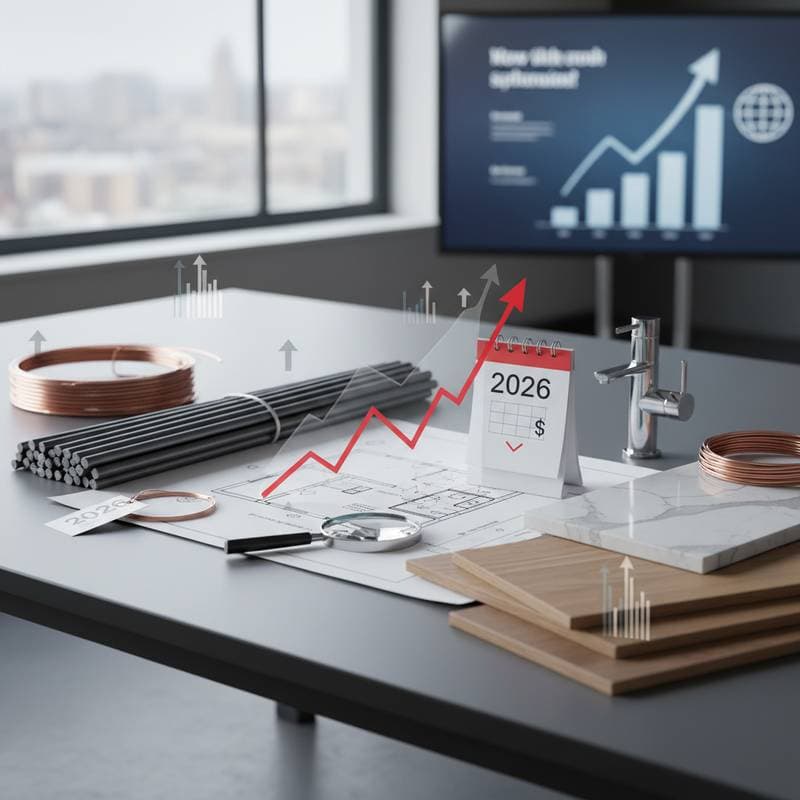
Why 2026 Tariffs Will Inflate Renovation Budgets
Material costs for home renovations stand to increase significantly due to tariffs scheduled for 2026. These measures target imported building materials, which form the backbone of many improvement projects. Homeowners planning kitchen remodels, bathroom updates, or structural additions must account for these changes to avoid budget overruns.
Delays in starting a project could prove expensive. Once tariffs take effect, prices for materials tend to rise steadily without reversal. A project budgeted at current rates might require thousands of additional dollars by next year to achieve the same scope.
How Tariffs Translate to Home Renovation Budgets
The Core Equation
Renovation budgets typically divide into three main categories:
- Materials: 45 to 55 percent of the total
- Labor: 30 to 40 percent of the total
- Permits, design, and contingencies: 10 to 20 percent of the total
A 10 percent increase in material costs can elevate the overall project by at least 5 percent. For a $50,000 kitchen remodel, this translates to an additional $2,500 to $4,000, even if the design remains unchanged.
Hidden Ripple Effects
Tariffs extend beyond raw materials to impact appliances, lighting fixtures, and decorative elements that incorporate imported components. A domestically assembled refrigerator, for instance, may contain parts from tariff-affected countries, leading to higher retail prices. Small projects face similar pressures through elevated costs and reduced availability at suppliers.
Phased renovations present additional challenges. Subsequent stages may incur higher expenses than initial ones due to escalating prices. Accurate budgeting requires incorporating potential escalations, and fixed-price contracts often include clauses allowing adjustments for material fluctuations.
The Long-Term Implications for Homeowners
Resale Value and ROI Adjustments
Elevated renovation costs do not guarantee proportional increases in resale value. Prospective buyers focus on the home's condition rather than the expenses incurred for upgrades. A renovation previously yielding an 80 percent return on investment might fall to 65 percent amid rising material prices.
Quality-focused improvements remain valuable, however. They help maintain property appeal in a market with increasing replacement costs. Strategic timing ensures that enhancements contribute to long-term equity, regardless of input costs.
Insurance and Replacement Cost Coverage
Rising material prices also affect rebuilding expenses following damage. Homeowners must review insurance policies to confirm sufficient replacement cost coverage. While some providers adjust limits annually, others demand explicit updates to avoid gaps in protection against events like fires or storms.
Regional Variations in Price Impact
The influence of tariffs differs across regions. Coastal areas, reliant on imports, may see steeper price surges compared to inland regions with robust domestic sourcing. Rural locations could encounter supply shortages as distributors favor urban markets. Consulting local suppliers and contractors provides insights into area-specific effects.
Avoiding Costly Mistakes as Prices Rise
Red Flags to Watch For
- Contracts lacking caps on material cost increases
- Bids that omit provisions for tariff-related adjustments
- Offers from unlicensed contractors promising to bypass import regulations or material standards
- Supplier estimates dated prior to tariff policy announcements
When to Bring in a Professional
In an environment of climbing costs, DIY approaches may appear cost-effective, yet they carry substantial risks. Tasks involving electrical systems, plumbing, or structural modifications demand expert involvement and compliance with permitting requirements. Errors in these areas often lead to repair expenses exceeding initial savings.
Maintaining Your Investment
After completing a renovation, safeguarding the investment requires diligent record-keeping. Retain receipts and documentation for all materials to support insurance claims and resale valuations.
For ongoing projects, compile a list of dependable suppliers and contractors who maintain clear pricing practices. Establishing these connections helps buffer against market volatility. Through proactive planning and informed decisions, homeowners can navigate tariff impacts while advancing toward enhanced home value, functionality, and durability.