
Winter Storm Prep Checklist for Homeowners
The answer is simple. You prepare now so you do not panic later. Winter storms can arrive quickly and bring freezing temperatures along with power outages and damage that costs thousands to repair. The smartest approach is to begin preparations well before the first snowflake falls. A complete checklist protects your property, your budget, and your peace of mind.
Key Priorities Before the Cold Hits
Focus first on the systems that keep your home warm, dry, and powered. Handling these essentials early reduces the chance of mid-storm surprises.
-
Inspect and service your heating system. Schedule a professional HVAC inspection to confirm that your furnace or boiler operates correctly. A tune-up typically costs between 100 and 250 dollars yet prevents breakdowns that lead to expensive emergency service. Replace air filters, check vent connections, and test the thermostat. For older systems, ask whether an efficiency upgrade would reduce long-term fuel costs.
-
Seal air leaks and insulate critical zones. Drafty windows, doors, and attic gaps can waste up to 30 percent of heating energy. Apply weatherstripping, caulk around window frames, and add insulation to attics or crawl spaces. A weekend project that uses about 150 dollars in materials often produces a clear improvement in comfort and lower utility bills.
-
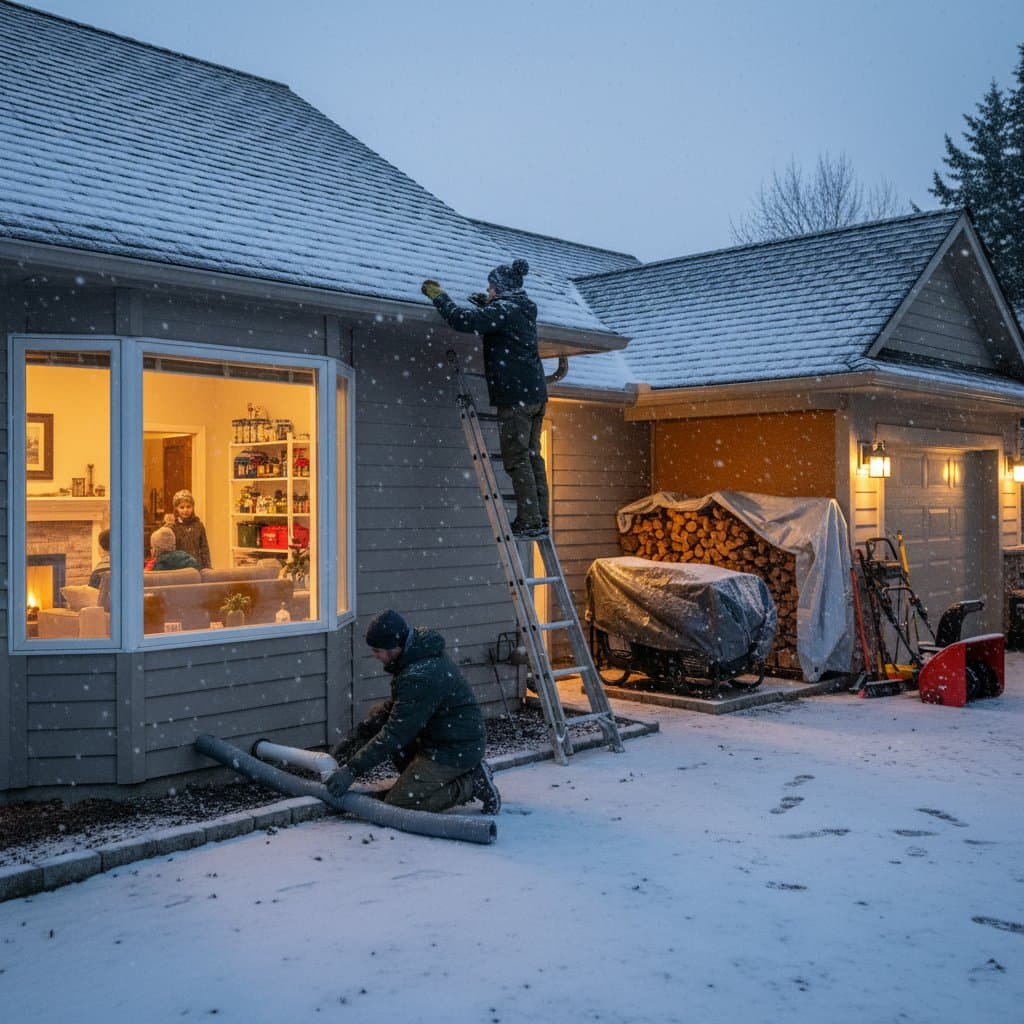
Clean gutters and check roof integrity. Clogged gutters trap melting snow that can refreeze and form ice dams. Clear debris and verify that water flows freely through downspouts. Examine shingles for cracks or lifting edges. Budget 350 to 600 dollars for small repairs or arrange a professional inspection before the first freeze.
-
Prepare your plumbing. Frozen pipes rank among winter's most expensive problems. Insulate exposed supply lines in basements, garages, and crawl spaces. Foam pipe sleeves cost less than 2 dollars per foot and help prevent ruptures that cause thousands of dollars in water damage. Locate your main shutoff valve and confirm that it turns easily.
Strengthening Exterior Defenses
After the interior priorities are addressed, move outside. Strategic upgrades prevent structural damage and keep your family safe during prolonged storms.
-
Secure windows and doors. Storm panels or shatter-resistant window film add protection against flying debris and wind pressure. Reinforce hardware on exterior doors. In areas with heavy snowfall, a storm door creates an extra barrier that retains heat.
-
Trim trees and clear the perimeter. Branches that hang over roofs or near power lines can snap under snow and ice weight. Hire a certified arborist for large limbs. Preventive work often costs between 200 and 500 dollars yet remains far less expensive than roof repairs or power restoration.
-
Inspect exterior vents and exhaust outlets. Snowdrifts can block dryer vents and furnace exhausts, which creates a risk of carbon monoxide buildup. Mark vent locations with stakes so they remain visible in deep snow. Keep a small shovel nearby for quick clearing.
-
Protect outdoor equipment. Cover air conditioning units with breathable covers, drain garden hoses, and shut off exterior water valves. Move grills, patio furniture, and planters into storage to avoid weather damage.
Preparing for Power Loss
When the grid fails, preparation determines whether the situation stays an inconvenience or becomes a crisis. Build a backup plan that keeps the household functioning safely.
-
Test your generator or install one. A portable generator costs 700 to 2,000 dollars depending on output. Whole-house systems begin near 6,000 dollars. Test any unit before the season starts, store extra fuel safely, and install carbon monoxide detectors. Never operate a generator indoors or near open windows.
-
Assemble an emergency kit. Every home needs flashlights, batteries, bottled water, nonperishable food, and a first-aid kit. Store supplies in an accessible location near the main living area. Add extra blankets, medication, and pet supplies. Rotate items regularly to maintain freshness.
-
Keep communication lines open. Charge portable power banks and consider a solar charger for phones. A battery-powered radio supplies updates if cell service fails. Keep important contacts in both paper and digital formats.
-
Plan for accessibility. Arrange a safe zone on the main floor for family members with mobility challenges. Keep emergency heating options nearby, such as propane space heaters rated for indoor use, and follow all safety guidelines.
Financial and Insurance Safeguards
Winter damage can produce complex insurance claims. Protect your investment before problems arise.
-
Review your policy. Confirm that homeowner insurance covers burst pipes, roof damage from snow load, and power outage losses. Some policies exclude certain weather issues unless supplemental coverage is added. Contact your agent and make adjustments as needed.
-
Document your home condition. Take photos or videos of the roof, siding, and interior finishes. Store backups online. This documentation speeds up claims after storm damage.
-
Budget for emergency repairs. Set aside 500 to 1,000 dollars in a dedicated home maintenance fund. Ready cash avoids delays when contractors are in high demand after widespread storms.
Ongoing Maintenance Habits
Winter preparation protects comfort, safety, and home value. After each major snow or freeze, walk the perimeter, check for new leaks, and clear blocked vents. These habits preserve earlier work and prevent costly surprises. When the next storm arrives, supplies and repairs will already be in place.