
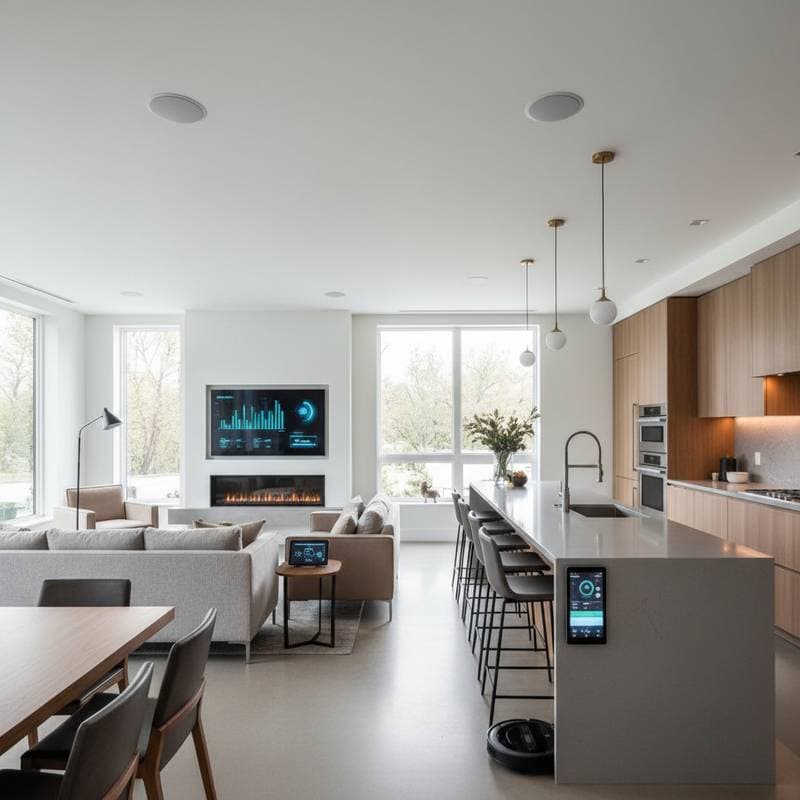
Smart Home Upgrades: Real Costs for 2026 Remodels
Smart home remodels in 2026 balance innovation with cost. Projects range from 1500 dollar DIY setups to 75000 dollar full home integrations. This guide presents real world pricing for lighting, HVAC, security, and more. It also covers return on investment insights and budgeting strategies.
Homeowners gain efficient and connected spaces that improve comfort along with safety and long term value.
Security System Pricing and Monitoring
Professional monitoring adds 20 to 60 dollars per month. Some homeowners choose self monitoring options to reduce ongoing costs.
Troubleshooting Tip
Connectivity issues often occur when mixing brands. For reliable performance choose devices from the same ecosystem such as Google Home or Apple HomeKit. A dedicated hub can also unify control.
Smart Bathrooms and Water Management
Smart bathrooms represent an emerging frontier in remodeling. Innovations such as digital showers, leak detectors, and voice controlled mirrors combine comfort with efficiency.
Cost Breakdown
- Digital shower systems range from 2000 to 4000 dollars.
- Smart mirrors with lighting and defogging cost 800 to 2500 dollars.
- Leak detection and water monitoring systems fall between 300 and 800 dollars.
- Smart toilets with bidet functions require 1200 to 4000 dollars.
A full smart bathroom package totals 5000 to 12000 dollars. The final amount depends on complexity and brand selection.
Value and ROI
Water saving features can reduce usage by 10 to 20 percent. Leak detection can prevent thousands of dollars in potential water damage. These upgrades prove especially valuable in regions with high water costs or frequent plumbing issues.
Budget Planning Framework
When planning a remodel categorize smart upgrades into three levels of investment.
| Level | Type of Upgrade | Typical Cost | Best For |
|---|---|---|---|
| Entry Level | Smart bulbs, thermostats, doorbells | 1000 to 3000 dollars | DIY enthusiasts or small remodels |
| Mid Range | Lighting systems, locks, cameras, appliances | 5000 to 15000 dollars | Whole home upgrades or resale prep |
| Premium | Full integration with automation hubs | 20000 to 75000 dollars | Luxury renovations or new builds |
Cost Saving Strategies
Bundle installations when multiple trades are already onsite. Select scalable systems that allow gradual expansion. Use rebates and utility incentives for energy saving devices. Mix DIY and professional work to control labor costs.
Regional and Seasonal Factors
Smart home costs vary by region due to labor rates and climate conditions. In colder climates smart thermostats and HVAC zoning systems deliver the best returns. In warmer or coastal regions focus on smart shading, air quality monitoring, and leak prevention.
Seasonal timing also matters. Scheduling electrical or HVAC work during off peak months can reduce labor costs by 10 to 15 percent.
Long Term Maintenance and Upkeep
Every smart home system requires maintenance. Replace batteries in sensors annually. Verify Wi Fi signal strength and check manufacturer updates regularly.
A well maintained smart system can last 8 to 15 years before major component upgrades become necessary. Modular design and software updates can extend that lifespan even further.
Starting Your Smart Home Project
Upgrading a home with smart technology serves as a practical investment. It enhances comfort, safety, and energy efficiency while increasing property value. The key remains balance.
Begin with high value essentials such as lighting control and smart thermostats. Expand as comfort and budget allow. Treating the home as a connected system rather than a collection of gadgets creates an environment that feels intuitive and efficient for years to come.