
Estimate Your 2026 Smart Home Tech Integration Costs
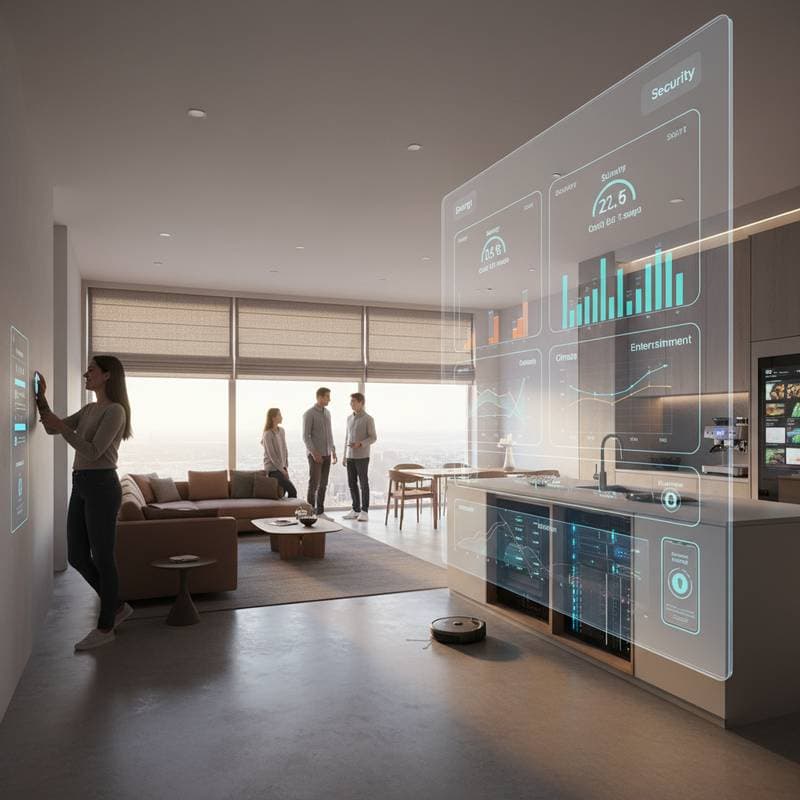
Lights that respond to voice commands, thermostats that adapt to daily patterns, and security systems that identify approaching vehicles represent common features in automated homes. Homeowners often seek clarity on the investment required to achieve these capabilities.
This guide presents detailed cost information organized by system type, installation method, and scale of implementation. Readers gain a practical framework for budgeting upgrades that range from individual rooms to complete property integrations.
Smart Home System Cost Breakdown
Different technologies contribute distinct amounts to overall expenses. The following table shows typical price ranges along with primary influences on those figures.
| System Type | DIY Range | Professional Range | Core Cost Factors |
|---|---|---|---|
| Smart Lighting | $200 - $1,500 | $1,000 - $5,000 | Fixture type, number of zones, hub compatibility |
| Smart Thermostats | $150 - $300 | $300 - $700 | HVAC compatibility, learning features |
| Security and Cameras | $250 - $2,000 | $800 - $4,000 | Camera count, storage options, monitoring plans |
| Smart Locks and Entry | $150 - $500 | $400 - $1,200 | Door type, connectivity, integration with alarm systems |
| Voice Assistants and Hubs | $100 - $600 | $300 - $1,000 | Ecosystem choice, number of rooms |
| Smart Appliances | $800 - $5,000+ | $1,500 - $8,000+ | Brand, size, and energy efficiency rating |
| Energy Management and Solar Integration | $1,200 - $10,000 | $4,000 - $20,000 | Battery systems, panels, and smart monitoring |
| Entertainment and Whole-Home Audio | $600 - $4,000 | $2,000 - $12,000 | Speaker quality, room coverage, cabling needs |
These ranges reflect national averages that shift with home size and location. A compact residence may reach full automation below $10,000, whereas larger properties with premium features often exceed $40,000 under professional installation.
Cost Comparison: DIY vs. Professional Installation
| Factor | DIY Integration | Professional Integration |
|---|---|---|
| Upfront Cost | Lower | Higher |
| Time Investment | High | Low |
| Reliability | Varies by skill level | High |
| Support | Limited | Ongoing service available |
| Long-Term Maintenance | User-managed | Often included in service plans |
Smaller projects benefit from DIY methods when products support straightforward setup. Complex systems require professional handling to maintain code compliance and consistent operation. Many homeowners combine approaches by delegating wiring tasks to licensed electricians while managing device configuration themselves.
ROI and Long-Term Value Considerations
Smart home features deliver measurable reductions in energy use along with stronger security and improved resale appeal. Annual savings of 10 to 20 percent commonly appear with optimized thermostats and lighting controls. Properties equipped with integrated automation frequently command 3 to 5 percent higher sale prices among interested buyers.
Additional advantages include lower daily stress from preset routines, steadier indoor comfort through responsive climate adjustments, and faster response to potential safety concerns via continuous monitoring.
Regional Cost Variations
Labor rates, incentive programs, and equipment availability create noticeable differences across locations.
- Urban areas experience 15 to 25 percent higher installation fees due to demand and wage levels.
- Suburban and rural sites often feature reduced labor charges yet incur added shipping expenses for specialized components.
- Properties in harsh climates gain faster payback from automated HVAC management.
Homeowners should review local utility rebates for thermostats or solar components to lower initial outlays.
Troubleshooting Common Issues
Systems occasionally require adjustments after installation. Frequent challenges and corresponding fixes include the following.
- Unresponsive devices often recover after a hub reboot or Wi-Fi reconnection. Nearby electronics sometimes create interference that disrupts signals.
- Voice assistants perform better when devices receive clear, unique names such as Kitchen Light or Hallway Speaker.
- Automation delays typically trace to outdated firmware or insufficient network coverage in certain areas.
- Battery-powered sensors need annual replacement or conversion to wired models for critical entry points.
- Cross-brand conflicts resolve through a single hub or application that coordinates all components.
Monthly system checks of one hour maintain reliable performance and reduce unexpected interruptions.
Advanced Add-Ons
After core systems operate smoothly, additional layers extend functionality.
Smart blinds and shades provide automated insulation and privacy control at $500 to $3,000 per room. Water leak detection systems with automatic shutoff valves cost $300 to $1,200 when installed. Home energy monitors that track usage in real time range from $400 to $1,000 for complete coverage. Integrated EV chargers paired with rate-optimized scheduling further reduce long-term utility expenses.
Planning Next Steps
Review current home systems against the cost ranges provided. Prioritize upgrades that address immediate needs such as security or energy management. Consult local professionals for site-specific quotes and incentive eligibility before committing to purchases.