
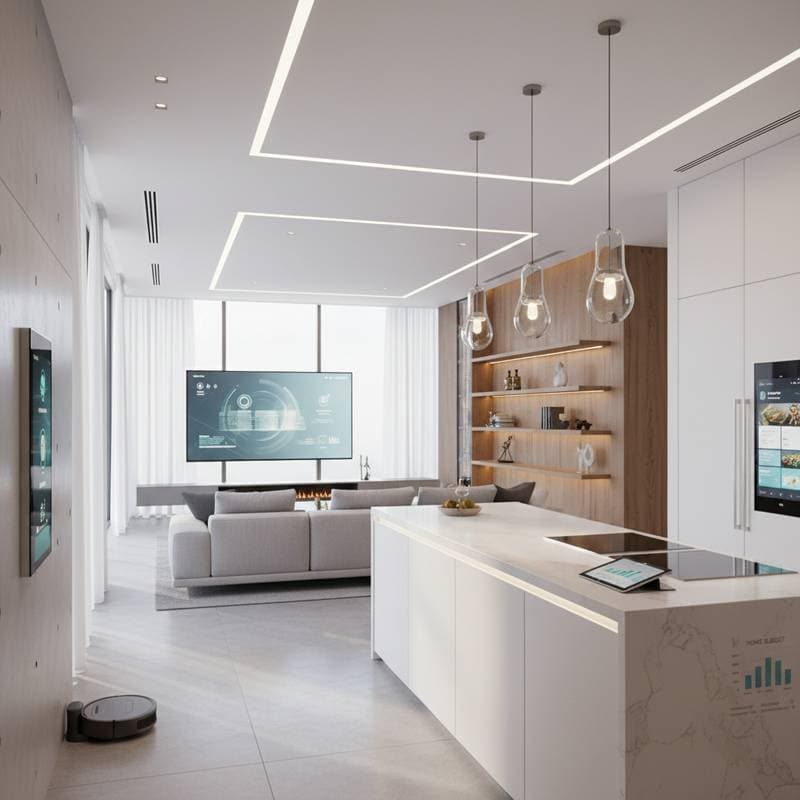
Smart Home Remodel Costs: A $10,000 to $75,000 Breakdown
Smart home technology has evolved rapidly, offering homeowners tools to enhance comfort, security, and efficiency. A remodel incorporating these features can range widely in expense, depending on the scale and components selected. This guide examines costs from modest updates at $10,000 to comprehensive overhauls reaching $75,000, providing clarity for informed decisions.
Defining the Range of Smart Home Remodels
The term smart home remodel encompasses various levels of integration. Basic projects focus on single-room enhancements, such as automated lighting or a smart thermostat. These start at the lower end of the spectrum, around $10,000, and suit those testing the waters of home automation.
Mid-range remodels, costing $25,000 to $50,000, expand to multiple systems like security cameras and voice-controlled appliances. Full-scale transformations, up to $75,000, connect an entire residence through centralized hubs, ensuring seamless operation across all devices. Factors influencing price include home size, existing wiring, and chosen brands, which range from affordable options to premium systems.
Key Cost Components
Understanding individual elements helps allocate funds wisely. Labor, materials, and installation dominate expenses, often comprising 40 to 60 percent of the total budget. Professional electricians or integrators ensure compatibility and safety, adding to the investment but preventing future issues.
Hidden costs, such as permits or structural modifications, can increase the total by 10 to 20 percent. Homeowners benefit from obtaining multiple quotes and verifying contractor credentials to maintain control over expenditures.
Breakdown by Upgrade Category
Lighting and Controls
Smart lighting systems replace traditional fixtures with LED bulbs and sensors that adjust based on occupancy or time of day. A basic setup for a three-bedroom home costs $2,000 to $5,000, including bulbs, hubs, and app integration.
Advanced options incorporate dimmers, color-changing lights, and motion detectors, pushing expenses to $8,000 or more. These upgrades reduce energy use by up to 30 percent, offering quick returns through lower utility bills. Installation involves minimal wiring changes, making it accessible for most remodels.
Climate Control Systems
Thermostats and HVAC integrations form the core of smart climate management. A single smart thermostat installation ranges from $300 to $800, but whole-home zoning systems escalate to $5,000 to $15,000.
These setups learn user preferences and optimize heating or cooling, potentially saving 15 to 25 percent on energy costs annually. Integration with blinds or vents adds layers of efficiency, though compatibility with older HVAC units may require additional adapters at $1,000 to $3,000.
Security and Surveillance
Modern security includes cameras, locks, and alarms connected via apps for remote monitoring. Entry-level packages with four cameras and a doorbell unit cost $1,500 to $4,000.
Comprehensive systems, featuring facial recognition and professional monitoring, reach $10,000 to $20,000. Such investments enhance safety and may lower insurance premiums by 5 to 10 percent. Ensure systems comply with local privacy regulations to avoid legal complications.
Appliances and Entertainment
Smart appliances like refrigerators with inventory trackers or ovens controlled by voice add convenience. Individual units range from $500 to $2,000 each, with a full kitchen suite totaling $10,000 to $25,000.
Home theater systems integrate speakers and screens for immersive experiences, costing $5,000 to $15,000. These elements boost daily living but require stable Wi-Fi infrastructure, which might necessitate router upgrades at $200 to $500.
Central Automation Hubs
A unifying hub ties all devices together, enabling voice commands or scheduled routines. Basic hubs cost $150 to $500, but custom installations with professional programming reach $5,000 to $10,000.
In larger remodels, this component ensures scalability, allowing future additions without overhauls. Select platforms like those supporting multiple protocols for long-term flexibility.
Budgeting Strategies for Success
Start by assessing current needs through a home audit, identifying high-impact areas like energy leaks or security gaps. Allocate 50 percent of the budget to core systems, 30 percent to labor, and 20 percent as a contingency fund.
Phased approaches allow incremental investments; begin with lighting and expand annually. Compare brands for warranties and support, prioritizing those with strong user reviews and update commitments.
Seek incentives like energy rebates, which can offset 10 to 20 percent of costs for efficient installations. Track expenses with spreadsheets to monitor progress and adjust as needed.
Maximizing Value in Your Investment
Focus on upgrades that align with lifestyle and yield measurable benefits. Energy-efficient choices not only cut bills but also increase property value by 3 to 5 percent. Security enhancements provide peace of mind, while automation streamlines routines.
Consult certified professionals early to tailor plans and avoid mismatches. With strategic planning, a smart remodel transforms a standard home into an intelligent, responsive environment that adapts to occupants over time.
Steps to Launch Your Smart Remodel
- Evaluate your home's infrastructure, including electrical capacity and internet speed.
- Define priorities, such as security or efficiency, based on family needs.
- Research compatible devices and gather quotes from three integrators.
- Develop a timeline, starting with non-disruptive installs like thermostats.
- Test systems post-installation and train household members on usage.
This structured path ensures a smooth transition, delivering a home that enhances life without unnecessary strain on resources.