
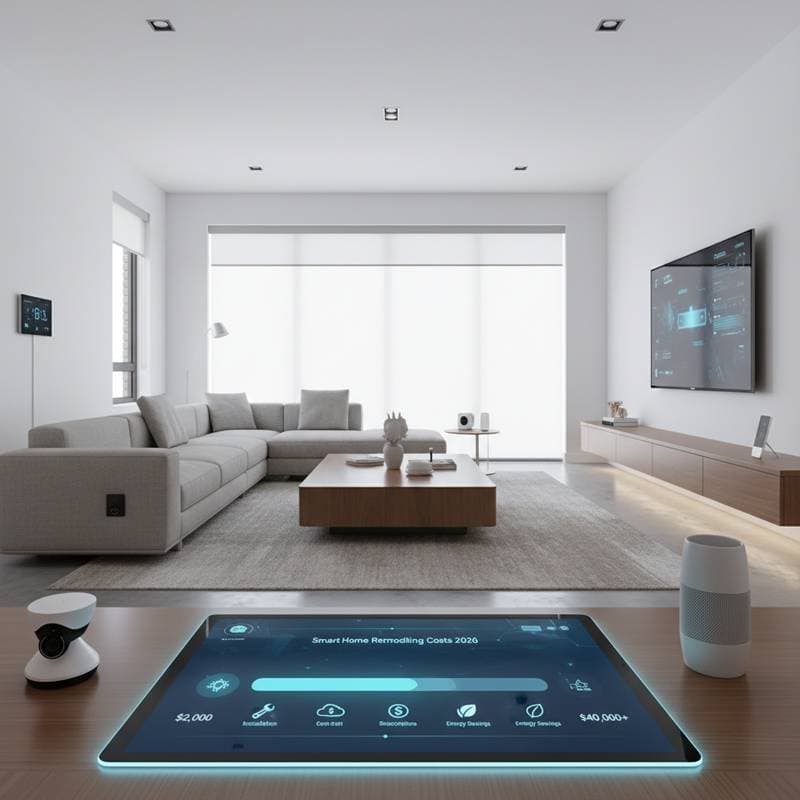
Understanding the Costs of Smart Home Technology in 2026
Consider the experience of entering a residence where lights brighten automatically and ambient sounds adjust to the environment. Such integration creates an effortless blend of technology and daily life. Homeowners often aspire to achieve similar functionality, yet determining the financial commitment requires careful evaluation.
Smart home technology has evolved from a speculative innovation into an essential tool for energy management, protection, and routine simplification. The expense varies based on the scope of implementation. Adding select connected components differs significantly from establishing a fully interconnected network, and grasping these distinctions enables informed financial decisions.
Assessing Potential Long-Term Savings
Upfront investments in smart home systems may appear substantial, yet they frequently yield returns through operational efficiencies. For instance, an intelligent thermostat reduces heating and cooling expenses by up to 10 percent each year. Automated lighting solutions decrease electricity consumption by 20 to 30 percent.
View these devices as enduring assets that lower utility payments and prolong equipment durability by avoiding excessive operation. Sophisticated setups monitor usage trends, guiding decisions on enhancements such as solar installations or improved insulation. Over time, these benefits offset initial outlays and support broader household optimizations.
Identifying Essential Hidden Expenses
Projects involving home automation include unforeseen elements that affect the overall budget. Hardware represents only part of the equation; additional aspects demand consideration.
Professional Installation Fees
Certain devices support self-installation, but intricate configurations necessitate skilled professionals. Technicians typically bill between 100 and 200 dollars per hour for setup and configuration tasks.
Network Infrastructure Requirements
Reliable connectivity forms the foundation of smart home operations. Costs for Wi-Fi extensions, mesh network additions, or modem upgrades range from 200 to 800 dollars.
Ongoing Subscription Fees
Numerous devices depend on cloud-based services or external applications. Security cameras, doorbells, and control centers often incur monthly charges of 5 to 30 dollars for storage and premium functionalities.
Annual Maintenance Obligations
Systems demand periodic software updates and component replacements. Allocate 100 to 200 dollars yearly to cover these routine needs and ensure continued reliability.
Prioritizing Safety and Device Compatibility
Effective smart homes enhance convenience without compromising security. Verify that selected products adhere to UL certification and comply with regional electrical regulations. Opt for items employing secure protocols such as Zigbee or Z-Wave to safeguard information transmission.
Interoperability plays a crucial role in system performance. Incompatible brands can lead to communication failures between components like lights and voice controls. Favor unified ecosystems or standards like Matter, which facilitate seamless interactions across manufacturers.
Deciding on Installation Approaches
Self-directed efforts suit straightforward additions, including smart plugs, entry sensors, or climate controls. These tasks require minimal time and standard tools.
Expert involvement proves essential for multifaceted integrations involving lighting, climate systems, and surveillance. Professionals handle cabling, synchronization, and optimization, providing assurance of durable performance. The decision hinges on technical proficiency and willingness to invest in sustained assistance.
Integrating Sustainability into Smart Upgrades
Automation aligns with environmental objectives by minimizing resource use. Intelligent watering systems curb excess water application, motorized shades mitigate air conditioning demands, and adaptive thermostats fine-tune energy distribution based on occupancy patterns.
Select hardware constructed from recyclable materials with eco-friendly packaging. Participate in manufacturer recycling initiatives to divert obsolete devices from waste streams. These choices extend beyond efficiency to promote conscientious consumption in contemporary residences.
Accounting for Location-Based Cost Differences
Expenses for smart home projects differ by geographic area. Metropolitan regions feature elevated service rates but superior availability of specialists and supplies. Remote locations may incur extra charges for technician travel or expedited deliveries.
In climates prone to severe conditions, incorporate protective measures like surge safeguards or weather-durable detectors. These adaptations increase setup demands and expenses, warranting early inclusion in financial planning.
Practical Strategies for Effective Implementation
- Initiate with modest additions to familiarize with device operations before scaling up.
- Emphasize proven manufacturers offering robust support over experimental options.
- Design network architecture in advance to prevent connectivity issues.
- Document connections and settings during initial configuration for easier future maintenance.
- Perform firmware updates consistently to uphold security and functionality.
Realizing the Benefits of a Smart Home Setup
After deployment, automated processes integrate into everyday routines, delivering unobtrusive support. The true value lies in the heightened security, ease, and resource awareness that result from thoughtful planning. By evaluating expenses thoroughly and selecting enduring, eco-conscious options, homeowners establish environments that adapt intelligently to their needs.