
2026 Smart Home Remodel: Essential Costs and Planning Insights
A smart home remodel integrates advanced technology with standard renovations to create an intuitive living space. These upgrades manage lighting, temperature, security, and appliances via unified controls. Homeowners benefit from increased efficiency and convenience without needing extensive overhauls.
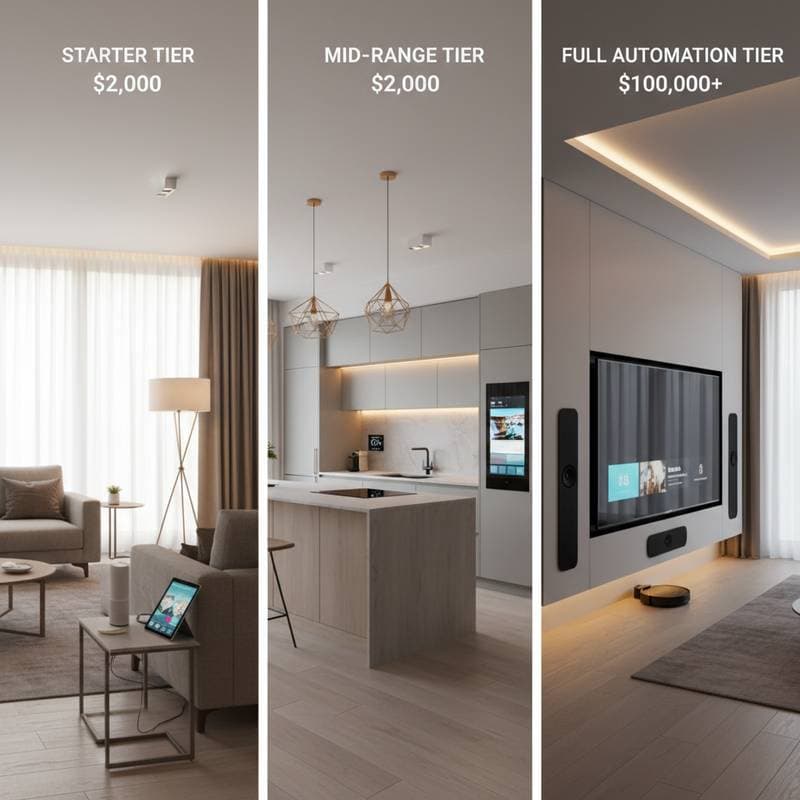
Costs depend on project scope, home size, and installation methods. This guide outlines three budget tiers, key considerations, and strategies to align investments with lifestyle needs and long-term returns.
Defining a Smart Home Remodel
Smart home remodeling merges physical improvements with digital systems. These setups enable remote or automated control of home functions through apps or voice commands. Projects vary from targeted room enhancements to full-property integrations.
Homeowners typically select one of three approaches:
- Entry-Level Setup: Install smart thermostats, lights, and locks to achieve basic automation and savings.
- Mid-Range Expansion: Incorporate security cameras, voice hubs, and connected appliances for broader functionality.
- Comprehensive Overhaul: Implement centralized controls, zoned systems, and energy integrations like solar ties for total connectivity.
Cost Breakdown by Budget Tier
Expenses fluctuate based on home dimensions, system intricacy, and labor involvement. Professional assessments help tailor estimates to specific properties. Below is a detailed range for each tier:
- Entry-Level Upgrades: $2,000 to $6,000. This covers items such as programmable thermostats (e.g., Nest or Ecobee models), LED smart bulbs, electronic door locks, and basic smart plugs or speakers.
- Mid-Range Systems: $10,000 to $25,000. Investments include whole-room lighting controls, low-voltage wiring updates, outdoor cameras, and appliances like Wi-Fi-enabled refrigerators or washers.
- Full-Scale Remodel: $30,000 to $100,000+. This encompasses structural rewiring, custom control panels, advanced energy monitors, and integrations with backup generators or solar panels.
Labor represents 40 to 60 percent of totals, particularly for electrical work. Permits and code-compliant upgrades add $500 to $3,000, varying by municipality.
Budgeting Strategies for Your Project
Identify core needs before purchasing equipment. Focus initially on features that enhance security and efficiency, then add conveniences. Use this framework to allocate funds effectively:
- Prioritize Security: Install smart locks (e.g., August or Schlage), cameras, and sensors to protect assets and provide peace of mind.
- Target Efficiency Gains: Add thermostats, HVAC zoning, and automated shading to lower energy use by 10 to 20 percent annually.
- Incorporate Lifestyle Features: Select voice-activated kitchens or media systems only after essentials, as they offer comfort without immediate financial returns.
Distribute budget as 40 percent for foundational wiring, 30 percent for devices, and 30 percent for setup and configuration. Outdated electrical panels may require $5,000 to $15,000 in reinforcements to handle increased demands.
Installation Options: DIY or Professional
Many devices support simple setup, allowing homeowners to manage basic installations. However, complex integrations demand expert intervention to ensure safety and performance.
Ideal for DIY:
- Plug-in smart devices like bulbs, outlets, and small gadgets.
- Wireless sensors, indoor cameras, and hub setups.
- Basic entertainment integrations with existing wiring.
Require Professional Expertise:
- Electrical expansions or panel upgrades.
- Multi-room automation networks.
- HVAC modifications, irrigation controls, or renewable energy links.
Engage certified electricians or integrators affiliated with organizations like CEDIA. Verify licenses via state registries to maintain warranties and code adherence.
Overlooked Expenses in Smart Remodels
Beyond hardware, supporting elements ensure system reliability. Account for these to avoid budget shortfalls:
- Connectivity Enhancements: Mesh Wi-Fi networks or Ethernet cabling cost $500 to $2,000 for full coverage.
- Ongoing Fees: Cloud services for video storage or AI features range from $5 to $20 monthly.
- Interoperability Challenges: Brand mismatches may necessitate $200 to $1,000 in bridges or converters.
- Upkeep Requirements: Firmware updates and battery replacements add $100 to $500 yearly.
Reserve 10 to 15 percent of the budget for unexpected needs, such as compatibility testing or minor repairs.
Benefits for Energy Use and Insurance
Smart systems yield savings through optimized operations. Thermostats and lights cut consumption by up to 15 percent, translating to $200 to $500 annual reductions on bills. Security integrations qualify for 5 to 10 percent insurance discounts; document setups with receipts for claims.
For resale, integrated systems appeal to buyers in urban or tech-savvy areas, potentially adding 2 to 5 percent to home value. Emphasize seamless functionality over isolated devices during showings.
Ensuring Safety and Regulatory Compliance
Electrical integrity forms the backbone of smart homes. All installations must align with National Electrical Code standards. Obtain permits for circuit additions or load increases to safeguard insurance validity.
Protect digitally with robust encryption, multi-factor logins, and firmware patches. Create a separate VLAN for devices to shield personal networks. Refrain from using unsecured connections for system access.
Selecting a Compatible Ecosystem
Early platform choices influence expandability. Evaluate based on needs for ease, control, and scalability:
- Voice-Controlled Platforms: Budget-friendly options like Amazon Alexa or Google Home suit beginners, though they limit some device pairings.
- App-Driven Solutions: Systems such as Samsung SmartThings provide detailed customization with moderate setup effort.
- Custom Professional Networks: Control4 or Crestron deliver flawless operation at premium prices, ideal for large homes.
Commit to one ecosystem to streamline operations and reduce troubleshooting.
Practical Steps for Effective Implementation
- Prepare Infrastructure Ahead: Install flexible conduits during initial phases to accommodate expansions without disruption.
- Organize Components: Label cables and ports systematically for efficient diagnostics.
- Unify Management: Designate a primary hub to oversee all functions and simplify updates.
- Record Configurations: Maintain a secure log of specifications, access codes, and layouts.
- Validate Operations: Conduct full tests prior to enclosing any work in walls or finishes.
Sustaining Long-Term Performance
Smart remodels require ongoing attention to adapt to advancements. Conduct biannual reviews to apply updates, swap outdated components, and verify redundancies. Audit subscriptions to retain only essential services, saving up to $100 yearly.
These efforts secure enduring benefits: reduced operational costs, heightened security, and a residence attuned to modern living. Strategic planning transforms initial investments into sustained enhancements for daily life and property equity.