
AI and Contractors: Better Together for Remodels
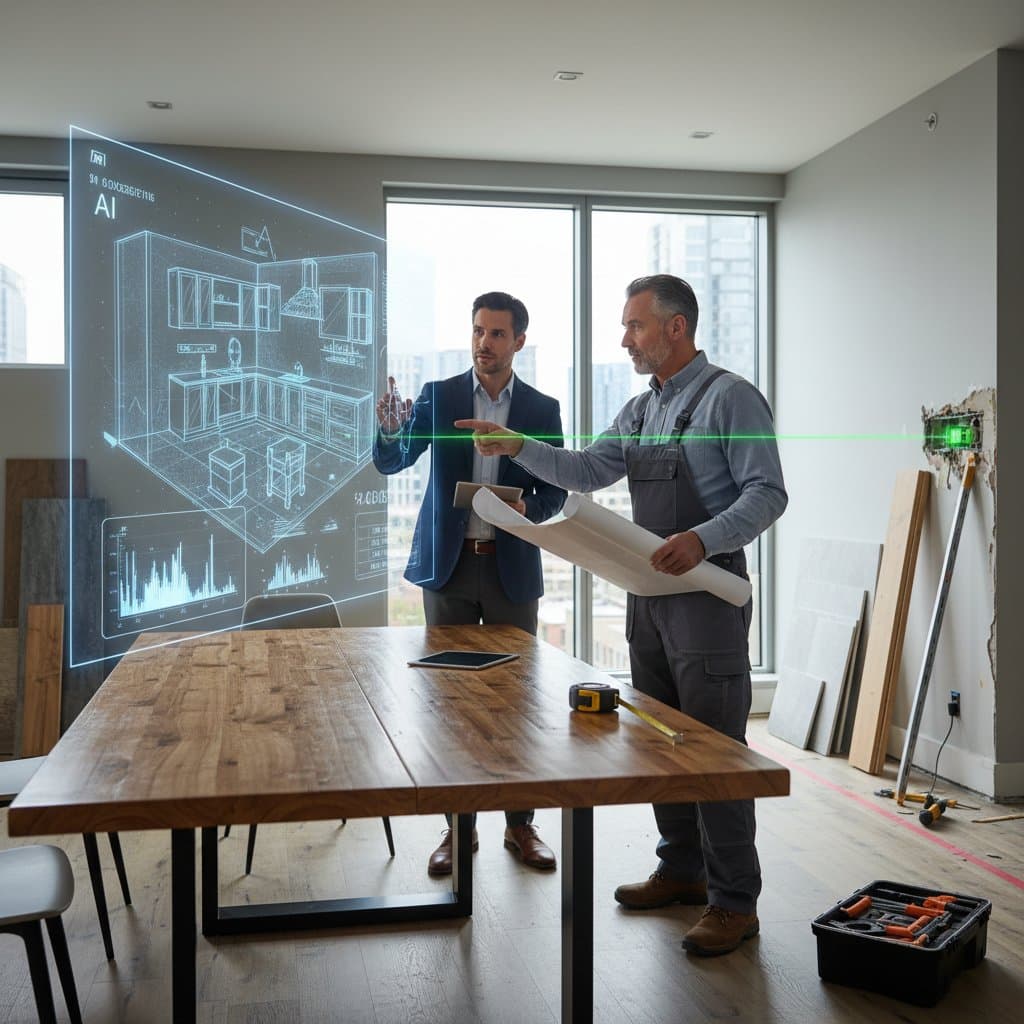
You can almost picture the scene: a tablet on the kitchen island displaying glowing digital blueprints, while a contractor reviews a notebook of hand-drawn sketches and cost estimates. Homeowners today face this intersection of technology and tradition when planning remodels. Artificial intelligence offers precision, rapid visualization, and data-backed efficiency. Contractors provide seasoned insight, adaptability, and the practical skills that make designs functional. The optimal strategy combines both, yielding remodels that are efficient, realistic, and transformative.
The Rise of AI in Remodel Planning
AI tools have elevated home design from trial-and-error to a methodical practice. Platforms such as Planner 5D, RoomGPT, and Houzz Pro enable users to create layouts, forecast material expenses, and preview finishes in moments. These systems leverage machine learning to evaluate existing spaces, recommending configurations that account for lighting, room dimensions, and building constraints.
Homeowners benefit by exploring kitchen configurations or paint schemes without initial outlays. AI also projects timelines, labor requirements, and investment returns. Consider a mid-range kitchen update: costs typically span fifteen thousand to thirty thousand dollars based on location and selections, with AI highlighting upgrades that enhance property value.
This accessibility allows testing numerous variations, regional cost comparisons, and prevention of budget pitfalls. However, algorithms overlook nuances like floorboard creaks or uneven walls, underscoring the need for human assessment.
The Contractor's Edge
Experienced contractors possess knowledge that surpasses algorithmic capabilities. They detect issues such as aging electrical systems, hidden structural anomalies, or dampness problems that scans might ignore. Contractors translate designs into executable plans, assessing the ramifications of alterations like relocating a load-bearing wall, including expenses and regulatory hurdles.
They navigate uncertainties adeptly: supply disruptions, equipment malfunctions, or unexpected discoveries can shift schedules. Unlike AI, which may stall without complete inputs, contractors adjust on the fly, safeguarding timelines, safety, and finances.
Variability exists in human services, with hourly rates from fifty to one hundred dollars varying by area and expertise. Communication gaps or obsolete techniques may necessitate revisions. AI's accuracy thus augments contractor skills, fostering a collaborative framework.
The Hybrid Advantage
Effective remodels integrate AI's analytics with contractors' proficiency. Homeowners start with AI to develop concepts, budget projections, and benchmarks, facilitating focused consultations.
For example, model bathroom arrangements via AI, evaluate tile pricing, and pinpoint efficient fixtures. Present these visuals to a contractor for plumbing validation, material adjustments, and structural reviews. This method minimizes delays, clarifies ambiguities, and curtails change orders.
Such integration allows homeowner participation without oversight. AI monitors advancements, finances, and schedules; contractors align implementation with site realities. The result is partnership over reliance.
Cost Control and ROI Insights
Budgets often challenge remodel projects. AI dissects expenses into materials, labor, and reserves, offering projections within ten to fifteen percent of actuals. A living room renovation, for instance, might range from five thousand to twelve thousand dollars, influenced by finishes and additions.
Contractors suggest economical alternatives and curb excess specifications, identifying when substitutes match desired outcomes or when modifications prove uneconomical. Merging these views produces budgets rooted in data and feasibility.
AI assesses returns by reviewing market data and efficiency gains. Contractors corroborate with insights on upkeep and longevity. This dual lens informs prudent choices.
Safety and Compliance Considerations
AI produces designs adhering to codes, yet regional differences and inspection protocols demand verification. Contractors interpret ordinances, obtain approvals, and confirm material standards, ensuring compliance and security.
Pro Tips for Success
- Start with AI to explore design alternatives prior to material or labor commitments.
- Engage contractors or architects for plan reviews before permit applications to verify practicality.
- Assign AI to metrics and projections, contractors to delivery and risk management.
- Incorporate buffers for discoveries concealed in structures.
- Select sustainable options via AI, then validate sourcing and efficacy through contractors.
Realizing Lasting Comfort
After completion, a remodel's value emerges in daily use. AI directs toward streamlined, balanced aesthetics, but contractors deliver the finesse: seamless cabinetry, ambient illumination, and enduring surfaces. This synergy transcends competition, crafting homes that endure and delight.