
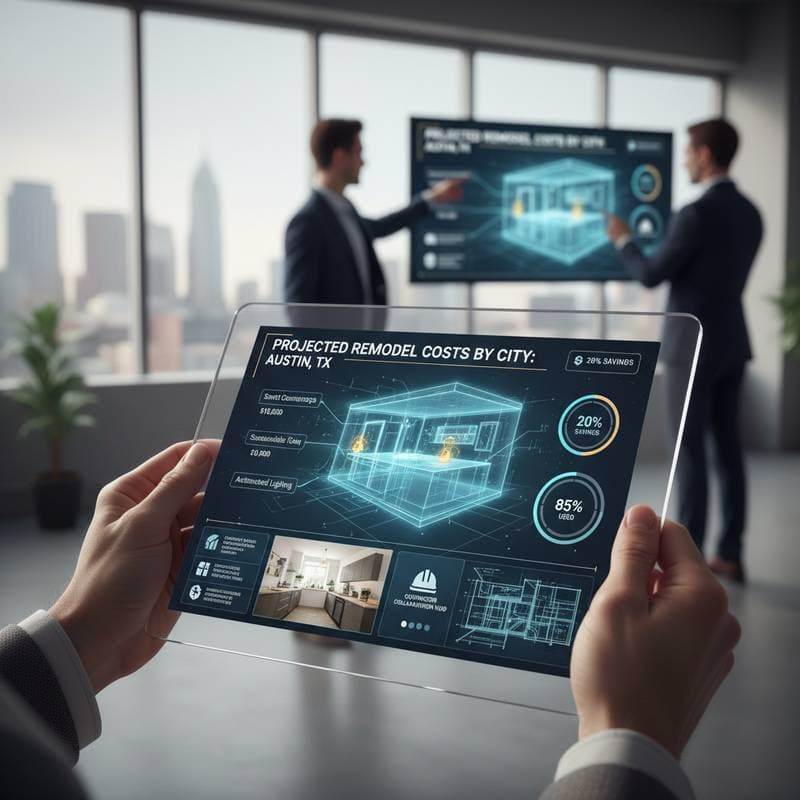
AI Remodeling Tools Transforming Costs by 2026
Homeowners frequently encounter unexpected expenses during kitchen renovations or bathroom updates. Conventional planning methods involve cumbersome spreadsheets, variable labor estimates, and numerous hypothetical adjustments. However, AI remodeling tools now alter this process fundamentally. These innovations enable precise planning, accurate pricing, and effective project management. In the near future, mobile devices will serve as highly capable project coordinators.
Precise Cost Forecasting for Remodeling Projects
Standard remodeling estimates typically depend on general averages. A provided figure may appear affordable initially, yet it often omits essential elements such as materials, required permits, or outdated infrastructure like ancient plumbing systems. AI-powered cost calculators address these shortcomings effectively.
These calculators process current data from regional markets, suppliers of materials, and networks of contractors. Rather than offering vague approximations, they provide comprehensive itemized reports that incorporate factors including local wage rates and fluctuations in prices due to seasons. For example, a bathroom upgrade estimated at $12,000 in a high-cost urban area could total $9,500 in a more affordable suburb, with the tool explaining the differences clearly.
Advanced features also calculate material waste ratios and benefits from energy-efficient modifications. Users gain insights into initial expenditures alongside potential reductions in ongoing costs. This approach resembles consulting a dedicated financial expert for residential improvements.
Enhanced Design Processes and Quicker Choices
Selecting paint colors or tile designs can consume considerable time. AI visualization tools now assist by employing image analysis and algorithms rooted in interior design principles to generate realistic previews of proposed changes.
Individuals upload images of spaces like living rooms, test various flooring materials, or observe light interactions with new surfaces such as countertops. The system evaluates current design trends, ensures color compatibility, and assesses impacts on property resale values. Tasks that previously demanded costly professional sessions occur swiftly on personal devices.
Professional designers retain their essential creative roles, yet these tools empower users to refine ideas with greater assurance prior to engaging paid services. Both independent project leaders and those hiring specialists benefit from this connection between conceptual ideas and practical implementation.
Continuous Monitoring of Project Budgets
Unexpected expense escalations represent a primary challenge in remodeling efforts. AI platforms counter this issue with advanced predictive budgeting capabilities.
Envision a mobile application that alerts users to sudden increases in material costs or notifies them of available supplier reductions. It proposes alternative selections that align with original aesthetics while adhering to financial limits. If a chosen tile variety rises by 15 percent, the tool suggests comparable substitutes at lower prices.
Integration with electronic payment platforms allows for immediate recording of all transactions. This setup fosters complete visibility, holding both clients and service providers responsible. Consequently, issues like gradual budget deviations diminish, preserving positive relationships throughout the project.
Expert Guidance Eliminating Uncertainty
AI remodeling tools extend benefits beyond individual homeowners to include contractors, architects, and interior specialists. These professionals leverage the systems to develop refined proposals and enhance interactions with clients. Shared access to reliable information minimizes miscommunications and strengthens partnerships.
Certain platforms review applicable local regulations and identify possible adherence challenges prior to permit submissions. This forward-thinking method conserves time and averts expensive errors. Such functionality proves particularly valuable for renovations in established residences, where concealed problems may disrupt schedules.
For intricate undertakings, combined approaches arise where AI manages quantitative assessments, and experts adjust outcomes as needed. This balance delivers accuracy complemented by personalized expertise.
Integrated Safety Measures and Eco-Friendly Options
Increasingly, AI remodeling solutions incorporate evaluations of environmental impact. They project energy conservation from updates like improved insulation and measure the ecological effects of material selections. For independent workers, integrated alerts highlight when tasks necessitate certified professionals or particular tools.
These features promote informed decision-making that safeguards properties and finances alike. Users receive evidence-based recommendations on task feasibility and efficiency, replacing speculation with reliable directives.
Steps to Implement AI Tools in Your Remodel
Prospective remodelers should begin by investigating AI-based cost estimators and design preview applications. Numerous options provide complimentary access to core functionalities for initial evaluations. Collect precise photographs, dimensions, and desired features to generate a feasible project outline.
View the AI as a supportive planning resource rather than a complete substitute. Apply its analyses to secure equitable pricing, identify cost reductions, and maintain effective dialogue with service providers. Successful renovations integrate technological precision with individual ingenuity and perseverance.
Adopting these tools early establishes a strategic advantage. Participants achieve financial savings, lowered anxiety, and enhanced appreciation for residential possibilities. Future discussions on remodeling expenses will reflect these technological advancements.