
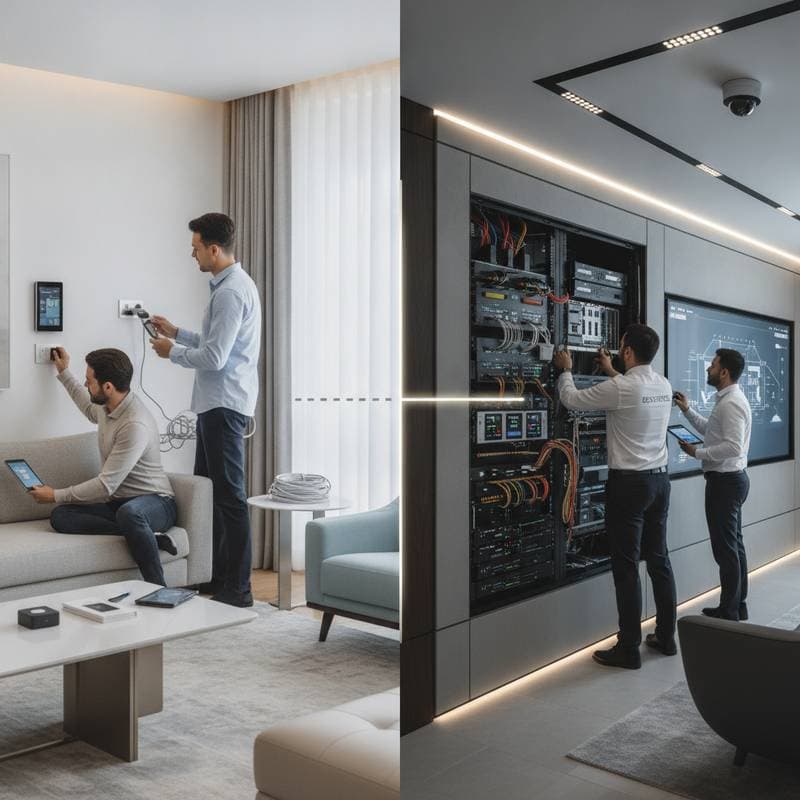
When to Skip DIY and Hire a Smart Home Pro
Smart home technology offers clear benefits in daily convenience and energy management. Yet installation choices determine whether those benefits materialize fully or lead to ongoing issues. Homeowners benefit from evaluating each project based on technical demands, safety implications, and long term performance.
Projects That Align with DIY Approaches
Basic devices require minimal setup beyond connecting to a wireless network and configuring mobile applications. Smart plugs, simple lighting kits, and standalone thermostats fall into this category. These items operate without alterations to existing wiring or walls.
Users who possess basic knowledge of network settings can complete such tasks in under an hour. Voice assistant integration follows similar steps and rarely demands specialized tools.
Troubleshooting tip: When voice commands fail to register, verify application permissions and confirm consistent naming conventions across all grouped devices in the control dashboard.
Situations That Require Professional Installation
Projects involving new wiring, integration across multiple systems, or structural modifications introduce risks that exceed typical homeowner expertise. Security systems with hardwired sensors, whole home lighting controls, and centralized automation hubs belong in this group. Professional installers ensure code compliance and reliable connectivity throughout the property.
Centralized systems also benefit from expert configuration that supports future expansion without repeated service calls. Safety related devices such as monitored alarms gain from documented installation that satisfies insurance requirements.
Cost Analysis and ROI Considerations
Smart home investments deliver returns through reduced utility expenses and improved property appeal. The following table outlines typical ranges.
| Project Type | DIY Cost Range | Pro Installation Range | Typical ROI |
|---|---|---|---|
| Smart Thermostat | $100 to $200 | $250 to $400 | Energy savings up to 10 percent annually |
| Smart Lighting | $50 to $200 | $200 to $500 | Moderate energy savings with visual improvements |
| Smart Security | $250 to $600 | $400 to $1200 | Insurance discounts plus higher resale value |
| Whole Home Automation | $1000 and higher | $2000 and higher | Daily convenience and lasting market appeal |
DIY methods can lower initial expenses by 30 to 50 percent. However, errors in configuration often require corrective work that offsets those savings. Professional installation provides documented reliability that protects the overall investment.
Decision Checklist for Installation Choices
- Choose DIY when devices connect wirelessly or plug directly into outlets.
- Choose DIY when basic electrical concepts are familiar and troubleshooting through apps feels manageable.
- Choose professional help when wiring, structural changes, or multi device integration appear in the plan.
- Choose professional help when centralized control and future system growth represent priorities.
- Choose professional help when security or safety functions require verified performance.
Ongoing Care for System Reliability
Firmware updates address emerging security concerns and maintain device compatibility. Regular backups of configuration settings prevent data loss during network adjustments. Periodic cleaning of sensors and camera lenses preserves detection accuracy. Seasonal review of automation schedules aligns lighting and climate settings with changing household patterns.
Protecting Your Long Term Investment
A well executed smart home system continues to deliver value when installation matches project complexity. Professional support for demanding tasks reduces future repair needs and supports consistent operation across all connected components.