
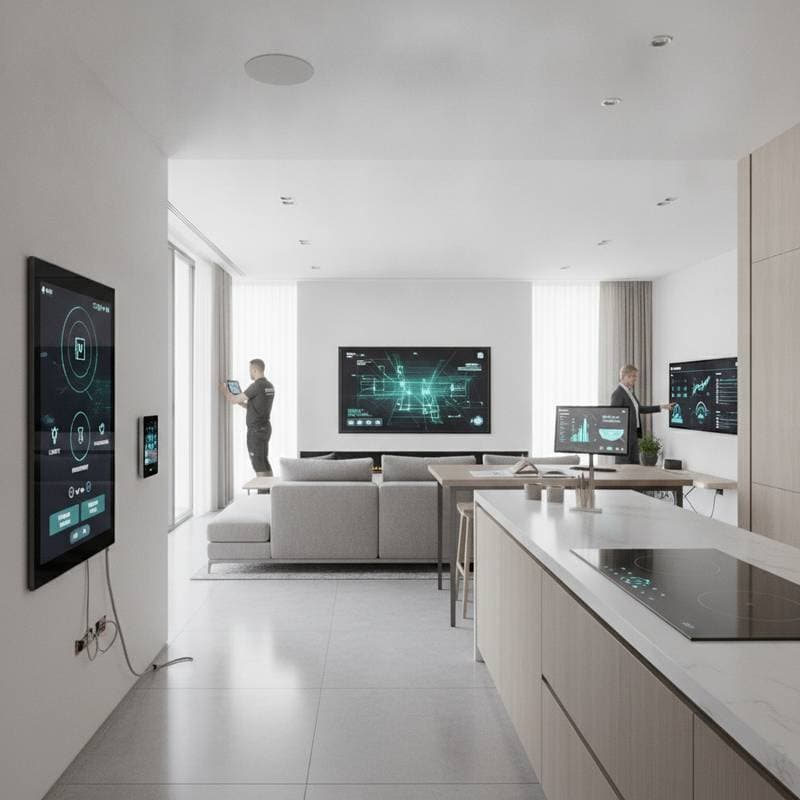
Preparing the Foundation for Smart Upgrades
Smart home technology now forms a standard part of remodel planning. Homeowners who address network capacity and electrical capacity early avoid later performance problems. This preparation supports reliable operation across all connected devices.
Hardwired Ethernet connections deliver stable performance for stationary equipment such as televisions and control hubs. Electrical upgrades that add outlets with USB ports or dedicated smart circuits typically cost between 150 and 300 dollars per location. These steps create the base layer that later systems rely upon.
Lighting That Responds to Daily Patterns
Lighting upgrades deliver quick visual change and measurable energy reduction. Individual smart fixtures or bulbs range from 50 to 200 dollars, while complete room systems begin near 800 dollars. Larger whole-home installations that incorporate voice control or occupancy sensing can reach 3,000 dollars.
Pair smart dimmers with daylight sensors to maintain steady illumination levels throughout the day. This combination reduces unnecessary energy use while preserving comfort. The approach works equally well in new construction and retrofit projects.
Climate Control That Lowers Operating Costs
Smart thermostats and zoned HVAC components rank among the highest-return upgrades. Annual heating and cooling savings can reach 10 percent when systems are properly commissioned. A single smart thermostat costs 150 to 400 dollars, while multi-room sensor packages range from 600 to 2,000 dollars.
Smart vents add another 100 to 200 dollars each. Older homes benefit from simultaneous insulation or air-sealing work so that automated systems do not waste energy compensating for building envelope losses.
Security Systems That Integrate with Daily Routines
Modern security extends beyond basic alarms to include locks, video doorbells, and camera networks. Individual smart locks cost 150 to 300 dollars, video doorbells fall between 100 and 250 dollars, and full camera systems range from 800 to 3,000 dollars. An integrated hub unifies these elements into a single interface.
Many owners value the added convenience of automatic door unlocking upon arrival. Larger properties gain efficiency when sensors, cameras, and lighting respond to the same control platform.
Media and Audio Without Visible Clutter
Well-planned entertainment systems create immersive experiences while preserving clean interior surfaces. Smart speakers range from 50 to 300 dollars. Whole-home audio installations run from 2,000 to 8,000 dollars depending on room count and wiring requirements.
Running conduit during wall or cabinet work preserves future flexibility. This step prevents later surface repairs when new devices or higher-bandwidth connections become available.
Connected Appliances in Kitchen and Bath
Smart refrigerators, ranges, and faucets have moved from optional features to expected conveniences. Refrigerators cost 2,000 to 5,000 dollars, connected ovens fall between 1,000 and 3,500 dollars, and smart faucets range from 400 to 1,000 dollars. Bathroom mirrors with integrated lighting and defogging cost 500 to 1,500 dollars, while digital shower systems can reach 2,000 dollars.
These appliances reduce daily friction by handling routine tasks automatically. Their value increases when they share data with lighting and climate controls.
Bringing Components into a Single System
Multiple devices require a central hub or voice ecosystem to function smoothly. Hubs cost 100 to 400 dollars, while professional programming services range from 500 to 2,500 dollars. Certified installers reduce the risk of protocol conflicts or overloaded circuits.
Homeowners comfortable with basic devices can handle standalone plugs and bulbs themselves. More complex wiring, security integration, or HVAC zoning warrants professional involvement.
Planning for Long-Term Adaptability
Technology changes faster than most building systems. Extra conduit paths, open communication standards, and a 10 percent budget reserve for future replacements protect the initial investment. Regular firmware updates maintain both security and performance.
Practical Habits That Sustain Performance
Design automation around existing household routines rather than imposing new behaviors. Prioritize stable, energy-certified devices over short-lived novelty features. Combine lighting, climate, and security into unified scenes that respond to occupancy or time of day. Schedule periodic maintenance for batteries, sensors, and software updates to keep the system responsive over time.