
AI Remodeling Tools: Revolutionizing Costs by 2026
Planning a home renovation often involves spreadsheets, extended cost analyses, and multiple contractor quotes. This process changes rapidly with the emergence of AI remodeling tools. These platforms combine data from building codes, material pricing, and design trends to provide accurate, real-time estimates that evolve with project adjustments. Tasks that previously required weeks now complete in minutes, with high levels of precision.
The Shift Toward Intelligent Home Renovation
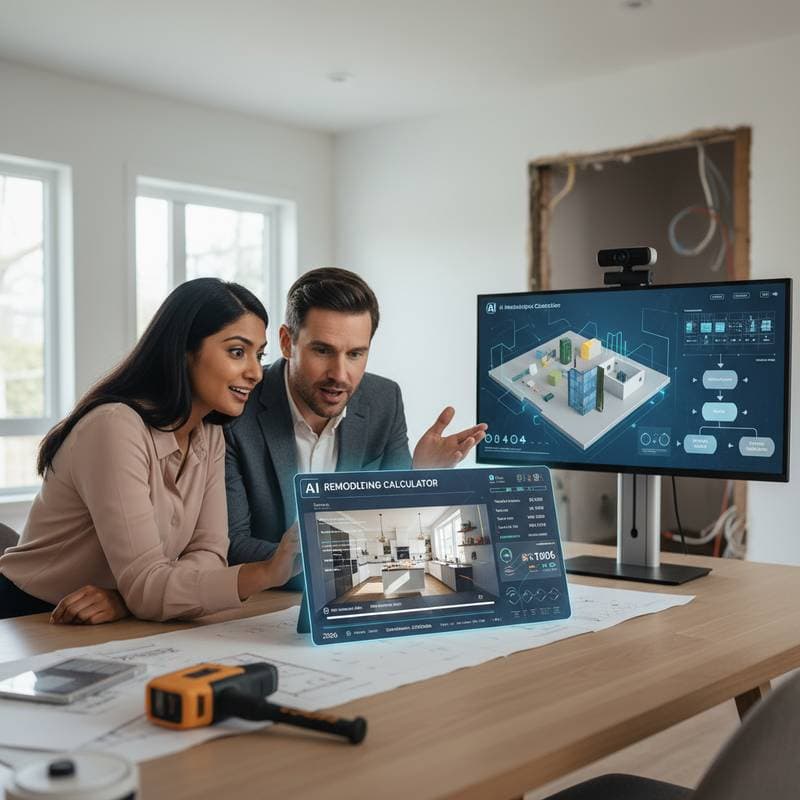
Consider evaluating a kitchen cabinet replacement. Rather than contacting several contractors or touring showrooms, access an AI-powered remodeling calculator. Upload photographs, choose materials, and obtain a comprehensive cost summary, labor projection, and timeline forecast immediately. The tool evaluates local prices for options such as quartz, butcher block, or laminate countertops, allowing visualization of budget constraints and design options prior to any physical work.
This evolution extends beyond convenience to promote data transparency and financial oversight. Conventional estimates frequently differ significantly, creating doubt about bid fairness for homeowners. AI platforms mitigate this variability by drawing from confirmed supplier records, area-specific labor rates, and past project outcomes. Such integration yields exceptional clarity in planning.
Mechanics of AI Remodeling Calculators
Contemporary AI remodeling calculators employ multilayered data frameworks that examine thousands of completed renovation initiatives. They incorporate factors including square footage, material grades, local labor costs, and supply price variations due to seasons. Numerous systems connect with home scanning applications to generate digital representations of spaces, enabling the AI to propose layouts and materials aligned with aesthetic preferences and structural limitations.
Essential capabilities encompass:
- Visual Analysis: Submit images or videos for the AI to detect current materials and installations, followed by recommendations for harmonious enhancements.
- Adaptive Cost Projections: Expenses update in real time with plan alterations, for example, transitioning from ceramic to porcelain tiles or enlarging a kitchen island.
- Return on Investment Forecasts: Evaluate prospective property value gains using market statistics to guide selection of upgrades with strong financial returns.
- Environmental Assessments: Track ecological effects and recommend sustainable materials or energy-saving installations that yield enduring cost reductions.
Achieving Accurate Budgets and Informed Choices
A primary advantage of AI remodeling tools lies in their precision for budgeting. Modeling a kitchen overhaul, which formerly demanded multiple expert discussions, now requires approximately twenty minutes. For instance, a standard kitchen renovation may range from twelve thousand to twenty thousand dollars, varying by location and quality tier. The AI identifies savings opportunities, such as selecting semi-custom cabinetry over fully bespoke options or engineered wood flooring instead of solid hardwood while preserving aesthetic quality.
These details allow homeowners to distribute funds strategically. Uncertainty no longer forces compromises; informed exchanges become possible. Contractors gain efficiency as well, with fewer iterations on quotations that minimize time and irritation for all parties.
Enhancing Safety and Regulatory Adherence in Design
AI remodeling tools extend their utility to safety and compliance measures. Embedded databases consult local building regulations, identifying design elements that necessitate permits or contravene standards. During a bathroom remodel involving plumbing relocation, the system notifies users of code stipulations or advises engaging certified specialists for that segment. This forward-thinking support prevents expensive modifications downstream.
Certain advanced platforms produce organized material inventories by project phase, guaranteeing appropriate purchase volumes and minimizing excess. This accuracy fosters sustainability and operational efficiency, curtailing discarded leftovers from projects.
Integrating Human Expertise
Although AI tools demonstrate advanced capabilities, human involvement proves indispensable. Algorithms forecast expenses and suggest configurations, yet personal vision, stylistic inclinations, and spatial affinity resist automation. Optimal outcomes arise from blending technological data with artisanal skill, innovative thinking, and practical knowledge. View AI as a supportive collaborator that manages analytical foundations, freeing focus for elements of style and utility.
Expert advice stays crucial for load-bearing modifications, electrical revisions, and complex setups. AI identifies hazards, but qualified professionals apply those findings to uphold local standards.
Advancing Sustainability Through Innovation
AI remodeling platforms propel environmentally sound renovation methods. By reviewing product lifespans and energy efficiency metrics, they direct users to viable sustainable selections. Installing low-flow plumbing or high-efficiency appliances involves initial investment but lowers ongoing utility expenses. Calculators forecast these reductions, illustrating how responsible choices benefit the environment and household economics over time.
Several tools assess the carbon emissions associated with material selections. Options like reclaimed lumber, recycled metals, or low-VOC coatings receive designations as superior for ecological impact. Embedding these evaluations in planning signifies a growing emphasis on conscientious home improvement.
Sustaining Design Post-Completion
After finishing a renovation, AI tools continue to contribute. Integration with intelligent home ecosystems monitors upkeep routines, energy consumption, and operational data. Detection of suboptimal HVAC performance triggers notifications, averting major repair costs.
Developing Practical Expertise
Individuals interested in direct participation in home improvements find AI remodeling tools instructive and developmental. They function as dynamic educators, clarifying material suitability for humid environments or the influence of lighting on hue perception.
The trajectory of renovation emphasizes partnership between analytical precision and creative discernment, quantitative data and qualitative design.