
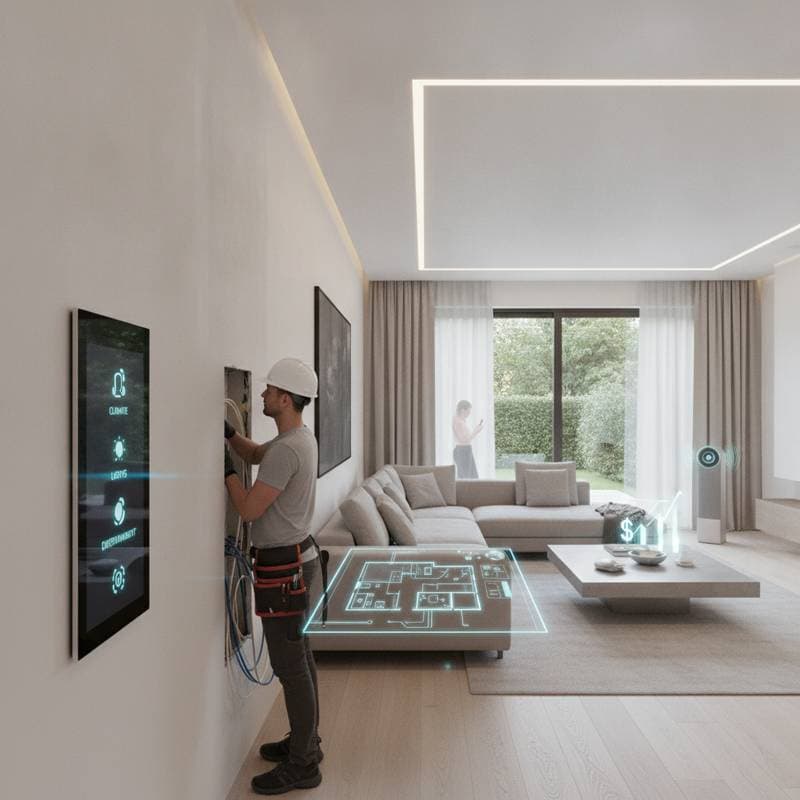
Estimating 2026 Smart Home Integration Remodel Costs
Smart home integration turns everyday houses into responsive environments. Connected thermostats adjust to routines. Voice controlled lights respond instantly. Automated security monitors activity around the clock. These features deliver comfort, lower operating costs, and added resale value when planned during a remodel.
This guide presents clear cost ranges, installation timelines, and selection criteria. Readers can compare do it yourself options against professional systems and decide what fits their budget and skill level.
System Categories and Cost Breakdown
Treat smart home integration as coordinated systems rather than isolated gadgets. Each category affects both daily performance and total project expense.
Smart Climate Control
Basic smart thermostats start at 250 dollars. Multi zone HVAC controls reach 2500 dollars. Professional installation adds 300 to 1200 dollars. Homeowners typically see utility reductions of 10 to 15 percent after the first year.
Lighting Automation
Smart bulbs and switches cost 2 to 10 dollars per square foot. A full centralized lighting system installed during construction ranges from 5000 to 15000 dollars. Motion sensors and preset scenes let residents activate evening or security modes with one command.
Security and Surveillance
A layered system of locks, cameras, and sensors costs 1000 to 5000 dollars. High definition video with cloud storage increases the upper limit. Professional monitoring services add 20 to 50 dollars each month. Plan conduit routes for outdoor cameras before walls are closed.
Audio and Entertainment Integration
Wireless multi room audio begins near 3000 dollars. High fidelity wired systems exceed 20000 dollars. Concealed speaker wiring installed during the remodel removes visible cables and improves acoustics.
Smart Appliances and Kitchen Tech
Connected refrigerators, ovens, and dishwashers add 2000 to 5000 dollars per unit. Integration into a single platform may require a technician visit to confirm compatibility.
DIY versus Professional Installation
Some devices suit weekend projects. Others demand licensed expertise.
- Smart bulbs, plugs, and thermostats work well for DIY users through simple app pairing.
- Security cameras and locks require voltage checks before installation.
- Lighting control panels must meet electrical codes and are best left to professionals.
- HVAC integration involves safety interlocks that licensed technicians handle.
- Central automation hubs need configuration to avoid network conflicts.
Small device additions remain practical for most homeowners. Whole home systems benefit from professional oversight to maintain reliability and code compliance.
Regional Cost Variations and Labor Rates
Hourly rates differ by market. Electricians charge 75 to 150 dollars. Low voltage technicians bill 65 to 120 dollars. System programmers range from 100 to 200 dollars. Bundling electrical, HVAC, and automation under one contract reduces scheduling overhead.
Routine Maintenance Practices
Firmware updates performed quarterly keep devices secure. Wi Fi coverage checks identify dead zones that need extenders. Annual battery replacement in sensors prevents false alerts. Professional inspections once a year verify wiring integrity. Periodic review of automation schedules keeps routines aligned with changing household patterns.
Maximizing Daily Value
A well executed smart remodel reduces energy waste and simplifies security management. Residents gain consistent comfort and remote oversight without added complexity. Continued attention to updates and inspections protects the initial investment over many years.