
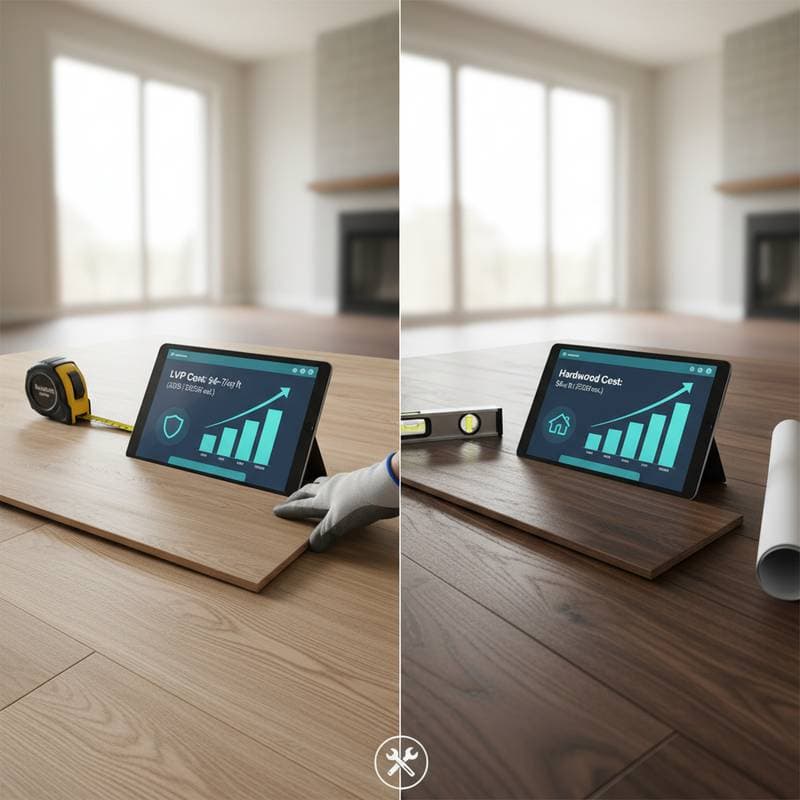
LVP vs Hardwood: True 2026 Installation Costs Revealed
Homeowners often face a key decision when selecting flooring: luxury vinyl plank or traditional hardwood. Both options elevate a home's appearance and functionality, yet they vary significantly in installation expenses, upkeep requirements, and enduring performance. A clear understanding of these aspects enables informed decisions that align with financial goals and daily living needs.
This analysis examines actual 2026 installation costs, expected service life, and aesthetic versatility for luxury vinyl plank and hardwood. It also identifies ideal applications within the home and contrasts outcomes of self-installation against professional services.
Real Installation Costs: Breaking Down the Numbers
Average Installed Price Per Square Foot
| Flooring Type | DIY Cost Range | Professional Installed Cost | Typical Room Total (200 sq. ft.) |
|---|---|---|---|
| Luxury Vinyl Plank | $2.50 - $4.50 | $5.00 - $8.00 | $1,000 - $1,600 |
| Engineered Hardwood | $4.00 - $6.50 | $8.00 - $12.00 | $1,600 - $2,400 |
| Solid Hardwood | $5.00 - $8.00 | $10.00 - $15.00 | $2,000 - $3,000 |
These figures encompass materials, adhesives, underlayment, and labor charges. Variations of 10 to 20 percent occur based on regional factors, such as elevated labor costs in urban centers where certified installers command premium rates.
Why the Gap Exists
-
Material Production: Hardwood derives from sustainably sourced timber, involving labor-intensive milling processes. Luxury vinyl plank, composed of multiple synthetic layers, benefits from efficient, large-scale manufacturing that lowers base material expenses.
-
Installation Demands: Hardwood installation necessitates subfloor acclimation for several days, followed by precise cutting, nailing or gluing, and potential on-site finishing. Luxury vinyl plank employs click-lock or peel-and-stick methods, often requiring only basic subfloor cleaning and leveling.
-
Surface Preparation: Hardwood typically demands custom staining and multiple coats of polyurethane for protection and sheen. Luxury vinyl plank emerges from the factory fully finished, ready for immediate use.
Durability and Longevity
Modern luxury vinyl plank flooring demonstrates robust resilience, featuring wear layers of 12 to 20 mils that shield against scratches, dents, and spills. This material excels in demanding zones such as kitchens, hallways, and pet-friendly homes, where it withstands daily foot traffic and occasional moisture exposure. High-quality installations maintain appearance for 15 to 25 years, influenced by usage intensity, routine care, and manufacturer specifications.
Hardwood flooring offers exceptional longevity, with solid variants enduring for decades or even centuries through periodic refinishing. Engineered hardwood, built on a stable plywood core topped with real wood veneer, supports one to three refinishing cycles. Both types demand controlled humidity levels between 35 and 55 percent to prevent warping or cupping, making them less ideal for humid climates without additional safeguards.
Design Flexibility and Aesthetic Impact
Advancements in luxury vinyl plank production yield planks with authentic wood-like visuals, including textured surfaces that replicate the grain of species like hickory or cherry. Options span narrow strips to expansive wide formats, ensuring seamless coverage in open-concept layouts. Uniform coloring across production runs minimizes visible seams, providing a cohesive look for expansive installations.
Authentic hardwood provides irreplaceable natural beauty, with each plank displaying unique grain patterns, color variations, and occasional knots that add visual interest. This organic variability enhances the warmth of living spaces and allows for custom finishes, from light oak washes to dark espresso tones. For hybrid approaches, consider luxury vinyl plank in utility areas like laundry rooms and genuine hardwood in formal zones to balance practicality and elegance.
DIY vs Professional Installation: Choosing the Right Path
When DIY Makes Sense
- Subfloors remain flat and stable, free of significant dips or rises exceeding 3/16 inch over 10 feet.
- Room configurations involve straightforward rectangular shapes with minimal obstacles like built-in cabinetry.
- Click-lock luxury vinyl plank systems eliminate the need for glues or heavy tools, relying on simple tapping and alignment.
- Budget constraints prioritize savings of $3 to $5 per square foot, offset by investing in quality underlayment for noise reduction.
When to Hire a Professional
- Hardwood projects involve intricate steps like tongue-and-groove fitting, on-site sanding, and multi-layer varnishing.
- Subfloors exhibit moisture issues or irregularities that require leveling compounds or vapor barriers.
- Layouts include intricate elements such as curved walls, multi-level transitions, or integrated heating systems.
- Long-term assurances matter, as certified installers provide warranties covering defects and improper settling.
Professionals utilize advanced equipment, including laser levels for precision alignment and industrial vacuums to minimize dust. For hardwood, their expertise prevents common pitfalls like gapping or uneven finishes, justifying the added expense through superior results and reduced future repairs.
Long-Term Benefits and Smart Upgrades
The enduring worth of flooring hinges on its integration with household routines and property objectives. Luxury vinyl plank suits active families, investment properties, or regions prone to flooding, delivering waterproof barriers, cushioned comfort, and modular replacement for isolated damages. Its low-maintenance profile frees time for other home priorities while preserving a modern, versatile aesthetic.
Hardwood elevates property appeal across resale markets, often recouping 70 to 80 percent of installation costs through increased buyer interest. Refinishing every 7 to 10 years refreshes the surface to match evolving decor trends, from minimalist neutrals to bold contrasts. This adaptability underscores hardwood's role in building lasting equity and personal satisfaction.
Protecting Your Flooring Investment
- Attach protective pads to the bases of furniture and appliances to distribute weight and avert surface scratches.
- Position durable mats at all exterior doors to capture dirt, sand, and debris before it reaches the floor.
- Monitor indoor humidity with a hygrometer and use dehumidifiers or humidifiers to sustain optimal levels.
- Address liquid spills promptly with absorbent cloths to prevent penetration and staining.
- Arrange biennial evaluations by flooring specialists to detect early signs of wear or structural shifts.