
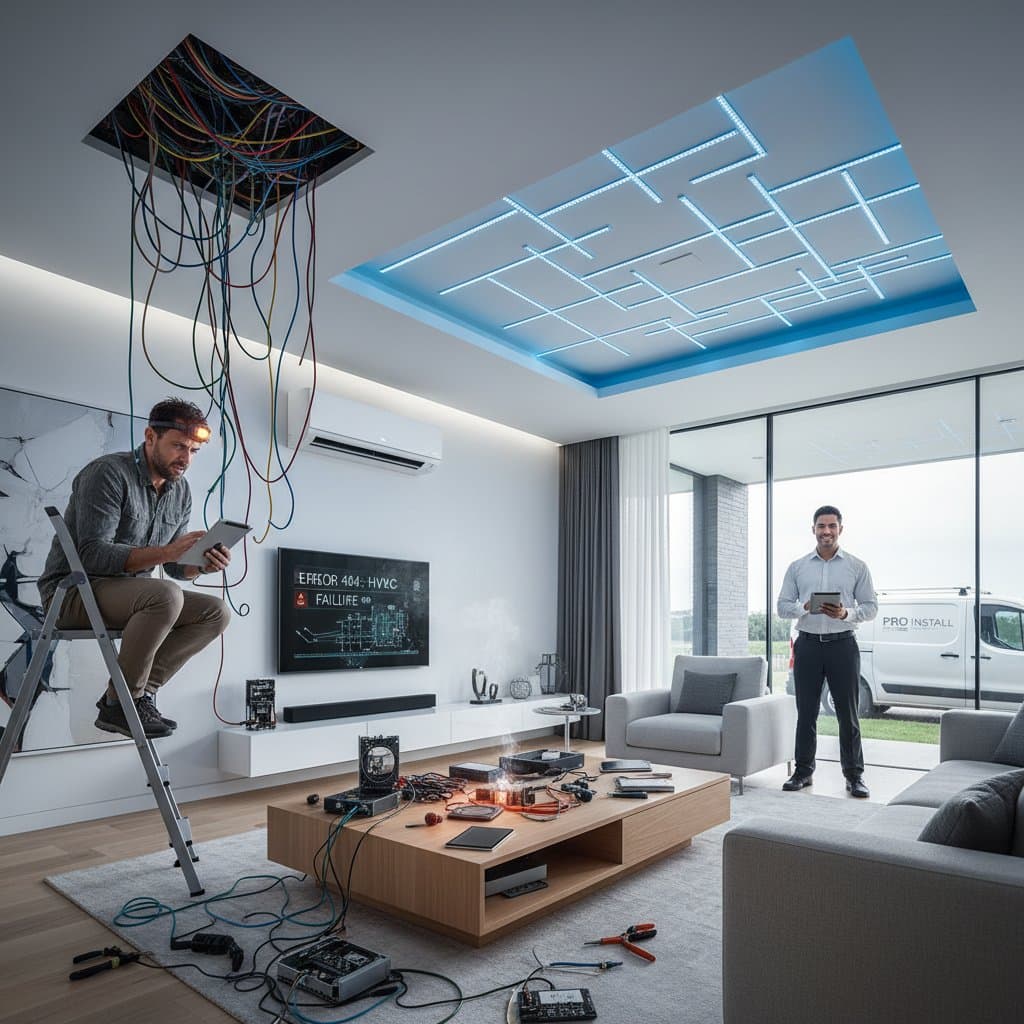
Why DIY Smart Home Installs Turn Risky in 2026
If you have ever tried to connect a smart thermostat or automate your lighting system, you know the satisfaction of seeing technology respond to your voice or phone. Smart homes promise convenience, energy efficiency, and modern comfort. Yet as devices grow more sophisticated, the line between a simple weekend project and full electrical integration has blurred. What once took minutes with an app now often involves rewiring, network security, and code compliance.
This article explores why DIY smart home installations have become more complex, what hidden dangers often go unnoticed, and how to decide when professional help is the safer route.
The Hidden Risks Behind DIY Smart Installs
The excitement of setting up a voice-controlled home can easily overshadow technical and safety challenges. The areas below show where DIY ambitions often collide with practical limits.
1. Electrical Safety Hazards
Many smart devices now tie directly into household wiring. Improper installation can lead to short circuits, overheating, and fire hazards. Smart switches require a neutral wire in most configurations. Older homes without one often prompt homeowners to improvise, which can violate local electrical codes and create dangerous backfeeds.
Ignoring breaker ratings or mixing low-voltage and high-voltage wiring in a single junction box can damage both the device and your home electrical infrastructure. A certified electrician understands how to balance load distribution and ensure compliance with safety standards.
2. Warranty and Insurance Complications
Manufacturers increasingly specify that smart devices must be installed by licensed professionals for the warranty to remain valid. If a self-installed smart thermostat malfunctions and damages your HVAC system, the warranty claim could be denied. Similarly, if a fire or electrical issue occurs due to non-compliant wiring, homeowner insurance may refuse coverage.
3. Structural and Aesthetic Damage
Running new wiring or mounting equipment often involves drilling into walls or ceilings. Without proper planning, you risk hitting plumbing lines, damaging insulation, or weakening structural supports. A small hole in the wrong spot can become an expensive repair. Professionals use specialized tools such as stud finders and inspection cameras to avoid these pitfalls.
4. Network Instability
Smart devices rely on strong, consistent connectivity. DIY setups often mix incompatible routers, extenders, and hubs, creating unstable networks. Devices may intermittently disconnect or fail to respond, leading to frustration and wasted time troubleshooting. A professional installer can design a mesh network that provides seamless coverage throughout your home.
5. Software Conflicts
Each brand operates on its own proprietary platform. Integrating multiple ecosystems without proper configuration can cause conflicts or automation loops. For example, lights may turn off when a motion sensor detects movement if triggers are incorrectly programmed. These issues are rarely dangerous but can make a smart home feel anything but intelligent.
When DIY Makes Sense
Not every smart home upgrade requires professional expertise. Simple plug-in devices such as smart plugs, Wi-Fi bulbs, or app-controlled outlets are generally safe for DIY installation. These projects offer a low-risk way to experiment with automation and gain confidence before tackling larger integrations.
Ideal DIY Projects
- Smart bulbs and plugs plug into existing fixtures with no wiring needed.
- Smart speakers and hubs use simple app-based setup.
- Standalone sensors are battery-powered and wireless, making them easy to reposition.
- DIY security cameras work well as long as they are wireless and do not require hardwiring into electrical systems.
These smaller projects build familiarity with app interfaces, automation routines, and troubleshooting without endangering your home wiring or warranty coverage.
When to Call a Professional
Certain installations cross into complex or hazardous territory. The scenarios below indicate that professional help is the wiser path.
Hardwired or High-Voltage Devices
Smart switches, thermostats, and integrated lighting often require direct wiring to mains power. If you are not trained to handle live electrical circuits, hire a licensed electrician.
Whole-Home Automation Systems
Connecting HVAC, lighting, and security into a unified automation hub demands network engineering skills. Professionals can map out communication protocols and ensure stable performance across multiple devices.
Structural Modifications
If installation requires drilling through walls, adding new outlets, or routing cables through attics or crawl spaces, a contractor or electrician should be involved to prevent code violations or hidden damage.
Data and Security Configuration
For systems that store sensitive information or control access points such as smart locks and cameras, cybersecurity expertise is essential. Professionals can set up encrypted connections and secure remote access channels.
Safety and Compliance Framework
Every smart home installation should follow three safety checkpoints. These checkpoints form a systematic approach that balances DIY enthusiasm with risk management.
1. Electrical Compatibility Check
Before installation, confirm voltage, amperage, and wiring needs. Use a multimeter to verify current flow and polarity. If your home wiring lacks a neutral or grounding system, stop and consult a professional.
2. Network Security Verification
Change all default passwords, enable two-factor authentication, and isolate smart devices on a separate network. This protects personal data and prevents unauthorized control. Schedule regular firmware updates to close security vulnerabilities.
3. Local Code and Warranty Review
Check local building codes for electrical work requirements. Many municipalities mandate licensed installation for certain smart systems. Review product warranties to confirm whether DIY installation is permitted.
Following these checkpoints ensures both safety and compliance, reducing the likelihood of costly mistakes.
Troubleshooting Common Issues
Even well-planned installations can encounter problems. Understanding common issues prepares you to respond quickly.
Flickering lights often indicate incompatible dimmer switches or wiring errors. Replace with a smart-compatible dimmer or consult an electrician. Disconnected devices usually stem from weak Wi-Fi signals. Upgrade to a mesh network or reposition routers. Voice assistant miscommunication may result from duplicate device names. Rename devices in your app for clearer control. App malfunctions often resolve after firmware updates or factory resets. Always back up your settings before resetting.
Document every step of your installation and configuration process. Keeping a written record simplifies troubleshooting and helps professionals diagnose problems faster if you need assistance later.
The Long-Term Cost of Cutting Corners
Many homeowners underestimate the long-term implications of a rushed smart home setup. A single wiring mistake can void warranties, reduce system efficiency, or cause device failures. Poorly configured automation can also waste energy rather than save it. For instance, a misprogrammed thermostat that repeatedly heats and cools the house unnecessarily can increase utility bills.
Professionals design systems that prioritize both performance and efficiency. They understand how to balance load, optimize sensor placement, and prevent overlapping commands. The result is a safer, more sustainable home that retains its value over time.
Planning Your Next Steps
If your goal is to enjoy a connected home without unnecessary risk, treat smart home installation as a partnership between DIY creativity and professional skill. Start small with low-voltage devices to build confidence. As your system grows, bring in certified experts for wiring, networking, and security integration.
When hiring help, look for credentials such as state electrical licenses, smart home certification from major manufacturers, and positive verified reviews. Ask for a detailed quote that includes parts, labor, and warranty terms. Clear communication prevents misaligned expectations.
Smart homes represent the future of comfortable, efficient living. They require expertise to function properly. By knowing where your abilities end and professional support begins, you protect your investment, your safety, and your peace of mind.