
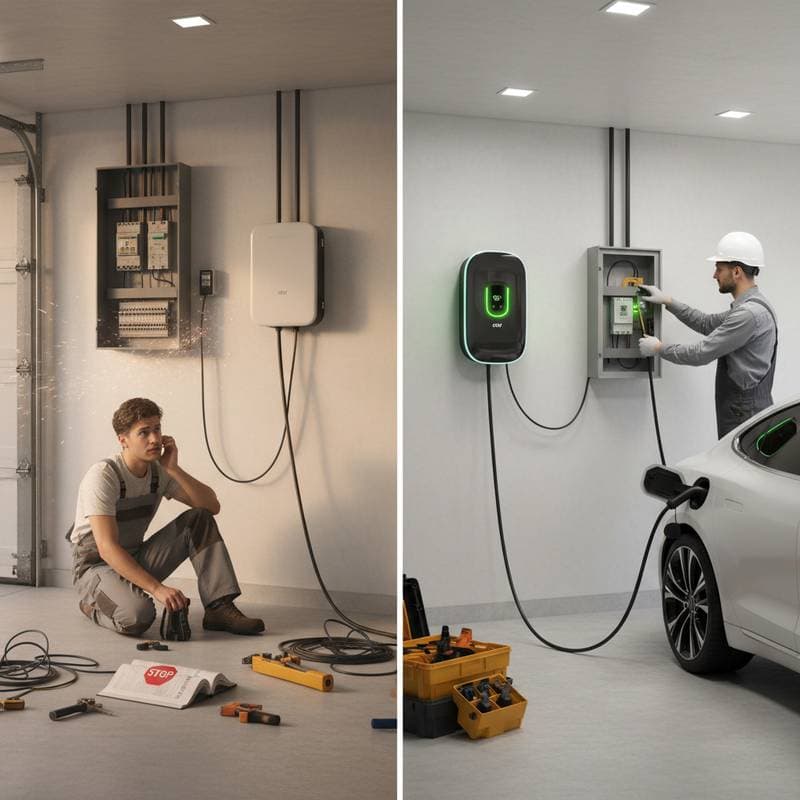
EV Charger Installation Costs: DIY Versus Professional Help
When a homeowner decides to add electric vehicle charging in the garage, the appeal of convenience meets questions of cost and complexity. Installing an EV charger involves more than mounting a unit. The choice between a do it yourself approach and hiring a licensed electrician affects safety, compliance, and long term property value.
Project Scope in Practical Terms
A homeowner stands in the garage with a new Level 2 charger still boxed. The vehicle charges slowly on a standard outlet. Faster charging requires a dedicated 240 volt circuit similar to those used by dryers or ovens. This step raises costs and complexity when the breaker panel sits near capacity or far from the installation site.
A Level 1 charger uses an existing household outlet. A Level 2 unit needs new wiring, a dedicated breaker, and often a permit. Costs rise when panel upgrades or long conduit runs become necessary.
Cost Breakdown
Professional installation of a Level 2 station averages between 600 and 2500 dollars. The charger unit accounts for 400 to 1200 dollars. Labor adds 300 to 1300 dollars. A panel upgrade, when required, adds another 1000 to 3000 dollars.
A skilled homeowner who performs the work can limit total spending to 400 to 1000 dollars when no panel changes are needed. Savings disappear if errors require later correction or trigger inspection failures. Urban labor rates push totals higher while newer suburban homes often fall at the lower end due to accessible wiring.
Steps in a DIY Installation
DIY work involves five main tasks. First, verify that the panel can accept the added load of a 240 volt circuit. Second, run new wiring through walls or ceilings. Third, install a dedicated breaker sized for the charger amperage. Fourth, mount the unit and make secure connections. Fifth, test voltage and amperage with a multimeter.
Each step carries risk. Undersized wire or loose connections can cause overheating or tripped breakers. Many manufacturers void warranties without proof of professional installation.
Benefits of Hiring a Licensed Electrician
A licensed electrician evaluates panel capacity, ensures code compliance, and installs proper grounding and conduit. The electrician obtains required permits and schedules inspections. Work typically finishes in three to six hours.
Documentation from a certified installer supports insurance claims and future home sales. When the panel is near capacity, the electrician can recommend load sharing devices that prevent overloads without a full upgrade.
Safety and Code Requirements
EV chargers draw high current for long periods. Local codes mandate dedicated circuits, correctly rated wire, and ground fault protection. Permits and inspections protect against hazards and keep insurance coverage intact. An unpermitted installation can lead to denied claims after an incident.
Long Term Value and Reliability
Professionally installed systems experience fewer service calls and maintain higher resale appeal. Buyers who own or plan to own electric vehicles notice clean, documented work. Experienced homeowners can complete safe DIY projects, yet many overlook load calculations or permit steps that later require professional correction.
Efficiency and Environmental Gains
Home charging during off peak hours lowers electricity costs and reduces grid strain. Energy Star rated units improve efficiency by up to 40 percent. Professional installations can include conduit sized for future higher power units or solar integration, avoiding later rework.
Practical Recommendations
Obtain at least three written quotes to compare labor and permit fees. Confirm the charger requires a 40 amp breaker and 8 gauge wire. Place the unit close to the parking spot to shorten wiring runs. Inquire about utility rebates before purchase. Size wiring for potential future vehicles to avoid repeated work.
Sustaining the Installation
A properly installed charger provides reliable service for a decade or longer. The decision between DIY and professional installation rests on electrical experience, local code demands, and the desire for documented compliance that protects both safety and home value.