
Key Points
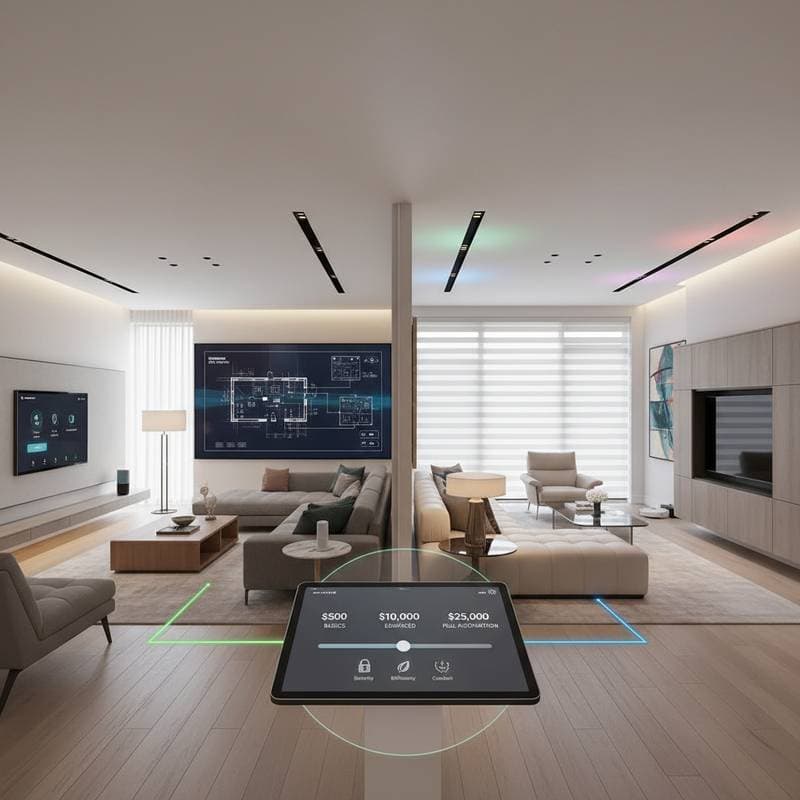
- Smart home enhancements span from several hundred dollars for basic devices to tens of thousands for comprehensive automation.
- Budget planning focused on energy efficiency, security features, and daily convenience maximizes long-term returns.
- Incorporating smart systems during home remodeling yields significant savings over later retrofitting efforts.
The Appeal of a Responsive Home
Picture returning home after a demanding day. Lights dim to a soothing level, window treatments adjust for optimal light, and a curated music selection plays gently throughout the space. This effortless welcome defines the essence of a thoughtfully designed smart home.
Such experiences depend on an interconnected network of sensors, central hubs, and specialized devices, each contributing to the overall expense. Homeowners often face the decision of integration depth while managing finances effectively. Grasping the cost structure, from core infrastructure to supplementary features, enables choices aligned with financial limits and lifestyle needs.
Analyzing Actual Expenses
Entry-level smart home configurations typically involve essential connected items, such as a programmable thermostat, video doorbell, or automated lighting controls. These initial investments range from $500 to $2,000, encompassing basic installation. Benefits include enhanced comfort and reduced energy use, with many systems recouping costs via lower monthly bills within the first year.
For instance, a Nest Learning Thermostat costs around $250 and learns user patterns to optimize heating and cooling. Pair it with Philips Hue smart bulbs at $50 each for three fixtures, plus a Ring Video Doorbell at $100, and the total approaches $500 without professional help. Installation adds $200 to $500 if hiring an expert for wiring adjustments.
Intermediate setups integrate various components for coordinated operation, with costs between $5,000 and $15,000. This level incorporates zoned lighting, voice-activated temperature controls, electronic door locks, and real-time energy trackers. Seamless functionality integrates into household routines, yet demands attention to device interoperability.
Consider adding a Yale Assure Lock at $250, integrated with an August Smart Lock adapter, alongside a Honeywell Home T10 Pro thermostat at $200. Expand with Ecobee sensors for room-specific climate control at $80 each and a full set of Lutron Caseta switches for $600. Professional setup ensures Wi-Fi stability and secure networking, pushing costs toward the higher end.
High-end or completely automated residences surpass $25,000 in expenditure. These advanced networks unify entertainment options, robust security measures, and climate regulation through a single control panel. Concealed cabling, powerful central processors, and expert deployment create a premium environment, though they necessitate ongoing technical support and periodic updates.
Examples include a Crestron Home automation system starting at $10,000 for core hardware, plus $5,000 for custom AV integration with Sonos speakers and a 4K projector setup. Security features like Arlo Ultra cameras at $400 per unit, combined with a full-home surveillance hub, add another $8,000. Custom programming and calibration by certified technicians complete the installation.
Strategic Integration in Remodeling Projects
During a home renovation, prioritize automation planning from the outset. Installing low-voltage cabling prior to enclosing walls avoids expenses that could reach thousands in future modifications. Pre-wiring for elements like motion sensors, surveillance cameras, or intelligent lighting provides adaptability without immediate full commitment.
Consult your contractor regarding electrical infrastructure compatibility with smart hubs. In older properties, upgrades to wiring or circuit panels may prove necessary to handle automated loads safely. This forward-looking strategy eliminates post-construction hurdles and supports scalable expansions.
For example, allocate $1,000 to $2,000 in a kitchen remodel for Cat6 Ethernet runs and conduit for future devices. This preparation allows easy addition of under-cabinet smart LEDs or appliance connectivity later, saving 30 to 50 percent compared to tearing open finished surfaces.
Weighing Self-Installation Against Expert Services
Numerous homeowners initiate their smart home with self-installed options. Wireless security cameras, intelligent power outlets, and internet-based lighting solutions install quickly and cost less than $300 per unit. These projects offer a gentle introduction, allowing users to identify preferred functionalities prior to broader commitments.
A Wyze Cam v3 at $35 provides 1080p video with night vision, while TP-Link Kasa smart plugs at $25 each enable remote appliance control. Govee LED strip lights for $50 offer app-based color changes. Total setup for three devices stays under $150, with setup time under an hour via smartphone apps.
Expert installation proves vital for complex integrations or sophisticated automation. Qualified technicians secure network performance, position devices for maximum coverage, and uphold data protection protocols. Labor typically increases the project budget by 10 to 20 percent, yet delivers dependable operation and a professional aesthetic.
Hire through platforms like the Custom Electronic Systems Association for vetted professionals. Expect $75 to $150 per hour, with a full mid-range system integration taking 8 to 12 hours. This service includes system testing, custom app configurations, and troubleshooting for optimal performance.
Addressing Security and Privacy in Connected Spaces
Smart homes depend on reliable internet access, which raises potential vulnerabilities in safety and data handling. Implement robust passwords, activate multi-factor authentication, and regularly update device software to mitigate risks. For new installations, confirm that all elements comply with local building codes and that technicians adhere to industry safety guidelines.
Privacy-conscious families should select devices with end-to-end encryption certifications and clear data usage policies. Opt for established manufacturers to benefit from reliable support and extended software updates. For instance, verify UL certification on hubs and FCC compliance for wireless components to ensure safe operation.
Additional measures include segmenting your home network with a guest Wi-Fi for IoT devices and using VPNs for remote access. Annual security audits, costing $200 to $500, can identify weaknesses before they become issues.
Experiencing the Benefits Daily
With a smart home operational, appreciation grows through everyday interactions. Notice how temperatures maintain ideal levels in sleeping areas during warm months or how illumination adapts seamlessly for evening activities. Gradually, the systems operate unobtrusively, enhancing routines without overwhelming them.
Over months, track savings via integrated apps; a smart thermostat alone can reduce heating costs by 10 to 15 percent annually. Security alerts provide peace of mind, while automation frees time for what matters most.
Practical Strategies for Effective Implementation
- Initiate with modest additions to evaluate features that align with your priorities.
- Select devices from a unified platform, such as Google Home or Amazon Alexa, to prevent integration challenges.
- Allocate funds for expert advice during multi-device setups to ensure smooth functionality.
- Focus initial investments on efficiency tools, like smart meters, for quantifiable financial gains.
- Assess internet speed and router capabilities prior to introducing bandwidth-intensive items like 4K cameras.
Effective smart living emphasizes thoughtful selection over gadget abundance. It fosters an environment that anticipates needs, adapts intelligently, and elevates quality of life sustainably.