
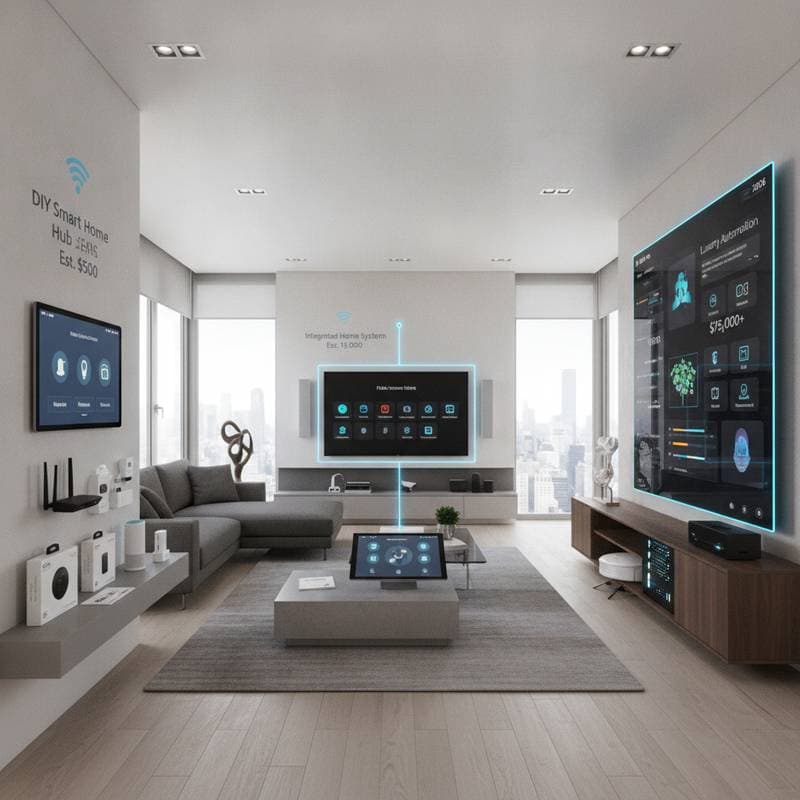
Smart Home Integration Costs in 2026
Homeowners planning smart home upgrades in 2026 face a wide range of investment levels. Costs depend on the number of connected systems, device selection, and whether professional installation is required. Basic setups remain accessible while comprehensive systems demand significant planning and resources.
Entry Level Smart Home Setups
Basic integrations start at five hundred dollars for simple device additions. These projects typically involve one or two categories such as lighting controls or basic security sensors. Homeowners complete most work themselves with minimal wiring changes.
Mid Range System Integrations
Projects that connect several systems fall between two thousand and fifteen thousand dollars. This level suits homes where lighting, climate, and security components share a central control point. Professional installation often forms part of the total because electrical work and programming become necessary.
Full Home Automation Projects
Luxury installations range from fifteen thousand to seventy five thousand dollars or more. Every major system operates through one hub, and custom programming matches the specific layout of the residence. These builds usually occur during new construction or major renovations.
The quoted ranges cover both equipment and labor. Final prices shift according to existing wiring conditions, the total number of controlled zones, and the chosen communication standards.
Hidden Costs and Long Term Factors
Upfront figures do not capture every expense that appears after installation. Ongoing connectivity and software support create recurring requirements.
- Monthly subscriptions for advanced features range from five to thirty dollars.
- Network equipment upgrades cost between three hundred and eight hundred dollars.
- Device replacement occurs every five to seven years as models reach end of support.
- Service visits address firmware issues or connectivity problems.
These items function as routine maintenance rather than unexpected problems. Consistent attention keeps the entire installation secure and able to accept newer products.
Regional Price Variations
Labor rates and equipment availability create noticeable differences across locations. Urban coastal markets carry twenty to thirty percent higher costs than suburban or rural areas. Remote sites may add travel charges when certified technicians are required.
Multiple quotes from certified installers help identify fair pricing. Manufacturer partnerships often extend warranty coverage when professionals handle the work.
Mistakes That Raise Total Expenses
Several common oversights cause budgets to expand beyond initial estimates.
- Purchasing devices before selecting a single control platform.
- Overlooking compatibility between different communication protocols.
- Failing to verify that the network can handle many simultaneous connections.
- Omitting surge protection for electronic components.
- Postponing firmware updates and battery changes.
Working backward from the desired outcome prevents most of these issues. Identify which systems must share data and which can operate independently.
Planning for Future Changes
Technology standards continue to advance. Devices that support open protocols such as Matter or Zigbee allow easier additions later. Setting aside at least ten percent of the initial budget covers upgrades without requiring a full replacement.
Running low voltage cable and conduit during construction adds little cost at the time yet prevents expensive retrofits. This step proves especially valuable for homeowners who expect to expand control over several years.
Steps That Support Successful Results
- Begin with the functions that deliver the clearest daily benefit.
- Confirm power access and reliable connectivity at every planned device location.
- Install one or two sample devices before committing to an entire system.
- Apply strong network security measures and maintain a separate router for smart equipment.
- Retain all manuals, serial numbers, and configuration records.
These actions keep both the system and the budget under control.
Daily Experience After Installation
A completed smart home changes how residents move through their space. Lighting scenes adjust automatically to match activities while temperature settings respond to occupancy patterns. The result is steady comfort supported by efficient operation.