
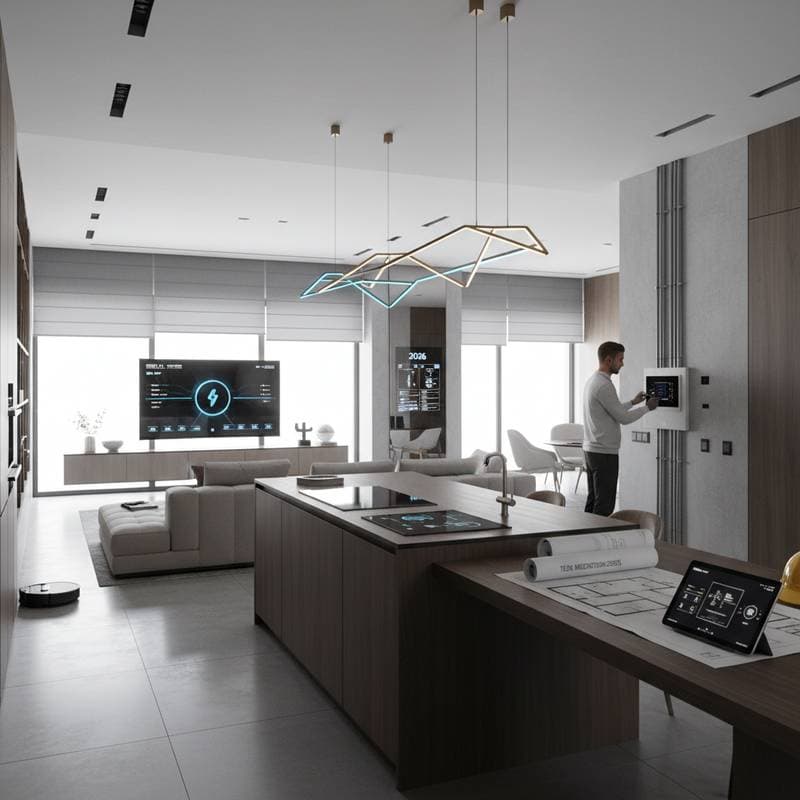
Understanding Smart Technology Costs in 2026 Home Remodels
Homeowners planning remodels in 2026 increasingly view smart technology as a core component rather than an optional add-on. These systems enable homes to respond intuitively to daily routines, from adjusting temperatures based on occupancy to securing entry points remotely. Integrating such features during renovation ensures seamless compatibility and avoids future disruptions.
The shift toward smart integration stems from advancements in affordability and reliability. Devices now connect effortlessly through standardized protocols, creating unified ecosystems that enhance both functionality and aesthetics. Early planning allows for cost-effective choices that align with overall project goals.
Why Integrate Smart Features into Your Remodel
Smart technology appeals to homeowners seeking efficiency and security. Systems that monitor energy use help reduce waste, while automated controls simplify maintenance. For instance, integrating smart elements during a kitchen remodel can synchronize appliances with lighting and ventilation for optimal performance.
Beyond convenience, these upgrades contribute to sustainability. Many devices comply with energy standards that lower consumption without sacrificing comfort. Homeowners who prioritize such features often report higher satisfaction and easier resale processes.
Budgeting requires assessing the scope of integration. Basic setups focus on individual rooms, whereas comprehensive plans encompass the entire property. Consulting local trends reveals that midrange remodels allocate 10 to 20 percent of budgets to smart components.
Detailed Cost Breakdown for Essential Smart Upgrades
Costs vary based on brand quality, installation complexity, and home size. Homeowners should compare options from established manufacturers to ensure durability and support. Below is a breakdown of average expenses for key categories.
-
Smart Lighting Systems: Basic Wi-Fi-enabled bulbs for a standard living room cost approximately $300, including basic hubs. Advanced setups with sensors, dimmers, and app controls for multiple rooms range from $1,500 to $2,500. Factor in wiring updates if replacing traditional fixtures.
-
Intelligent Thermostats: A single high-end model with learning algorithms and remote access starts at $250. Professional installation, which includes wiring to the HVAC system, adds $150 to $300. For larger homes, zoning systems that control multiple areas can total $800 or more.
-
Home Security and Access Controls: Entry-level video doorbells and smart locks cost $300 to $600 per unit. Comprehensive systems with cameras, motion detectors, and facial recognition for the entire property range from $2,000 to $4,000. Annual monitoring subscriptions add $200 to $400.
-
Connected Appliances: Smart refrigerators with inventory tracking and energy monitoring begin at $1,500. Ovens and washers with app-based controls cost $800 to $2,500 each. Full kitchen integration, including voice compatibility, pushes totals to $5,000 or higher.
-
Central Automation Hubs: Devices that unify lighting, climate, and security start at $1,000 for basic models. Advanced hubs supporting voice assistants and custom routines range from $3,000 to $6,000, including setup. These prevent compatibility issues across devices.
A typical remodel incorporating moderate smart features adds $6,000 to $18,000 to the overall budget. Luxury installations with custom programming and whole-home coverage often exceed $30,000 but yield returns through efficiency gains.
Ensuring Compatibility and Professional Installation
Compatibility forms the foundation of a reliable smart home. Verify that devices support common standards like Zigbee or Z-Wave to avoid silos. Assess your internet bandwidth early, as multiple devices demand robust connectivity to function smoothly.
Professional involvement proves essential for complex setups. Electricians certified in smart systems handle wiring and integration, preventing hazards like overloads. Expect labor costs of $500 to $2,000 depending on project scale.
Security considerations extend beyond physical locks. Choose systems with encryption and regular updates to protect against breaches. Schedule annual audits to maintain performance and address emerging vulnerabilities.
Budget for ongoing expenses as well. Subscriptions for cloud services and premium features range from $15 to $60 monthly. Firmware updates ensure devices remain current, often requiring minimal professional intervention.
Maximizing Sustainability and Financial Returns
Smart technology drives sustainability by optimizing resource use. Thermostats that adjust based on weather forecasts can cut heating costs by 10 to 20 percent. Lighting systems with occupancy sensors reduce electricity bills similarly.
Water management tools, such as leak detectors, prevent damage and waste. Automated shading controls maintain comfortable temperatures, decreasing reliance on air conditioning. These features align with green building certifications that appeal to eco-conscious buyers.
Long-term value emerges from combined savings and enhancements. Studies indicate smart homes sell faster and at premiums of 5 to 10 percent. Track utility reductions post-installation to quantify benefits and justify investments.
Steps to Implement and Maintain Your Smart Remodel
Begin by mapping your home's layout and identifying priority areas. List desired features, such as voice control in bedrooms or security in entryways, to guide selections. Obtain quotes from multiple contractors to compare integrated solutions.
During installation, test components incrementally to catch issues early. Post-remodel, create user guides for family members to foster adoption. Regular maintenance, including battery replacements and software checks, sustains reliability.
Ultimately, a well-planned smart remodel elevates daily life through intuitive support. Homeowners gain peace of mind from secure, efficient spaces that adapt to needs. With strategic budgeting, these investments deliver enduring comfort and value.