
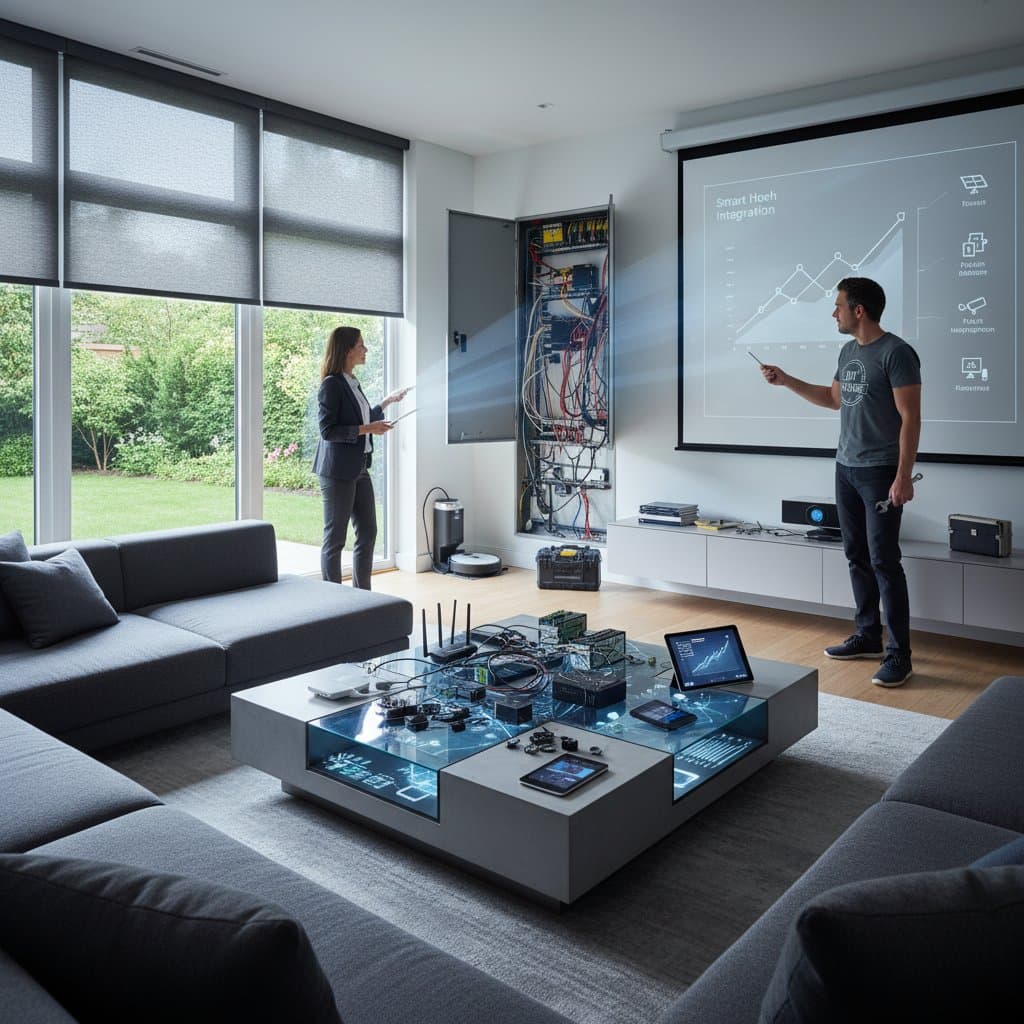
The Hidden Costs of Smart Home Remodels
Homeowners envision a smart remodel as a pathway to enhanced living, with automated lights that mimic natural daylight, self-adjusting blinds, and thermostats that anticipate personal preferences. This vision draws many toward technology-driven upgrades that promise efficiency and modern aesthetics. However, beneath these appealing features exists a web of expenses that frequently emerge only after the project advances.
Enthusiasm for smart home integration often leads homeowners to underestimate the full financial commitment. Invoices for network enhancements, expert integrations, and ongoing upkeep can transform initial optimism into financial strain. Early awareness of these elements enables better budgeting, informed choices between self-installation and professional services, and the creation of durable, interconnected living spaces.
Essential Infrastructure for Seamless Connectivity
Smart homes depend on robust wiring, reliable connectivity, and optimized power distribution to function effectively. Budgets typically account for surface-level devices while overlooking the supporting systems. Retrofitting established residences to support high-bandwidth networks presents significant challenges.
Key infrastructure requirements include:
-
Specialized wiring for lighting and security
Costs range from $2 to $5 per square foot, influenced by wall construction. Structures with plaster or brick demand additional labor, potentially doubling expenses. -
Upgraded networking solutions
Mesh Wi-Fi networks with several nodes cost $400 to $1,000, plus $300 for expert setup. For dependable performance in entertainment areas or workspaces, wired Ethernet installations incur higher fees. -
Electrical system expansions
Devices like intelligent heating, ventilation, and air conditioning units, along with motorized shades, require extra circuits. Panel upgrades fall between $1,200 and $3,000, based on current infrastructure.
These components prove indispensable. Inadequate foundations lead to delays, signal interruptions, and unreliable operations. As connectivity expands, reliance on this unseen framework intensifies.
Recurring Expenses in Smart Home Ecosystems
The industry model for smart devices emphasizes ongoing payments beyond initial purchases. Homeowners focus on device prices, yet subscription charges accumulate steadily.
Examples of these fees encompass:
-
Cloud-based video storage for surveillance
Providers bill $5 to $15 monthly per camera for recording and access. Systems with multiple units may exceed $100 per month. -
Premium features in control applications
Platforms reserve functions like automation routines, voice commands, and usage analytics for paid levels. -
Support for updates and warranties
Some companies provide subscription plans for firmware maintenance and device compatibility. Absence of such plans risks obsolescence with emerging technology.
Across five years, these costs often match or surpass upfront investments. A project starting at $10,000 may reach $15,000 or higher with sustained fees included.
Protecting Data and Securing Networks
Each internet-enabled gadget creates a vulnerability point in the household. Systems such as digital locks and assistants transmit data via the cloud, heightening risks of breaches without safeguards.
Necessary protective measures involve:
-
Expert network assessments priced at $200 to $500
-
Specialized routers or firewalls from $150 to $400
-
Ongoing vulnerability management through software patches
These investments enhance safety without altering appearances. With increasing device proliferation, digital defense rivals traditional locks in importance.
Integrating Sustainability into Smart Upgrades
Technology-driven renovations can align with environmental goals through adaptable designs. Select systems that permit modular expansions to minimize waste and replacement needs. Prioritize options compatible with open standards for flexible updates.
Maximize existing setups by converting standard switches to intelligent versions rather than full replacements, saving substantial amounts and simplifying processes. Opt for verified energy-saving products from neutral certifiers to ensure genuine benefits.
Extend eco-friendly practices to structural elements like cabinetry and surfaces integrated with smart features. This approach yields harmonious, lasting improvements.
Strategies for Long-Term System Care
Completion of a smart remodel marks the beginning of maintenance responsibilities. Routine firmware refreshes, power source renewals, and performance checks sustain functionality.
Establish a schedule for seasonal evaluations to assess integrations, apply updates, and adjust settings to current needs. Address issues promptly to prevent escalation and preserve the system's value.
Planning a Cost-Effective Smart Remodel
Approach smart home projects with a comprehensive budget that incorporates all identified costs. Consult certified professionals early to evaluate infrastructure needs and recommend scalable solutions. Balance innovation with practicality to achieve a connected home that enhances daily life without unforeseen financial burdens.