
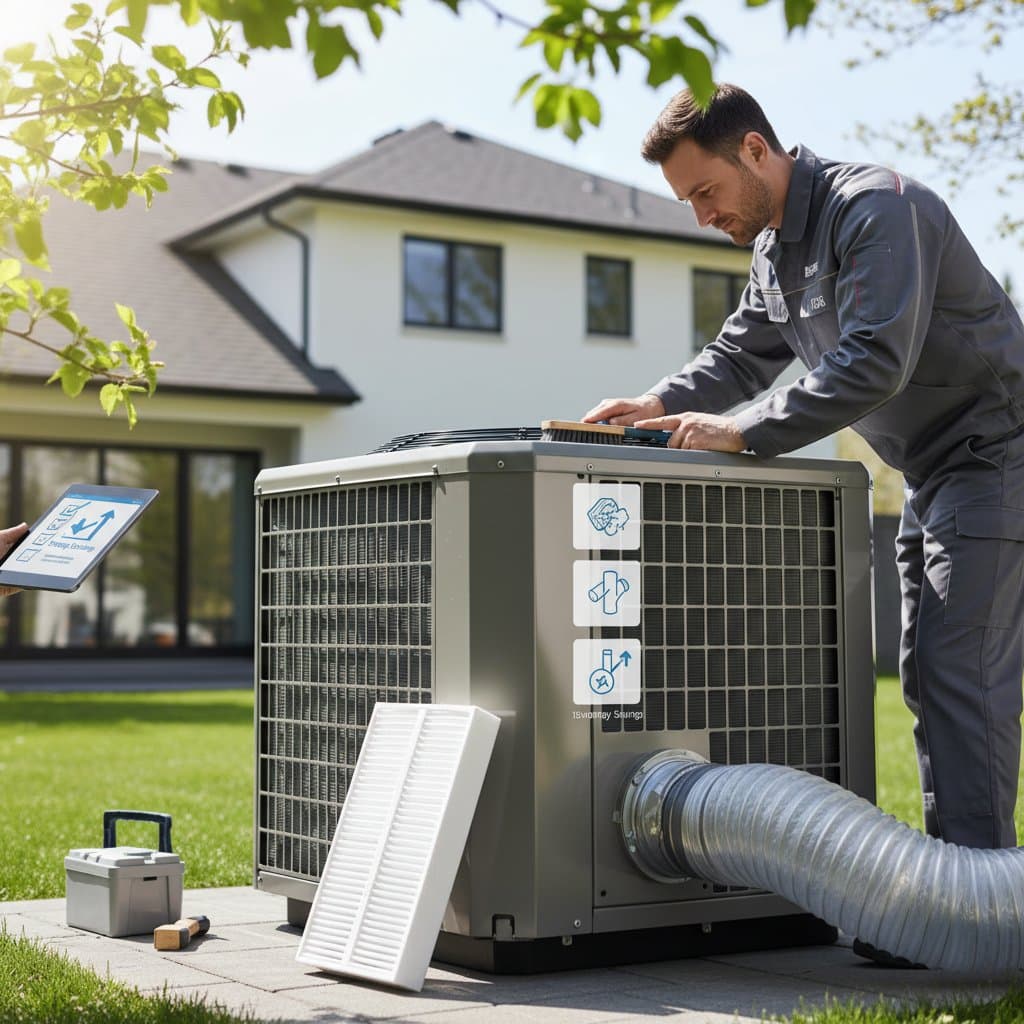
Spring HVAC Maintenance Checklist
Spring offers the best window to prepare your HVAC system for summer demands. A focused tune-up improves efficiency and reduces the risk of costly failures during peak heat.
- Replace or clean air filters on a regular schedule.
- Verify thermostat accuracy and consider an upgrade.
- Run a full system test to catch issues early.
- Inspect electrical connections for safety and performance.
- Seal air leaks around the system and throughout the home.
Replace Filters on Schedule
Dirty filters restrict airflow and force the system to work harder. Homeowners should change filters every one to three months based on pets, dust levels, and usage.
Pleated filters rated MERV 8 to 11 provide strong filtration without restricting airflow. Reusable filters require thorough washing with mild soap and warm water followed by complete drying before reinstallation. Skipping this task can cut airflow by up to 30 percent.
Verify Thermostat Accuracy
An imprecise thermostat wastes energy through uneven heating or cooling. Smart models learn household patterns, allow remote adjustments, and generate usage reports that highlight savings opportunities.
Upgrading from a manual unit can reduce annual heating and cooling costs by about 10 percent. Compare the thermostat reading against a separate thermometer in the same room and recalibrate or replace the unit if readings differ.
Test System Operation Early
Run the system in cooling mode before outdoor temperatures climb. Early testing reveals problems while technicians still have open appointments.
Lower the thermostat a few degrees and check each vent for steady airflow. Listen for rattling or buzzing, and confirm that cool air arrives within minutes. Warm or weak output often signals low refrigerant or compressor trouble that requires professional service.
Inspect Electrical Connections
Loose or corroded wiring reduces efficiency and creates safety risks. Always shut off power at the breaker before removing any access panels.
Look for frayed insulation, burn marks, or loose terminals. Tighten visible screws with an insulated screwdriver. Any deeper electrical diagnostics belong to a licensed technician, with typical service calls costing between 100 and 200 dollars.
Seal Gaps and Improve Insulation
Even an efficient HVAC unit loses performance when conditioned air escapes. Check attic doors, recessed lights, window frames, and openings around pipes or wires.
Apply expanding foam or weatherstripping to close visible leaks. These steps lower the cooling load and deliver the greatest benefit in older homes.
Consider High-Efficiency Upgrades
Systems older than ten years often justify replacement. New units with SEER ratings of 16 or higher, variable-speed compressors, and smart zoning deliver cooling cost reductions up to 30 percent.
Installed prices range from 4000 to 8000 dollars, yet utility rebates and long-term energy savings frequently offset the investment.
Address Minor Problems Quickly
Regular care does not eliminate every issue. Use this table to identify and resolve common faults before they worsen.
| Problem | Likely Cause | Quick Fix |
|---|---|---|
| Weak airflow | Dirty filter or blocked vent | Replace filter and clear obstructions |
| Warm air output | Low refrigerant or dirty coil | Schedule professional inspection |
| Unusual noises | Loose parts or worn belt | Tighten screws or replace belt |
| Water accumulation | Clogged condensate drain | Flush with vinegar or use wet-dry vacuum |
| Thermostat failure | Dead batteries or wiring fault | Replace batteries or inspect connections |
Shut the system down and call for service if basic steps fail to restore normal operation.
Protect Your Equipment Investment
Consistent spring attention extends equipment life and stabilizes monthly energy costs. Track filter changes, cleaning dates, and service visits in a simple log to support warranty claims and performance reviews.