
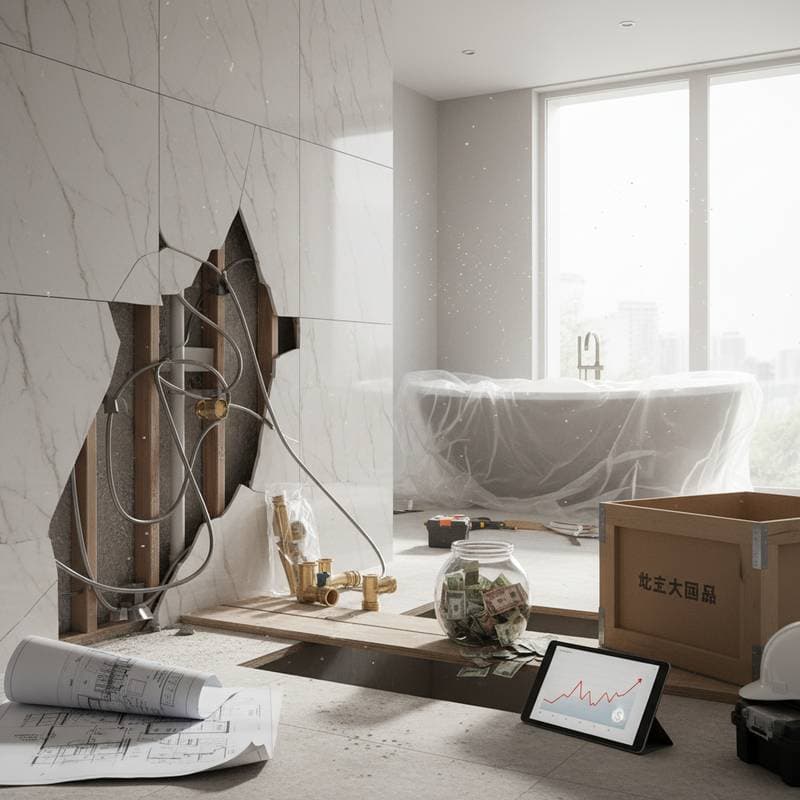
The Hidden Costs of Luxury Bath Remodels
A newly remodeled luxury bathroom evokes the tranquility of a high-end spa, with polished marble surfaces, seamless glass enclosures, and soft, layered lighting that invites relaxation. Homeowners often envision this serene escape, but the path to realization involves numerous unforeseen expenses that can strain finances. Recognizing these elements early allows for better planning and a smoother renovation process.
Initial budgets typically account for visible upgrades, yet premium choices and technical demands quickly escalate totals. A project that starts at $20,000 may surpass $40,000 once all factors emerge. Homeowners benefit from detailed cost breakdowns to safeguard their investment and maintain project momentum.
Materials That Quietly Add Up
Premium materials define the sophistication of a luxury bathroom, but their selection demands careful cost evaluation. Transitioning from basic options to high-quality imports or bespoke elements reveals substantial price differences.
- Natural stone for floors or walls costs $20 to $50 per square foot, though custom patterns, precisely matched slabs, or advanced sealing treatments can elevate expenses to $100 or more.
- Solid surface countertops in quartz or marble begin at $75 per square foot, with exotic varieties exceeding $150, including edging and polishing.
- Custom vanities crafted from hardwoods or reclaimed wood range from $3,000 to $8,000, encompassing hardware, protective finishes, and professional installation.
Beyond base prices, account for material waste during cuts, shipping charges from distant suppliers, and corrections for fabrication mistakes, which collectively increase costs by 10 to 15 percent. Selections like brushed brass hardware or cascading faucets also influence related plumbing and aesthetic cohesion, amplifying overall expenditures.
Plumbing Complexities Beneath the Surface
Luxury features extend beyond aesthetics to functional enhancements that require expert plumbing. Elements such as radiant floor heating, expansive rainfall showers, and elegant freestanding tubs necessitate custom configurations not found in routine setups.
Relocating drains or supply lines during layout changes often involves breaching concrete slabs or subfloors, incurring $1,000 to $3,000 in labor and repairs. In older structures, upgrading pipes to accommodate contemporary water pressure adds several thousand dollars prior to surface work.
Spa-inspired additions like steam enclosures or multi-jet systems demand integrated water purification and dehumidification to safeguard surfaces and inhibit mold. Proper installation of these components ranges from $1,500 to $5,000, ensuring reliability and longevity.
Electrical Upgrades Hidden Behind the Walls
Strategic lighting elevates the ambiance of a luxury bathroom, with options like recessed fixtures, wall-mounted sconces, and illuminated mirrors providing versatile illumination. Implementing these requires dedicated wiring, control systems, and sometimes additional circuits to manage increased power needs.
Electricians bill $75 to $150 per hour, and intricate setups may span multiple days. Features including heated towel warmers, interactive mirrors, and automated climate controls introduce further intricacy, raising electrical allocations by 20 to 30 percent.
In established homes, legacy wiring seldom complies with current regulations, necessitating comprehensive overhauls that cost $2,000 to $4,000. Addressing these upgrades averts hazards and secures approval during inspections.
Design Fees and Project Management
Achieving a cohesive luxury design typically involves collaboration with specialists who handle sourcing, coordination, and execution. Architects, interior designers, and managers bring precision that minimizes errors, though their involvement incurs dedicated fees.
Designers often apply flat rates of $2,000 to $6,000 or hourly charges from $100 to $250, depending on project scale. Managers oversee operations for about 10 percent of construction expenses, contributing $5,000 to $10,000 in a standard undertaking.
Self-management appeals to some, but luxury projects feature interdependent trades and precise timelines. Coordination lapses between specialists can lead to delays or corrections costing thousands; professional guidance mitigates such risks effectively.
Permits and Inspections
Significant alterations to a bathroom trigger regulatory oversight, regardless of its private nature. Permit fees vary by locality and project extent, generally falling between $300 and $1,500, with structural or plumbing modifications potentially doubling that amount.
Multiple inspections verify adherence to building codes and safety protocols, each introducing scheduling pauses and risks of required adjustments. Budget for these administrative steps alongside potential timeline extensions.
Bypassing permits invites complications, as documentation proves essential for resale appraisals or insurance evaluations. Incomplete records may diminish home value or hinder claims processing.
The Cost of Downtime
Disruption from a remodel affects daily routines, as primary bathroom access halts for weeks or longer. Alternatives such as portable facilities or temporary accommodations generate additional outlays ranging from hundreds to thousands of dollars.
Extended durations due to contractor availability or supply issues compound these burdens. Incorporate timeline contingencies and reserve funds to accommodate living disruptions without derailing the budget.
The Sustainability Premium
Incorporating eco-conscious elements supports environmental priorities and yields future efficiencies, yet demands higher initial investments. Water-conserving showerheads, efficient toilets, and energy-saving lights trim utility expenses, but elevate the budget by 10 to 20 percent.
Non-toxic paints and durable finishes promote health and endurance, often requiring specialized procurement or application techniques that increase labor. Options like recycled glass tiles, bamboo storage, and regional stone enhance green credentials while raising unit costs incrementally.
These selections deliver returns via reduced consumption and extended service life, justifying the upfront commitment for forward-thinking homeowners.
Hidden Structural Surprises
Demolition frequently exposes concealed defects that transform routine work into extensive repairs. Issues such as concealed water intrusion, decayed flooring, or microbial contamination around legacy pipes escalate scope dramatically.
Remediating moisture damage spans $500 to $2,000 based on extent, while subfloor replacement or beam reinforcement adds $1,000 to $3,000. In vintage properties, addressing hazardous materials like asbestos or lead demands certified remediation exceeding $4,000.
Allocate 10 to 15 percent of the budget as a contingency to handle discoveries calmly, preserving financial stability amid uncertainties.
Maintaining Your Investment
Preserving the elegance of a luxury bathroom involves ongoing attention to detail. Stone surfaces require resealing annually or biennially to resist stains, and grout demands routine maintenance to retain vibrancy and strength.
Advanced fixtures may need firmware refreshes or component swaps as innovations evolve. Dedicate 1 to 2 percent of the project cost yearly to upkeep, sustaining peak performance and averting accelerated wear.
Strategies for a Seamless Remodel
- Obtain bids from at least three certified contractors to compare rates, particularly for niche expertise.
- Insist on itemized estimates covering materials, workmanship, and reserves to pinpoint potential overruns.
- Inquire about supplier markups on products to ensure competitive pricing.
- Build a 15 percent buffer into the budget for unanticipated challenges.
- Confirm coverage terms for key installations to protect against future expenses.
- Schedule during off-peak seasons for potential discounts from contractors.
Sustaining Long-Term Satisfaction
A well-executed luxury bathroom enhances daily life and property appeal for years. By anticipating hidden costs and prioritizing quality, homeowners realize their vision without compromise. This proactive approach transforms potential pitfalls into opportunities for enduring excellence.