
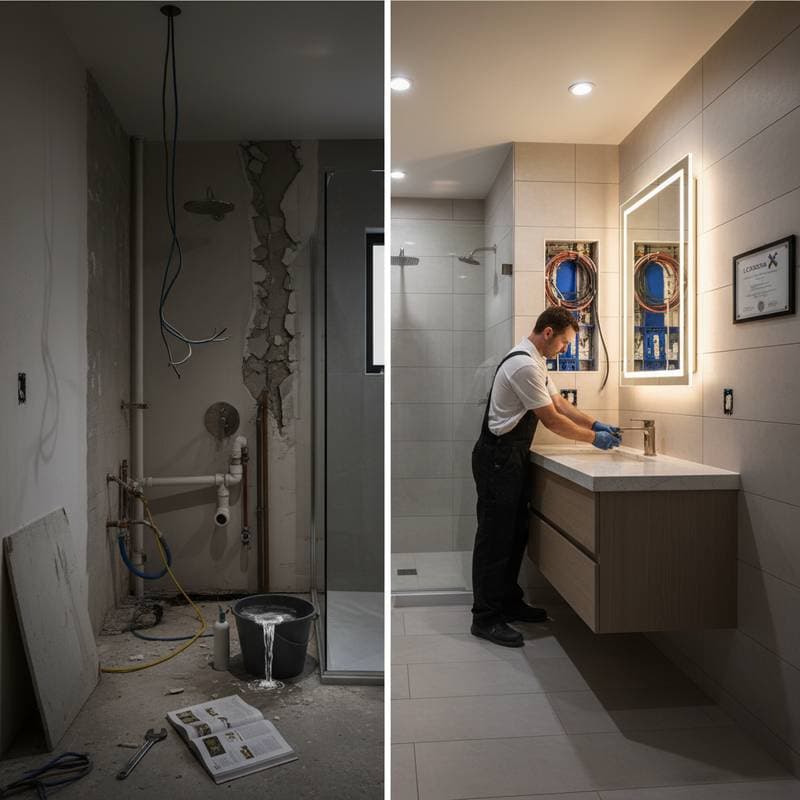
Understanding the Complexity of Bathroom Remodels
Standing in a bathroom with worn tile or a leaky faucet prompts many homeowners to consider a self-directed remodel. Such projects appear straightforward at first: update the vanity, replace fixtures, or refresh the flooring. However, bathrooms integrate plumbing, electrical, and structural elements that demand exacting standards and adherence to local codes. A project intended for a single weekend frequently escalates into a scenario fraught with expenses, hazards, and regulatory issues.
This article delineates the reasons professional assistance qualifies as essential for the majority of bathroom remodels. Readers gain clarity on suitable DIY applications, prohibited amateur efforts, and prudent budgetary choices that safeguard both the residence and personal well-being.
Evaluating Costs: Apparent Savings Against Enduring Benefits
Initial perceptions position DIY approaches as more economical, with the elimination of labor fees promising substantial reductions. Reality adjusts this perspective when accounting for tools, materials, and error rectification. The disparity in expenses diminishes considerably under these considerations.
| Task | DIY Approximate Cost | Professional Cost Range | Common Risk |
|---|---|---|---|
| Replace toilet and vanity | $700 - $1,200 | $1,500 - $2,800 | Leaks or inadequate sealing resulting in floor deterioration |
| Tile shower and floor | $1,000 - $1,800 | $2,500 - $5,000 | Inadequate waterproofing fostering mold growth |
| Relocate plumbing lines | $400 - $900 in materials | $1,200 - $2,500 | Code infractions or resultant leaks |
| Upgrade lighting and ventilation | $300 - $600 | $800 - $1,500 | Circuit overloads or insufficient airflow |
Attractive DIY figures prove deceptive when an oversight amplifies expenditures. A concealed leak beneath tiles may evade detection until structural framing and subflooring suffer damage. Remediation at that stage often exceeds the original professional fee by a factor of five.
Licensed remodelers execute the specialized labor while orchestrating inspections, adhering to schedules, and warranting results. Such assurances frequently surpass the value of foregone labor expenses.
Identifying Viable DIY Contributions
Certain remodel aspects permit homeowner involvement without compromising integrity or regulations. Enthusiastic individuals can enhance elements safely in these domains.
DIY-suitable activities encompass:
- Painting walls or cabinetry
- Mounting mirrors, towel bars, or shelving
- Refreshing cabinet hardware or faucets with matching alternatives
- Substituting light fixtures utilizing current wiring
- Incorporating decorative trim or peelable wallpaper
These modifications elevate visual appeal and utility without perturbing core infrastructure. An integrated strategy proves optimal: engage experts for foundational plumbing, electrical, and structural tasks, then address cosmetic finishes independently. This method balances finances while upholding safety and conformity.
Assessing Time Commitments Realistically
Skill possession alone does not suffice; evaluate the temporal demands. Experts complete comprehensive bathroom overhauls in two to three weeks through synchronized efforts. DIY participants, juggling employment and family obligations, encounter extensions spanning months.
Project phases interlink critically. Tiling awaits plumbing inspections post-rough-in. Fixture placement follows waterproofing solidification. Disruptions propagate sequentially. Numerous self-managed remodels result in prolonged inaccessibility of bathroom facilities.
Specialists optimize timelines, synchronize subcontractors, and procure materials punctually. This proficiency yields financial efficiencies and minimizes aggravation. For households with a single bathroom, professional engagement becomes imperative to avert extended disruptions to essential routines.
Leveraging Professional Coordination and Protections
Beyond technical proficiency, remodelers deliver managerial acumen that aligns all components. Permitted contractors synchronize plumbers, electricians, and tilers for seamless progression across stages.
They furnish warranties encompassing labor and materials, providing reassurance unattainable through DIY means. Failures prompt no-cost corrections by the contractor.
Professional involvement streamlines property transactions. Prospective purchasers commonly seek documentation of permits and certified labor. A vetted bathroom renovation conveys reliability, hazard mitigation, and adherence, potentially elevating market value and accelerating sales.
Addressing Frequent DIY Errors Through Expert Intervention
-
Inadequate Waterproofing
Amateur tilers often adhere directly to drywall or omit barrier membranes. Specialists employ cement board and moisture-resistant coatings to bar water penetration. -
Erroneous Drain Inclination
Shower bases require exact slopes directing to drains. Minor deviations lead to water accumulation. Professionals calibrate angles to satisfy codes and eliminate stagnation. -
Incompatible Fixture Dimensions
Sinks, vanities, and toilets necessitate alignment with plumbing configurations. Experts assess and strategize placements prior to disassembly. -
Circuit Overburdening
Supplemental lighting or outlets without load analysis risk breaker failures or ignition hazards. Electricians compute distributions pre-installation. -
Insufficient Ventilation Provision
High-humidity environments demand exterior exhaust. Contractors dimension fans and conduits to avert mold proliferation and structural harm.
Circumventing these pitfalls typically conserves resources beyond DIY projections.
Enhancing Personal Expertise During Professional Projects
Individuals favoring practical engagement find value in observing contractor operations. Shadowing reveals insights into plumbing configurations, waterproofing protocols, and tiling methodologies. Acquired understanding fosters assurance for routine upkeep.
Homeowners may master tasks such as wax ring replacement, grout resealing, or caulk line preservation to inhibit leaks. These interventions prolong bathroom longevity without venturing into perilous domains.
Sustaining Remodel Longevity and Value
Post-completion maintenance ensures enduring performance. Regularly inspect seals and grout for wear, addressing issues promptly to prevent escalation. Clean ventilation systems quarterly to maintain airflow and reduce mold risks.
Schedule annual professional evaluations for plumbing and electrical integrity. These steps preserve warranties, uphold safety, and protect the investment against premature decline. A well-maintained remodel enhances daily comfort and bolsters property appeal for years ahead.