
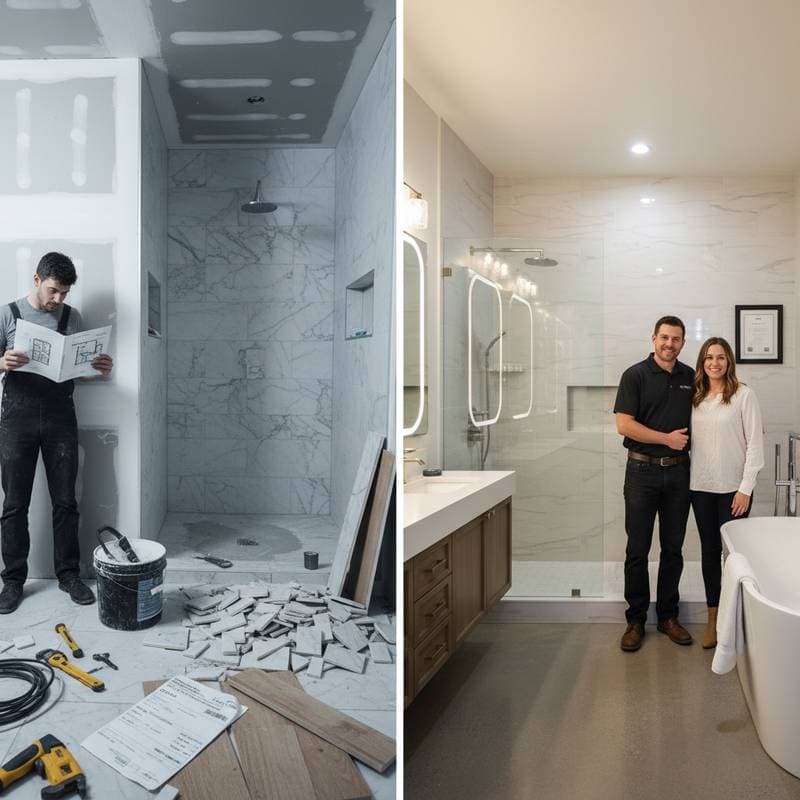
Why DIY Luxury Baths Cost More Than Hiring Pros
The reason becomes evident quickly: attempting a luxury bath remodel on your own leads to accumulating hidden costs. Errors in waterproofing and code violations that hinder resale transform an apparently economical endeavor into one that surpasses professional expenses. Luxury bathrooms require exacting precision, seamless coordination, and strict adherence to regulations, elements that many homeowners fail to fully appreciate.
Understanding Where DIY Costs Spiral
A luxury bath project appears manageable at the outset, yet it soon reveals the complexity of integrating multiple systems within a compact area. Plumbing, electrical systems, ventilation, tiling, and waterproofing must function in harmony. A single error can necessitate a complete and costly redo.
Homeowners frequently overlook key details, such as:
- Incorrect slopes in shower pans, which cause water to pool or leak
- Faulty installation of waterproofing membranes, permitting mold to develop undetected
- Mistakes in tile layouts that result in the waste of premium materials
- Electrical modifications performed without permits, which insurers may deny in claims
Experienced contractors foresee these challenges. They expertly sequence various trades, confirm compliance with building codes, and avert damage from the beginning. In contrast, individuals undertaking the project themselves typically learn these critical points only after incurring significant financial setbacks.
To avoid such pitfalls, assess your skills honestly before starting. Consult local building codes online or at your municipal office to understand requirements for plumbing and electrical work. If uncertainty arises, seek advice from a licensed inspector early to identify potential issues.
Realistic Cost Comparison
Saving on labor costs may seem like an obvious advantage initially. However, in high-end remodels, the expense of materials often dominates the budget. Items like premium tiles, marble surfaces, frameless glass enclosures, and bespoke fixtures demand flawless installation techniques.
Consider this typical cost breakdown:
- DIY luxury bath: $12,000 to $25,000, plus an additional $5,000 to $10,000 for necessary corrections
- Professional installation: $18,000 to $30,000, encompassing permits, warranties, and required inspections
When errors happen, the costs of discarded materials and subsequent rework eliminate any initial savings. Contractors frequently negotiate discounts with suppliers for tiles and fixtures, discounts unavailable to individual purchasers. Moreover, their services include comprehensive warranties that safeguard against future leaks or equipment malfunctions, protections that self-performed work cannot provide.
For a more precise estimate, calculate your project by listing all materials with current market prices from reputable suppliers. Factor in a 20 percent buffer for waste and errors, then compare against quotes from at least three licensed contractors to gauge true value.
The Value of Code Compliance and Permitting
Upgrades to luxury bathrooms typically invoke specific building codes concerning electrical circuits, ventilation systems, and plumbing vents. Bypassing permits might appear as a time-saving measure, yet it risks complicating home sales or invalidating insurance policies down the line. Inspectors from local authorities often insist on evidence of professional execution for alterations involving structural elements, plumbing, or electrical components.
Licensed contractors manage these aspects as standard procedure. They submit permit applications, arrange for inspections, and maintain thorough records. Homeowners handling the project independently must grapple with these bureaucratic processes solo, where even one overlooked inspection could demand extensive and expensive demolitions.
To navigate this effectively, research your area's permitting requirements through official government websites. Prepare a detailed project plan including blueprints and material specifications before applying. If permits prove daunting, hire a permit expediter for a modest fee to streamline the process.
Why Time Is Money in Bathroom Renovations
Even seasoned do-it-yourself enthusiasts misjudge the duration required for a luxury remodel. Managing timelines for tile curing, fixture arrivals, and plumbing installations can extend what was intended as a brief effort into several months.
During delays for a replacement faucet or fixes to a dripping valve, the bathroom stays out of service. Professionals orchestrate subcontractors and shipments efficiently, reducing disruption to just a few weeks. This streamlined approach minimizes expenses related to alternative accommodations or reduced work efficiency if operating from home.
Plan your timeline meticulously by creating a Gantt chart or simple schedule outlining each phase, from demolition to final touches. Account for curing times, such as 24 to 48 hours for grout, and build in buffers for unexpected delays like material backorders.
Hidden Long-Term Costs
Numerous DIY luxury bathrooms present an impressive appearance initially, only for issues to emerge after several months. Problems like fractured grout, sluggish drains, or concealed wall moisture usually stem from inadequate preparation. Remedying these later often proves more expensive than engaging experts at the project's inception.
Professional installations incorporate robust moisture barriers, accurate slope computations, and proven sealing methods to ward off enduring damage. The assurance derived from code-compliant work backed by warranties translates into tangible financial benefits over time.
Monitor for early warning signs post-completion, including unusual odors or soft spots in walls. Address them promptly by consulting a specialist rather than attempting further DIY fixes, which could exacerbate the damage.
Protecting and Extending Your Bath Investment
If you have begun a DIY bath project and sense it overwhelming, pause before proceeding with plumbing or electrical tasks. Engage a licensed contractor for an evaluation and guidance. Numerous experts provide assistance on portions of the project, allowing you to manage cosmetic elements like painting or fixture placement while they oversee complex technical aspects.
To safeguard your investment effectively:
- Retain all receipts and photographic records for insurance claims or resale purposes.
- Conduct moisture inspections near tubs and showers on a quarterly basis.
- Regularly renew caulking and grout to block water penetration.
- Arrange for a professional assessment every two to three years to confirm structural soundness.
Luxury bathrooms serve as tranquil havens that enhance daily comfort and boost property appeal. Opting for professional involvement from the start, though it requires greater initial outlay, shields you from the steeper costs associated with self-taught errors.