
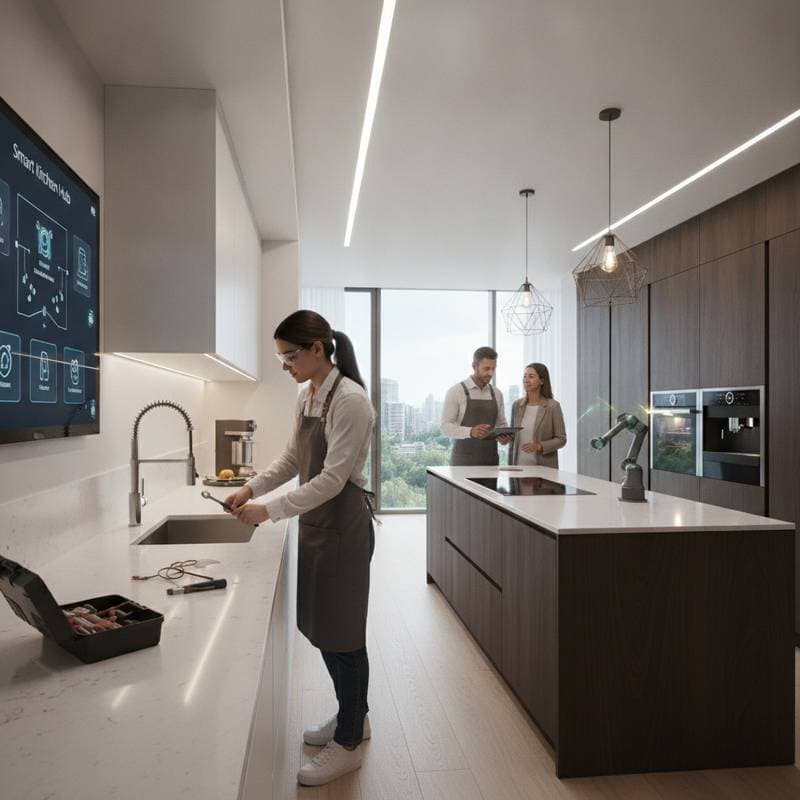
Should You DIY AI Kitchen Upgrades or Hire a Pro?
When you picture your dream kitchen, you might imagine sleek smart appliances that sync with your schedule. Lights adjust to your mood. A voice assistant manages your morning coffee routine. The appeal is obvious. An AI-powered kitchen blends comfort, efficiency, and style into one interactive space. Yet behind the promise of convenience lies a practical question that every homeowner faces.
The Allure of a Smarter Kitchen
It often begins with a single upgrade. You replace an old refrigerator with a model that monitors groceries. Or you install a smart faucet that responds to voice commands. Soon the idea of an entire kitchen that connects intelligently feels irresistible. Smart ovens preheat when you leave the office. Lighting adjusts for dinner parties. Countertops track food prep for nutrition insights.
This sense of transformation can be addictive, especially for those who love a good DIY challenge. What seems like a simple install can quickly reveal hidden layers of complexity. Integrating AI-driven systems requires more than plugging in devices. It demands structured network planning, power management, and compatibility across multiple platforms.
Understanding What AI Kitchen Upgrades Really Mean
An AI kitchen upgrade is not just about adding a few smart gadgets. It involves creating an integrated ecosystem where appliances, lighting, sensors, and mobile devices communicate seamlessly. Common systems include smart appliances such as refrigerators, ovens, and dishwashers that adjust settings based on usage patterns. They also include voice-controlled lighting and climate systems that respond to time of day or occupancy. Energy management platforms optimize consumption and reduce utility costs. Predictive maintenance systems alert you before a part fails.
These upgrades can range from a few hundred dollars for basic retrofits to tens of thousands for full remodels with new wiring and custom cabinetry. A realistic mid-range AI kitchen update typically falls between 3000 dollars and 8000 dollars. This range depends on the brand, connectivity features, and level of automation. Labor costs for professional installation can add another 1000 dollars to 5000 dollars. Regional rates and project scope affect the final amount.
DIY Potential: What You Can Handle Yourself
For homeowners comfortable with basic electrical work and software setup, several AI kitchen projects fall well within reach. You can often handle smart lighting installation. Swapping traditional bulbs for Wi-Fi or Bluetooth-enabled options is one of the easiest entry points. Many systems require only a compatible hub and app setup. Expect to spend 150 dollars to 400 dollars for a starter kit that covers key kitchen zones.
Smart plug and appliance integration is another accessible option. Plug-in smart adapters let you control small appliances like coffee makers or slow cookers remotely. For less than 100 dollars, you can automate morning routines without rewiring outlets. Voice assistant setup involves devices like Amazon Echo or Google Nest. These are designed for consumer installation. The challenge lies in configuring routines that link multiple devices smoothly. This is where patience and experimentation pay off. Energy monitoring sensors provide real-time data on appliance usage. Installation is straightforward. Interpreting readings to adjust energy habits requires some learning.
DIY installations can save money and offer a rewarding sense of accomplishment. They also let you customize systems exactly to your taste. Even small errors, such as overloading a circuit or misconfiguring device permissions, can create inefficiencies or security vulnerabilities.
When to Call a Professional
Some AI kitchen upgrades cross into territory best left to certified electricians, network specialists, or licensed contractors. Consider hiring a professional if your project involves hardwired appliance integration that requires dedicated circuits or updated electrical panels. Custom cabinetry adjustments to accommodate built-in smart appliances also warrant expert help. Network optimization for large data loads across multiple devices benefits from specialist input. Water or gas line modifications for connected dishwashers or ranges require licensed work. Full kitchen remodels that combine traditional renovation and smart technology integration need coordinated expertise.
Professionals bring technical precision and accountability. Many manufacturers require certified installation to maintain warranties. A licensed electrician or smart home technician will ensure that wiring meets safety codes. Devices communicate without interference. While it might add to upfront costs, professional installation reduces long-term risk.
Cost Comparison: DIY vs. Professional Installation
A cost analysis helps clarify the trade-offs.
| Upgrade Type | DIY Cost Estimate | Professional Cost Estimate | Complexity Level |
|---|---|---|---|
| Smart lighting | 150 to 400 dollars | 300 to 800 dollars | Easy |
| Smart plugs and voice assistants | 100 to 300 dollars | 200 to 600 dollars | Easy |
| Smart appliances (oven, fridge, dishwasher) | 2000 to 5000 dollars | 3000 to 7000 dollars | Moderate to High |
| Network setup and integration | 200 to 500 dollars | 800 to 2000 dollars | Moderate |
| Full AI kitchen remodel | 5000 to 8000 dollars | 10000 to 20000 dollars | High |
While DIY paths appear cheaper, they often come with hidden costs such as extra hardware, troubleshooting hours, or potential system inefficiencies. Professionals streamline these processes and deliver reliable results. This advantage grows when multiple systems must interact seamlessly.
Safety and Compatibility Concerns
Smart kitchen upgrades merge electricity, water, and data. That combination makes safety non-negotiable. Always turn off power before handling wiring. Use grounded outlets. Verify that smart devices meet local electrical codes. Surge protection is also essential to prevent damage during power fluctuations.
Compatibility is another frequent stumbling block. Many homeowners end up with fragmented ecosystems when mixing brands. Before committing to new devices, research which ecosystems support your current setup. Platforms like Matter and Zigbee aim to unify communication. Full compatibility remains a work in progress. Professional installers often test interoperability before finalizing connections. This approach saves hours of frustration.
The ROI of a Connected Kitchen
Beyond convenience, AI kitchen upgrades can yield measurable returns. Smart appliances reduce energy waste. Adaptive lighting lowers electricity bills. Predictive maintenance extends equipment life. Homebuyers increasingly value smart infrastructure. Well-integrated systems can raise property appeal.
Yet ROI depends on thoughtful planning. A kitchen overloaded with gadgets but lacking cohesive design can feel chaotic rather than convenient. The best results come from blending technology with timeless functionality. Choose upgrades that genuinely simplify daily routines rather than adding novelty features.
Balancing Sustainability and Innovation
AI kitchens can support sustainable living when used wisely. Energy monitoring helps track consumption patterns. Smart water systems reduce waste through precision flow control. Opt for devices with low standby power usage and recyclable materials. If you are replacing older appliances, donate or recycle them responsibly to minimize landfill waste.
Professionals can help design energy-efficient layouts. DIYers can also make environmentally conscious choices. Always evaluate whether a new device improves efficiency enough to justify its production footprint.
Pro Tips for Success
Start small. Begin with one controllable system, such as lighting or temperature. Then expand gradually. This phased approach minimizes overwhelm and allows you to master each integration step. Prioritize security. Secure your home network with strong passwords and regular firmware updates. Smart kitchens handle sensitive information, including usage patterns and voice data.
Document everything. Keep a digital record of device settings, installation notes, and warranty details. It simplifies troubleshooting and future upgrades. Plan for future compatibility. Choose devices that support open standards and software updates. This prevents obsolescence as technology evolves. Test regularly. Schedule periodic system checks to ensure connections remain stable and sensors function accurately.
Daily Life in a Connected Kitchen
Once everything is connected, the daily rhythm of your kitchen changes. Lights brighten automatically when you begin cooking. Your oven notifies you through your phone when preheating is complete. The refrigerator suggests recipes based on what it detects inside. Over time, these small conveniences add up to a sense of seamless living. The kitchen becomes a space that anticipates needs and supports efficient routines without constant manual input.