
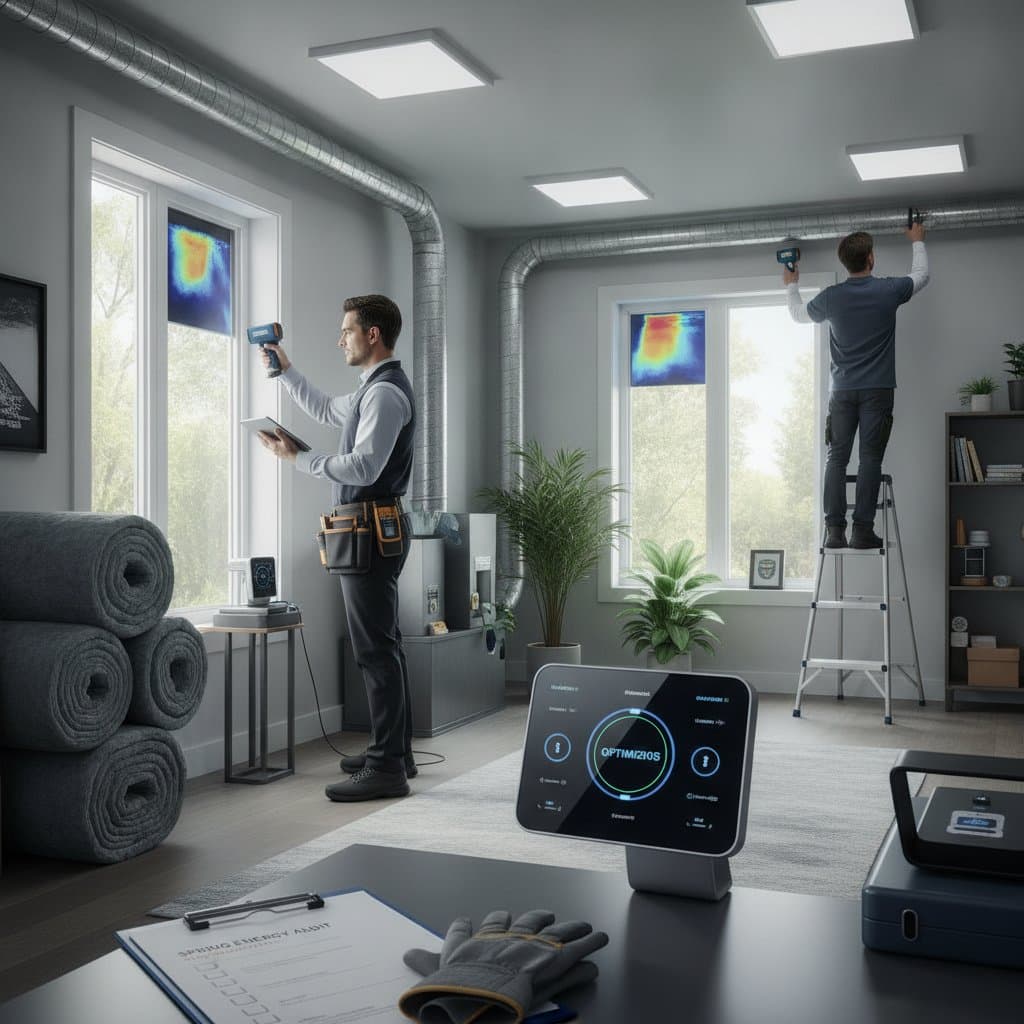
Perform a Targeted Spring Home Energy Review
A spring energy audit identifies quick fixes that lower utility costs without major construction. Focus first on air movement, equipment efficiency, and lighting to capture the largest returns. Each improvement builds on the next and compounds savings through the cooling season.
Locate and Seal Hidden Air Leaks
Begin at the attic hatch, recessed lights, and plumbing penetrations. Apply foam sealant or backer rod plus caulk to close gaps larger than one quarter inch. Weatherstrip doors and add door sweeps to prevent conditioned air from escaping.
Test windows by holding a lit incense stick along the frame on a windy day. Moving smoke reveals leaks that clear caulk and new weatherstripping can stop. These steps often reduce heating and cooling loads by ten to fifteen percent.
Improve Attic Insulation and Ventilation
Measure existing insulation depth and compare it with recommended R-values for your climate zone. Add blown-in cellulose or fiberglass batts to reach the target depth without blocking soffit vents. Proper ventilation prevents moisture buildup while keeping attic temperatures stable.
Optimize Heating and Cooling Equipment
Replace HVAC filters every thirty to ninety days and confirm that supply and return vents remain unobstructed. Set the thermostat to seventy eight degrees during occupied cooling hours and program a five degree setback when the house is empty. Annual professional tune-ups restore factory efficiency ratings.
Upgrade Lighting and AppliancesLighting upgrades are among the fastest payback projects. Replace incandescent bulbs with LEDs and install smart switches or occupancy sensors in low-traffic rooms. The upfront cost is modest, and savings appear on the next utility statement.
Appliances draw significant power as well. Choose ENERGY STAR models when replacing refrigerators, dishwashers, or clothes washers. These units typically consume twenty five to forty percent less electricity than older equipment.
Cost range: New LED bulbs cost about two to five dollars each. ENERGY STAR refrigerators typically start around seven hundred dollars, yet rebates and tax credits reduce the net expense.
Review Windows, Doors, and WeatherproofingWindows lose energy mainly through poor sealing rather than the glass itself. Inspect for broken seals, cracked panes, or loose frames. Apply clear caulk around interior trim and install weatherstripping on door thresholds.
Single-pane windows benefit from storm inserts or interior film kits that improve insulation without full replacement. Cost estimate: Thirty to one hundred dollars covers DIY sealing materials, far less than premature window replacement.
Professional consideration: Condensation between double-pane glass indicates seal failure. Replacement glass may then be required, and any new units must meet current local efficiency codes.
Audit Outdoor SpacesOutdoor fixtures, irrigation controls, and garden lighting add to monthly bills. Swap halogen floodlights for LEDs, reset sprinkler timers for spring rainfall patterns, and fit exterior outlets with weatherproof covers. Solar path lights or motion-activated fixtures on decks and patios cut unnecessary nighttime use.
Track Your Savings Over Time
Complete the audit over successive weekends, beginning with the lowest-cost tasks such as sealing leaks and changing filters. Record every receipt for potential utility rebates. Review monthly statements to confirm reduced consumption and adjust habits accordingly.