
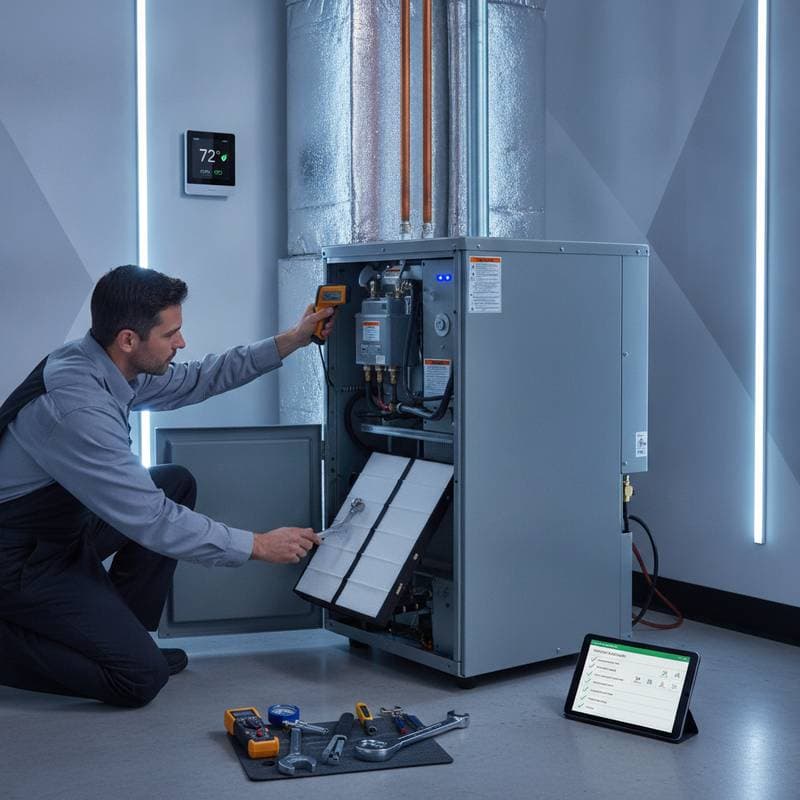
Replace Air Filters on Schedule
Air filters protect the entire HVAC system from dust and debris. Replacement frequency ranges from one to three months based on household factors such as pets, occupancy levels, and local dust conditions.
Select high-efficiency pleated filters rated MERV 8 to 12. These ratings balance strong particle capture with adequate airflow. Standard disposable filters cost between eight and twenty dollars. Washable electrostatic models range from forty to eighty dollars and provide multi-year service when cleaned regularly.
A musty odor or visible dust around vents signals that the filter requires immediate attention.
Inspect Air Vents and Ductwork
Blocked vents and duct leaks allow conditioned air to escape. National energy data indicate that the average home loses up to thirty percent of cooled or heated air through such openings.
Open every vent and clear furniture or rugs from airflow paths. Shine a flashlight along vent edges to spot dark streaks that indicate leakage. Whistling sounds near joints also point to escaping air. Seal small gaps with aluminum foil tape or duct mastic.
Professional duct cleaning is advised every three to five years. Schedule service sooner if visible dust appears or allergy symptoms increase. Costs typically fall between three hundred and six hundred dollars depending on home size.
Clear the Condensate Drain Line
The condensate drain removes moisture produced during cooling. A clog leads to water leaks and elevated indoor humidity.
Locate the drain line near the indoor air handler. Pour a mixture of one cup white vinegar and one cup warm water into the line. Allow the solution to sit for thirty minutes, then flush with clean water.
Standing water or a musty smell near the air handler indicates deeper blockage. Arrange professional clearing in these cases.
Clean and Straighten Coil Fins
Evaporator and condenser coils transfer heat effectively only when clean and properly aligned. Dirt accumulation acts as insulation and lowers cooling capacity.
Remove the outer cover from the outdoor unit. Use a fin comb or soft brush to straighten bent fins. Apply a no-rinse coil cleaner and allow the surface to dry.
A can of coil cleaner costs ten to fifteen dollars. Professional coil service ranges from seventy-five to one hundred fifty dollars based on the degree of buildup.
Test System Operation Early
After completing inspections and cleaning, restore power and run a test cycle. Lower the thermostat several degrees below room temperature and monitor performance.
Confirm steady airflow from all vents, absence of grinding or rattling sounds, and delivery of cool air within ten minutes. Inconsistent cooling or extended run times suggest the need for further adjustment before peak temperatures arrive.
Establish Supportive Daily Habits
Set calendar reminders to inspect filters and the outdoor unit each month during heavy use. Operate ceiling fans to distribute cool air and reduce system workload. Apply weatherstripping around doors and windows to limit air loss. Keep all vents open to maintain balanced pressure throughout the house. Record every filter change and service visit to support warranty claims and performance tracking.
Consistent attention to these details improves overall efficiency and extends equipment life.