
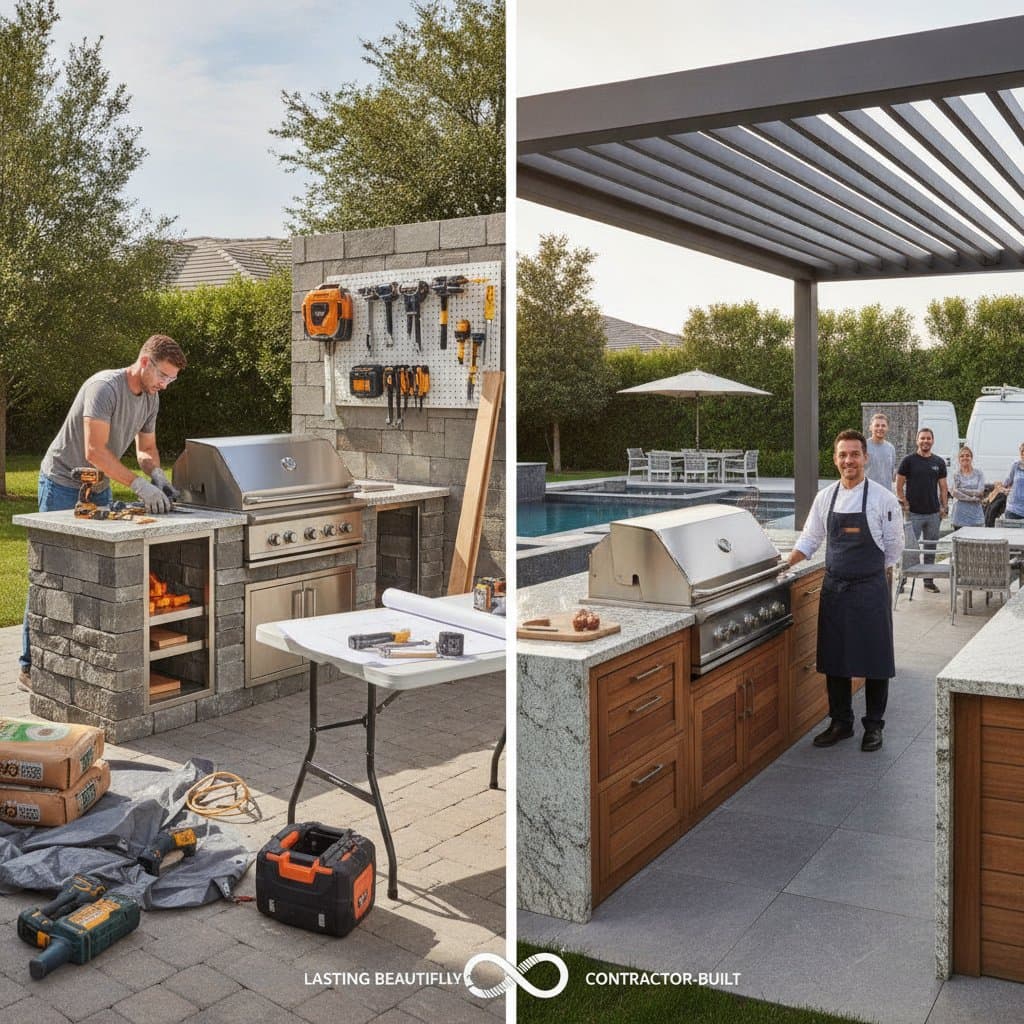
Outdoor Kitchen: Weighing DIY Risks Against Pro Results
When the idea of grilling beneath the open sky starts calling, many homeowners imagine building their own outdoor kitchen. The thought of saving money, adding personal touches, and completing a project by hand can be incredibly tempting. Yet behind the allure of DIY lies a network of technical decisions, safety concerns, and long-term maintenance factors that can make or break the investment.
Understanding how to weigh DIY ambitions against professional outcomes helps ensure the finished space becomes a lasting, functional part of your home rather than a source of ongoing frustration.
Understanding the Scope Before You Start
Outdoor kitchens are more than a grill and a counter. They involve multiple systems that must work together safely and efficiently. Most installations include at least three of the following components:
- Gas or propane connections
- Electrical wiring for lighting and appliances
- Water lines and drainage for sinks or ice makers
- Structural work such as concrete slabs or masonry
- Weather-resistant finishes and protective enclosures
Each element adds complexity and potential risk. A simple grilling island might be manageable for a skilled DIYer. When plumbing, gas lines, or wiring enter the mix, the balance often shifts toward hiring a contractor. A professional can ensure compliance with local codes and manufacturer warranties. Both factors prove critical if you plan to sell your home or file insurance claims in the future.
Cost Comparisons and Realistic Budgeting
A basic DIY outdoor kitchen can cost anywhere from $1,500 to $5,000, depending on material choice and design complexity. Hiring a professional for a full installation typically ranges from $7,000 to $25,000, with luxury builds exceeding that. The gap may seem large, but the value difference often lies in precision and longevity.
When comparing costs, consider these hidden expenses:
| Category | DIY Estimate | Professional Estimate | Notes |
|---|---|---|---|
| Materials (stone, tile, concrete) | $800 - $3,000 | $1,500 - $4,000 | Pros often source higher-quality materials at bulk rates |
| Appliances and fixtures | $500 - $2,000 | $500 - $2,000 | Same equipment, but pros handle proper installation |
| Utilities (gas, electric, water) | $200 - $1,000 | $1,000 - $5,000 | Licensed work reduces safety risks |
| Labor and finishing | Self-performed | $3,000 - $10,000 | Adds expertise, speed, and warranty coverage |
DIY projects often end up costing more than expected once mistakes, rework, and extra materials are factored in. A professional quote may seem higher at first. It includes technical assurance and time savings that protect both your budget and peace of mind.
Skill Assessment and Safety Considerations
Deciding whether to go DIY or professional begins with a clear skill audit. Ask yourself these questions:
- Do you understand how to safely connect gas and electrical lines? Mistakes in these areas can lead to fire hazards, leaks, or appliance damage.
- Are you comfortable working with masonry or concrete? Uneven surfaces can cause water pooling, cracking, and long-term structural issues.
- Do you have the tools and protective gear required? Renting or buying specialized equipment can add hundreds of dollars to costs.
- Can you manage local permit requirements? Many municipalities require inspections for outdoor utility connections. Skipping them can lead to fines or forced removal.
If any of these questions raise hesitation, a hybrid approach might be the best solution. Some homeowners handle design, layout, and finishing details while hiring licensed professionals for utility work. This method maintains creative control while protecting safety and ensuring compliance.
Timeframe and Project Management
A DIY build might take several weekends or even months, depending on available time and weather conditions. Professionals often complete the same project in one to two weeks. The difference lies in organization and access to resources.
DIY builders must factor in learning time, tool setup, curing or drying periods, and unexpected adjustments. For instance, miscalculating countertop alignment or underestimating drainage needs can delay completion. Contractors typically follow a structured timeline with material deliveries and labor scheduling already optimized. This approach helps keep costs predictable and progress steady.
Longevity and Maintenance
Outdoor kitchens face constant exposure to moisture, temperature shifts, and sunlight. Proper sealing, material selection, and ventilation determine how well the structure endures over time. Professionals often use specialized techniques such as under-counter venting for gas components, weatherproof electrical boxes, and expansion joints for concrete. A DIY builder might overlook these details, which can lead to cracking, rusting, or warping within a few seasons.
Maintenance is another long-term consideration. Stainless steel appliances need regular cleaning to prevent corrosion. Stone surfaces require resealing. Plumbing connections should be inspected annually. A professional installation usually includes guidance or service plans for these tasks. DIY installations depend entirely on owner diligence.
Situations That Require Professional Help
- Gas line installation or relocation
- Electrical wiring and breaker connections
- Structural work tied to existing foundations
- Drainage and water tie-ins
Practical Steps for a Successful Build
- Use modular kitchen kits designed for outdoor use. They simplify assembly and often include pre-cut stone panels.
- Choose propane tanks instead of direct gas lines if local regulations allow.
- Opt for plug-in appliances rather than hardwired systems.
- Plan for ventilation gaps in enclosed cabinets to prevent heat buildup.
- Start small with a grill station or prep counter before expanding to a full kitchen.
Creating a Functional Outdoor Living Area
Once complete, an outdoor kitchen becomes more than a cooking area. It extends your living space, encourages outdoor gatherings, and increases property value when designed responsibly. Whether built by your own hands or through professional expertise, the true measure of success is in daily use and lasting enjoyment.