
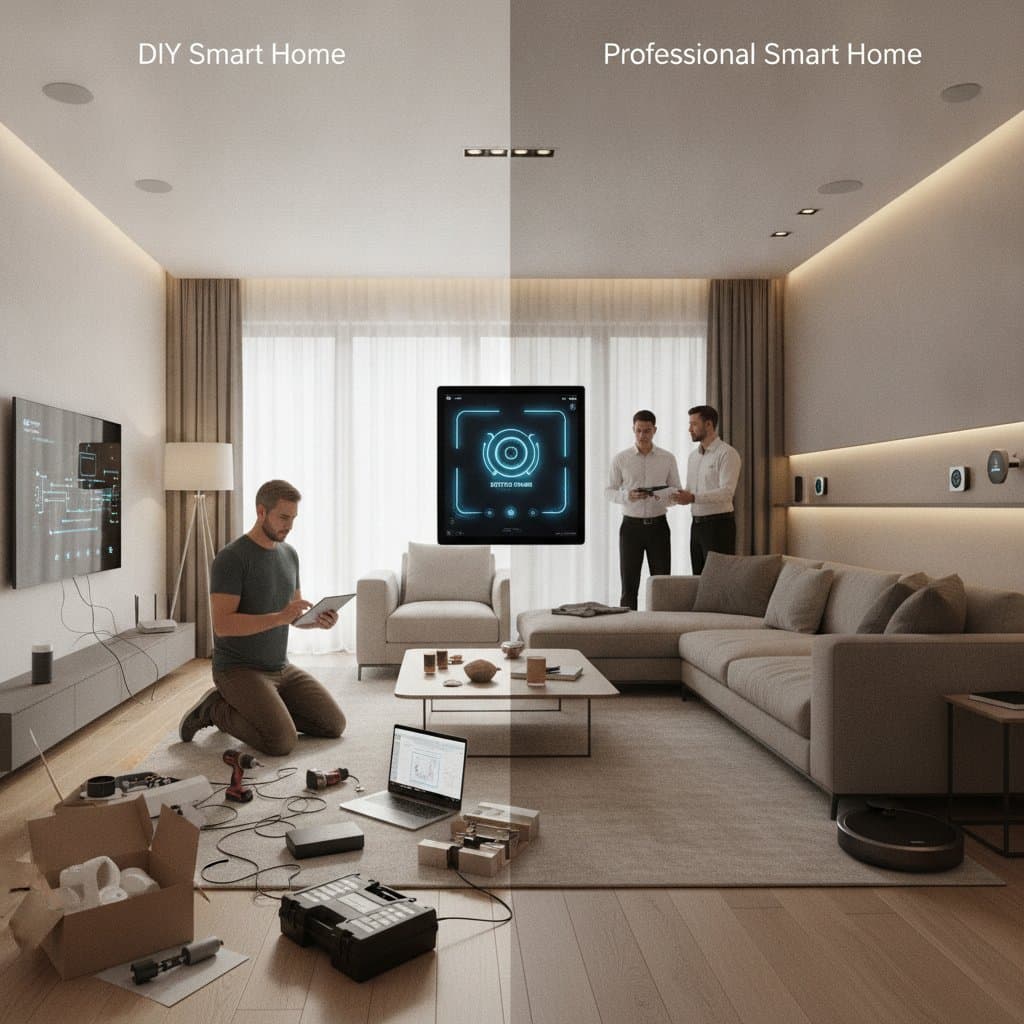
DIY Smart Home Costs vs Professional Setup Comparison
When you first walk into a friend's home and the lights adjust to their presence, the blinds lower as the sun shifts, and the thermostat quietly changes to a comfortable setting, it can feel like a glimpse into the future. Smart homes no longer belong to luxury estates or tech enthusiasts. They have become accessible to anyone with a Wi Fi connection, a smartphone, and a bit of curiosity. Yet behind that seamless convenience lies a question that every homeowner faces sooner or later. Is it better to build your smart home yourself or hire a professional installer?
The answer depends on your priorities, your comfort level with technology, and your long term goals for your living space. The difference between DIY and professional smart home setups is not just about cost. It is about control, scalability, maintenance, and peace of mind.
The Case for Professional Installation
Professional smart home installation attracts homeowners who want the technology to fade into the background and simply work. These systems are often custom designed to match your home layout, lifestyle, and existing infrastructure. Experienced installers plan wiring, network capacity, and device compatibility to create a unified ecosystem that you rarely need to adjust.
Cost Breakdown for Professional Setup
Professional installation costs vary widely based on the size of the home and the level of integration. Below are average ranges for professionally installed smart home systems.
- Basic package (lighting, thermostat, door locks): 2000 to 4000 dollars
- Mid range system (security, cameras, voice control, entertainment): 5000 to 10000 dollars
- Full integration with custom automation and wiring: 15000 to 30000 dollars or more
Installation labor typically adds 75 to 150 dollars per hour, depending on region and system complexity. Many companies also charge maintenance or service fees for updates and troubleshooting.
Professional Advantages
- Seamless integration: Devices communicate through a central control system without compatibility issues.
- Optimized performance: Professionals design reliable networks that handle multiple devices smoothly.
- Aesthetic installation: Cables, hubs, and sensors are concealed or built into walls for a clean look.
- Ongoing support: Many installers offer service plans, firmware updates, and 24 hour technical help.
- Future proofing: Systems are designed for scalability and can adapt to new technologies more easily.
If you value convenience and reliability over tinkering, a professional setup delivers a polished experience. Yet the cost difference can be substantial, and updates often require calling the original installer.
Long Term Costs and ROI Considerations
Smart home upgrades can improve property value and energy efficiency. Buyers increasingly view features like smart thermostats, automated lighting, and security systems as desirable amenities. Yet the financial return depends on system reliability and ease of use.
A DIY system offers strong value because of its low entry cost. Replacing or upgrading devices is inexpensive, and energy savings often begin immediately. For example, smart thermostats can reduce heating and cooling costs by up to ten percent annually, and smart lighting can cut electricity use by a similar margin.
A professional installation yields a different form of return. The upfront cost is higher, but the system is engineered for longevity and consistent performance. Integration with solar panels, security monitoring, and home entertainment can enhance both comfort and resale appeal. Many real estate agents report that homes with professionally installed smart systems attract more attention from tech savvy buyers.
Choosing the Right Path for Your Home
Selecting between DIY and professional smart home installation is not simply a financial decision. It reflects how you want to interact with your environment. Here are guiding factors to consider.
- Skill level: If you enjoy learning and problem solving, DIY might be satisfying.
- Time availability: Professional installation saves time but costs more.
- Budget range: DIY offers flexibility, while professional systems require larger upfront investment.
- Home ownership plans: If you plan to move soon, a portable DIY setup makes sense. For long term residents, professional wiring can add permanence and value.
- Desired complexity: For simple automations, DIY is ideal. For full integration and voice controlled entire home scenarios, professional expertise is worth it.
Living with Your Smart Home
After installation, daily interactions determine long term satisfaction. Test routines regularly and adjust settings based on actual household patterns. Track energy reports monthly to confirm savings match projections. Schedule annual reviews of firmware and security protocols whether you manage the system or rely on a service plan.