
Future-Proof Your Home: Essential Smart Technologies for Enhanced Living
Many homeowners desire a residence that anticipates their needs. Consider entering a dimly lit kitchen burdened with groceries, or departing for a trip while questioning the security of entry points. Smart home technology, once confined to speculative fiction, now delivers practical enhancements in comfort, efficiency, and protection.
These advancements extend beyond mere convenience. They reduce operational costs, bolster safety measures, and elevate property value over time. For comprehensive renovations or targeted improvements, the outlined technologies prepare residences for an interconnected future.
Intelligent Lighting Systems: Customizable Ambiance on Demand
Lighting influences the atmosphere of any space profoundly. Advanced systems surpass traditional fixtures by enabling programmed illumination that aligns with daily routines. Users set gradual dawn simulations for mornings, automatic dusk reductions for evenings, or adjustable hues suited to tasks like focused work, social gatherings, or restful pursuits.
Key Benefits
Effective illumination conserves power while promoting health. It supports better rest cycles, minimizes visual fatigue, and deters intruders through occupancy mimicry during absences. Integration with motion detectors ensures activation solely upon detection, optimizing usage in transitional areas such as corridors and restrooms.
Implementation and Expenses
Individual smart bulbs cost between $10 and $20 apiece. Complete switches or dimmers range from $50 to $150 per installation. A comprehensive network, encompassing a central hub and mobile application integration, totals $500 to $2,000 based on automated zones.
Most setups suit those adept at elementary electrical tasks. Professionals recommend de-energizing circuits at the main panel and verifying schematics prior to any modifications.
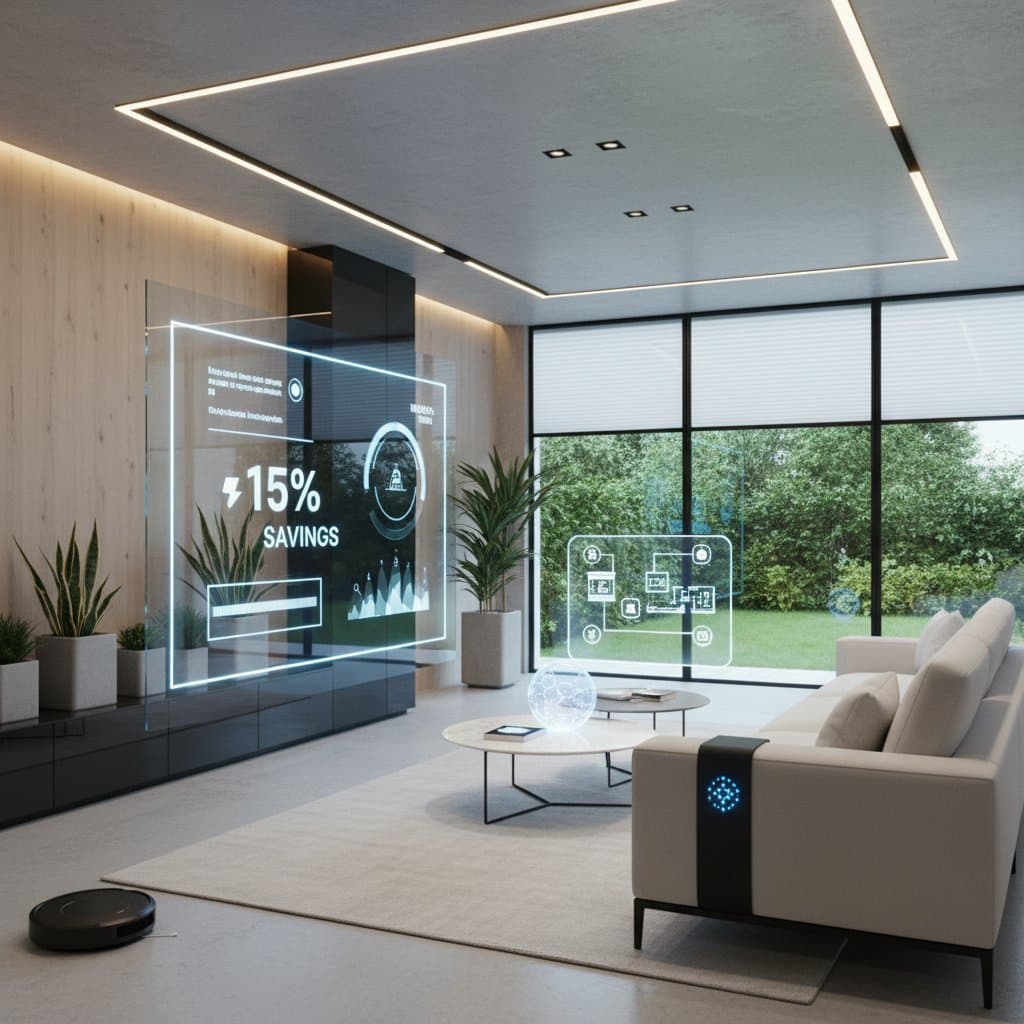
To achieve the promised 15% energy reduction, select systems compatible with energy-monitoring apps that analyze usage patterns and suggest optimizations, such as LED pairings that draw 80% less power than incandescents.
Connected Kitchen Appliances: Streamlined Operations and Resource Efficiency
Kitchens evolve into interactive centers with intelligent appliances. Refrigerators monitor inventory freshness and generate meal ideas from available items. Precision faucets measure exact volumes for culinary preparations, and heating units initiate cycles remotely as users approach.
Recommended Enhancements
- Ovens equipped for distant activation and progress alerts
- Dishwashers that calibrate cycles for minimal resource consumption
- Refrigerators designed to curb spoilage through inventory alerts
- Faucets responsive to voice commands for sanitary handling
Financial Overview
These devices represent significant upfront commitments yet yield returns via usability and reduced waste. Pricing per unit spans $1,200 to $3,000, influenced by capability levels. During overhauls, incorporate electrical and hydraulic provisions upfront to mitigate subsequent expenses.
Energy savings materialize through features like adaptive cooking that shortens preheat times by 20%, contributing to overall household reductions. Pair with smart plugs to monitor and limit standby power draws.
Security Protocols
Verify electrical infrastructure supports additional demands. Many units feature auto-disengagement safeguards, particularly beneficial in families with young or senior members, preventing unattended operations.
Advanced Water Monitoring: Safeguarding Against Concealed Threats
Unseen water incursions rank among costliest residential issues. Intelligent sensors and valves provide instant notifications and halt flows proactively, averting extensive harm.
Essential Capabilities
- Instantaneous mobile notifications for detected anomalies
- Self-closing valves to avert inundation
- Consumption analytics to pinpoint wasteful patterns
Investment and Returns
Basic kits, including multiple detectors, range from $200 to $600. Though understated, such protections avert damages exceeding thousands in remediation fees.
Particularly advantageous in aging structures or climates susceptible to pipe constriction, these tools integrate with whole-home systems for comprehensive oversight, further trimming bills by identifying leaks that waste up to 10% of usage.
Installation involves placing sensors near prone areas like under sinks and behind washers; professional plumbing consultation ensures valve compatibility.
Wellness-Oriented Bathrooms: Integrating Comfort and Sustainability
Bathrooms transform into sanctuaries with technological infusions. Mirrors incorporate ambient glows and informational displays, showers sustain ideal temperatures, and exhausts respond to moisture levels.
Featured Innovations
- Mirrors with integrated illumination and daily briefings
- Showers with digital controls for consistent warmth
- Ventilation units triggered by humidity thresholds to inhibit growths
Planning and Upkeep
Outlays vary from $500 to $2,500 according to sophistication. Mirrors often require minimal setup via outlets, whereas shower enhancements demand pipe evaluations. Adhere to vendor guidelines for seamless integration.
Water-efficient presets, such as low-flow modes, align with conservation goals, potentially lowering utility costs by adjusting to usage habits detected over time.
Maintenance includes periodic software updates and sensor cleanings to sustain accuracy, ensuring long-term reliability.
Strategies for Effective Integration
- Initiate with a single domain, like illumination or temperature regulation, to build familiarity.
- Emphasize interoperability; disparate brands may complicate synchronization, so favor unified platforms.
- Leverage renovation phases for cabling; concealed low-voltage lines streamline future expansions.
- Fortify cybersecurity with robust credentials and routine updates to shield connected devices.
- Evaluate market appeal; prospective buyers value these elements, enhancing competitiveness.
Realizing Everyday Advantages
Integrated smart features seamlessly enhance routines. Subtle adjustments, from preemptive climate shifts to responsive illuminations, foster an environment of effortless sophistication. Over time, these efficiencies compound into substantial fiscal and lifestyle gains, positioning the home as a responsive partner in daily endeavors.