
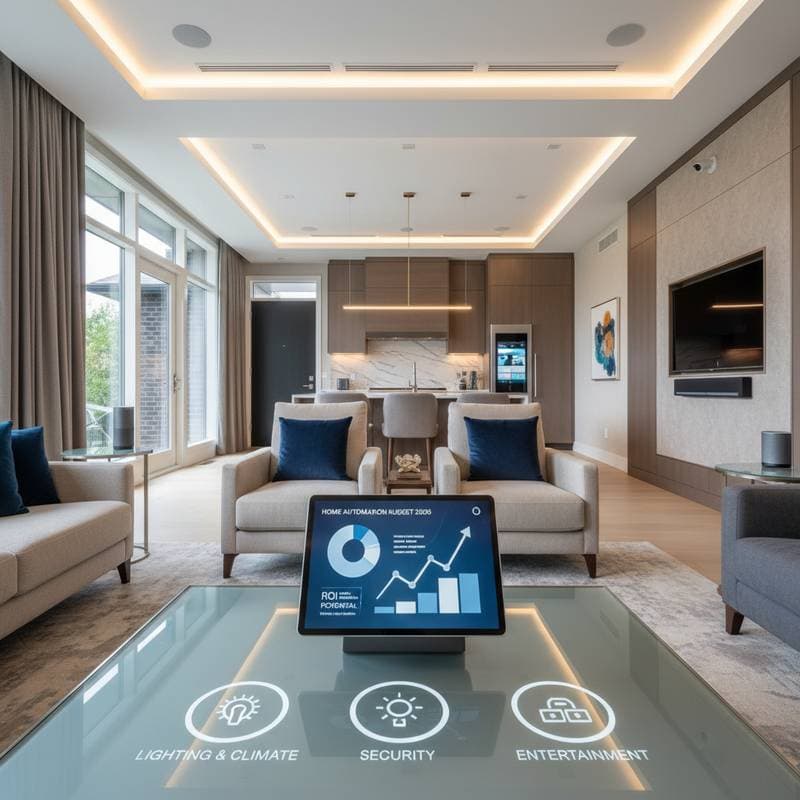
Discover True 2026 Smart Home Integration Costs
When homeowners enter their residence and lights gradually brighten to a welcoming level, the thermostat adjusts to an ideal evening temperature, and a preferred music selection plays softly from built-in speakers, the underlying network of devices, software, and setup labor often remains invisible. Smart home systems deliver effortless operation, yet achieving integration among aesthetics, technology, and finances demands thoughtful preparation. Many individuals can attain a linked living environment, but grasping the actual expenses distinguishes feasible plans from mere aspirations.
Key Points
- Integration expenses fluctuate considerably according to system intricacy, home dimensions, and desired automation levels
- Entry-level configurations start near $1,000, whereas comprehensive automation may surpass $50,000
- Expert setup guarantees electrical safety, operational dependability, and adherence to building regulations
- Gradual enhancements typically provide superior sustained benefits compared to extensive one-time implementations
- Gains in energy conservation, daily ease, and property market value underpin the investment return
Breaking Down the Real Costs
Core System and Control Hub
A smart home requires a central controller to orchestrate device interactions. Options include voice-responsive units or specialized panels. Basic controllers range from $200 to $500, while sophisticated, custom-coded versions cost $1,000 to $3,000. Select a hub that supports expansion to avoid limitations as the system grows.
Smart Lighting Integration
Automating illumination serves as an accessible entry into smart technology. Individual smart bulbs price at $15 to $50, and switches or dimmers fall between $60 and $100 apiece. In a typical three-bedroom house with 20 to 30 fixtures, complete lighting automation, including professional labor, totals $2,000 to $5,000. Opt for wireless retrofit switches to enable app control without electrical modifications, thereby minimizing installation expenses.
Climate and Energy Control
Intelligent thermostats demonstrate value through reduced energy use, frequently cutting heating and cooling costs by 10 to 15 percent. Standard units begin at $150, and adaptive models that learn user preferences reach $300. Incorporating smart vents or multi-zone regulators elevates a full climate solution to $1,000 to $3,000 with installation. Recovery of costs varies by regional utility prices and household habits, though most owners recoup expenses in two to four years.
Security and Surveillance Systems
Expenses in security vary most among categories. Basic wireless cameras cost under $500, but systems with door contacts, motion sensors, and electronic locks exceed $5,000. Monthly professional oversight fees range from $20 to $60. Hardwired installations offer greater stability yet necessitate foresight during remodels. Wireless alternatives provide adaptability, though signal interference poses risks in expansive spaces.
Entertainment and Media Control
Unified media setups link displays, audio components, and streaming sources for synchronized operation. Multi-zone sound systems commence at $2,000, and advanced home cinema configurations surpass $10,000. Variations arise from component standards, cabling demands, and soundproofing needs. Integrate automated blinds or illumination presets with media functions to enhance immersion, adding $300 to $500 per area.
Whole-Home Integration and Automation Scenes
After placing devices, linking them into unified sequences activates the system's potential. Routines such as "Good Morning" for gradual awakening, "Movie Night" for dimmed lights and closed shades, or "Away Mode" for security activation demand tailored setup. Integrators charge $100 to $200 hourly, with complete homes needing 10 to 20 hours. This phase, often overlooked, delivers substantial everyday benefits.
DIY or Professional Installation: Which Path Fits You
Homeowners differ in their affinity for technical tasks versus complete solutions. The optimal selection hinges on skill level, available time, and tolerance for issue resolution.
-
DIY Approach:
Suitable for apartments or modest residences, self-installation cuts labor costs by thousands. Packages for lights or temperature controls feature intuitive designs for secure personal setup. However, managing networks and fixing errors proves challenging without prior knowledge. -
Professional Integration:
Recommended for sizable homes or intricate networks, qualified technicians uphold code standards and extend guarantees. Labor comprises 20 to 30 percent of overall budgets. Integrators frequently include orientation to foster independent operation post-setup.
A hybrid strategy proves effective for many. Initiate with simple elements like plug-in modules or perimeter detectors via DIY, then engage experts for intricate cabling or routine development.
Long-Term Value and Return on Investment
Smart integrations extend beyond ease to measurable advantages. Efficient temperature and light management, plus motorized window coverings, decrease energy expenditures. Unified security lowers insurance rates and boosts market desirability. Agents emphasize compatible, user-friendly features during sales.
Strategic implementations generate 10 to 20 percent returns via savings on utilities, policy discounts, and elevated home worth. Enhanced oversight and personalization elevate quality of life in ways conventional setups cannot replicate.
Troubleshooting Common Integration Challenges
Reliable systems occasionally face disruptions like signal loss, connection errors, or program clashes. Implement these measures to sustain performance:
-
Centralize Your Network Management
Allocate static IP addresses to essential components and create isolated guest access. Such steps curb bandwidth overload and abrupt failures. -
Document Device Settings
Maintain a record of identifiers, access codes, and setup details in a basic table. This resource expedites diagnostics and expansions. -
Update Firmware Regularly
Outdated code causes many glitches. Perform checks every three months to apply the newest releases across devices. -
Plan for Power Outages
Install surge safeguards and optional power reserves for core elements like modems and controllers. Minor interruptions should not compromise the network. -
Seek Professional Calibration
Persistent issues, such as uneven lighting or erratic zones, benefit from expert adjustments to timing and connectivity.
Plan Your Smart Home Upgrade
Assess current needs and budget constraints to select initial components. Consult local specialists for site-specific advice, ensuring compatibility and scalability. With deliberate steps, transform your space into an efficient, secure, and enjoyable haven that adapts to your lifestyle.