
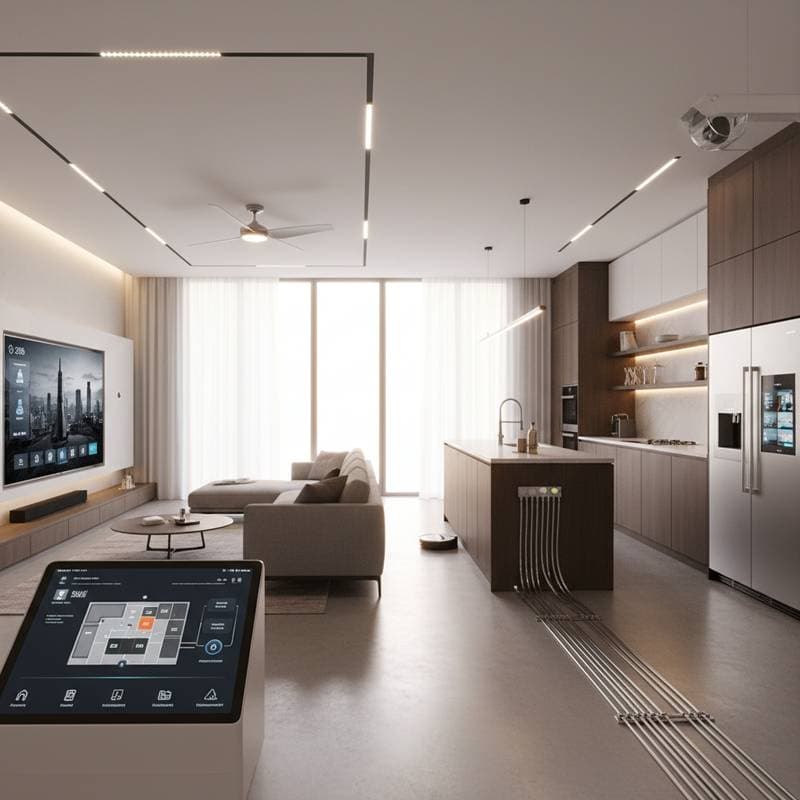
Introduction to 2026 Smart Home Remodeling
Smart home remodeling in 2026 offers homeowners opportunities to integrate advanced technologies that enhance comfort, security, and energy efficiency. Total project costs range from $1,500 for basic upgrades to $75,000 for comprehensive whole-home systems. Factors such as home size, existing infrastructure, and desired features influence the final investment.
Emerging trends emphasize seamless integration, voice-activated controls, and sustainable solutions. Homeowners prioritize devices that reduce energy consumption while providing intuitive operation. This guide details essential components, realistic budgets, and implementation steps to achieve a connected living environment.
Audio Systems: Immersive Sound Integration
Begin audio enhancements with wireless speakers or soundbars that connect through Wi-Fi for simple setup. For a more sophisticated approach, embed speakers into ceilings and walls during the remodel to achieve a minimalist aesthetic. Planning audio integration at this stage allows professionals to conceal wires behind drywall and position central equipment racks in closets or utility areas.
Costs for basic audio setups start at $500, while custom in-wall systems can reach $10,000 or more, depending on room count and quality. Select components compatible with multi-room streaming to distribute sound throughout the home effortlessly.
Professional Insight: Request system calibration after placing furniture. Acoustics shift significantly with the addition of rugs, curtains, and sofas, ensuring optimal sound distribution.
Lighting and Climate Control: Everyday Efficiency
Smart lighting transforms ambiance and saves energy through automated schedules and motion sensors. Replace traditional fixtures with LED bulbs controlled via apps or voice commands, costing $200 to $2,000 for a standard home. During remodels, install low-voltage wiring for recessed lights that adjust color temperature and brightness.
Climate control upgrades feature programmable thermostats and zoned HVAC systems. A single smart thermostat costs around $250, but full zoning for larger homes may exceed $5,000. These systems learn user preferences to maintain ideal temperatures, reducing utility bills by up to 20 percent.
Integrate lighting and climate into daily routines, such as dimming lights at sunset or pre-heating rooms before arrival. Choose energy-efficient models certified for smart grid compatibility to maximize long-term savings.
Security and Entertainment: Protection and Leisure
Enhance security with smart locks, cameras, and doorbell systems that provide remote monitoring. Basic packages cost $300 to $1,500, while professional installations with 24/7 monitoring reach $3,000. Run dedicated wiring during remodels to support high-definition feeds without Wi-Fi dependency.
Entertainment centers evolve with 8K displays and integrated streaming hubs. Wall-mounted TVs with hidden cabling cost $1,000 to $5,000, paired with automated shades for optimal viewing. Ensure all devices support universal remotes to simplify operation across zones.
Professional Insight: Opt for weatherproof outdoor cameras and encrypted connections to safeguard privacy. Regular firmware updates prevent vulnerabilities in connected devices.
Building the Brain: Hubs, Networks, and Controls
The control system serves as the core of any smart home, linking devices through voice assistants, touch panels, or dedicated hubs. A robust network forms the foundation, ensuring reliable performance for all connected elements.
Networking and Hub Setup Costs: $1,000 to $5,000, scaled by home size and connection points. If current Wi-Fi coverage proves inadequate, install a mesh network or Ethernet cabling during the remodel. This upgrade proves cost-effective, as most smart devices demand stable connectivity for optimal function.
Centralized professional automation systems unify lighting, climate, security, and entertainment under one interface. Prices range from $10,000 to $50,000, delivering superior reliability and tailored features for complex setups.
DIY Versus Professional Options: Tech-savvy individuals may prefer DIY hubs like SmartThings or Home Assistant for flexibility in smaller spaces. Larger homes benefit from professional installations such as Control4 or Savant, which handle intricate integrations seamlessly.
Implementation Strategies
Successful smart home remodels originate from a defined vision and practical expectations. Avoid automating every aspect immediately; focus initially on high-impact systems that streamline routines, then scale gradually as familiarity and funds allow.
Consider these steps to guide your project:
- Prioritize Network Infrastructure. Establish strong Wi-Fi or Ethernet early to support subsequent installations effectively.
- Select Versatile Ecosystems. Choose devices compatible with multiple platforms, allowing future switches in assistants or hubs without hardware overhauls.
- Anticipate Expansions. Install additional conduit or wiring paths, even if unused initially, to simplify later additions.
- Arrange Expert Calibration. Schedule tuning for lighting, thermostats, and audio to align precisely with intended operations.
- Emphasize Safety Protocols. Incorporate surge protectors and engage licensed electricians for work near water sources, HVAC units, or structural elements.
After installation, develop custom automation sequences tailored to personal habits. Examples include gradual morning light increases or automatic music activation upon entry. Smart technology excels by conforming to individual lifestyles.
Sustaining Your Smart Home
A well-executed smart remodel integrates effortlessly into routines, eliminating excess switches and enabling predictive adjustments. Maintenance involves routine software updates, annual sensor and battery replacements, and seasonal reviews of automations to adapt to shifting light and weather patterns.
From a modest thermostat addition to a complete overhaul, these technologies foster greater comfort, efficiency, and security. Homeowners gain not only daily conveniences but also a resilient foundation prepared for evolving innovations in connected living.