
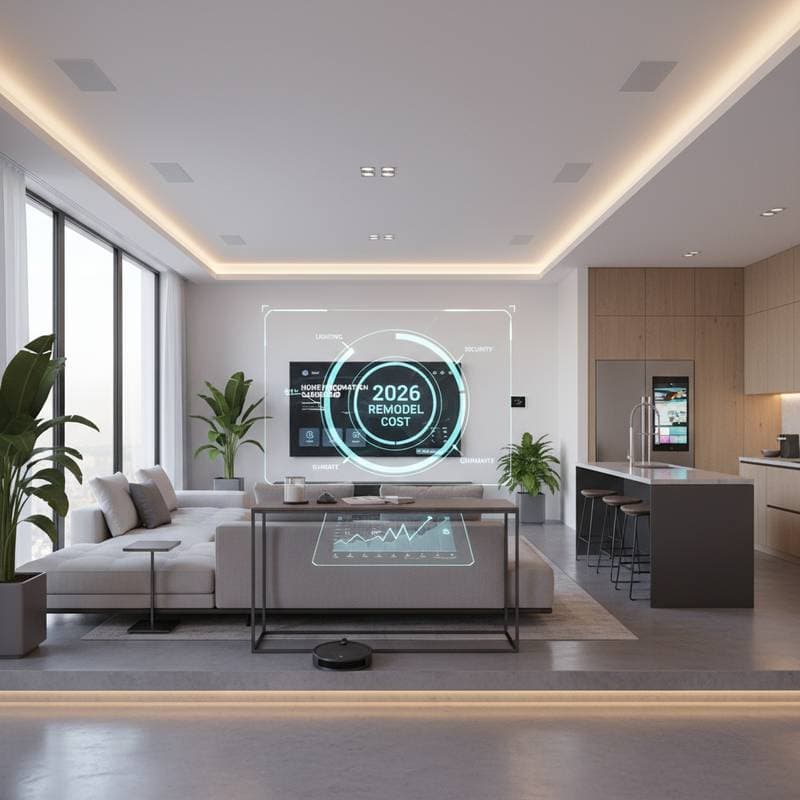
Understanding Smart Home Remodel Costs in 2026
Smart home technology continues to evolve, offering enhanced convenience, security, and energy savings. However, integrating these systems into your living space involves significant investment. Homeowners must account for device purchases, installation labor, and potential infrastructure upgrades when planning a remodel.
Costs vary based on home size, existing setup, and chosen features. Basic setups might total $5,000 to $10,000, while comprehensive overhauls can exceed $50,000. Factors such as location, customization level, and professional involvement influence the final price tag.
Key Cost Factors to Consider
Several elements drive the expense of a smart home remodel. Device quality and brand reputation play a major role; premium systems from established manufacturers ensure reliability but command higher prices. Installation complexity adds to the bill, particularly if structural changes like new wiring or network enhancements are required.
Labor costs typically range from $50 to $150 per hour, depending on the region and specialist needed. Electricians and network technicians often charge separately for smart integrations. Material expenses, including hubs, sensors, and cabling, fluctuate with market trends and supply chain dynamics.
Energy efficiency features can offset initial outlays through utility bill reductions. Systems that optimize heating, cooling, and lighting usage often qualify for rebates or tax incentives. Evaluating these benefits early helps justify the investment.
Breakdown of System-Specific Costs
Lighting Systems
Smart lighting upgrades allow remote control, scheduling, and voice activation. Basic LED bulb kits for a standard home cost $200 to $500, including compatible bulbs and a central hub. Advanced setups with recessed fixtures and motion sensors range from $1,000 to $3,000.
Installation for simple swaps takes a few hours, but full rewiring in larger spaces may add $500 to $2,000. Energy savings from automated dimming and occupancy detection often recoup costs within two years.
Security and Access Control
Security forms a cornerstone of smart home appeal. Entry-level camera and doorbell systems start at $300, covering basic monitoring and alerts. Comprehensive packages with locks, multi-camera arrays, and professional monitoring services reach $2,000 to $5,000.
Smart locks and garage door controllers add $200 to $600 each. Integration with alarm systems requires professional setup, costing $1,000 or more. These investments enhance safety and provide remote oversight for peace of mind.
Climate Control and HVAC Integration
Thermostats and sensors enable precise temperature management. A single smart thermostat installation costs $150 to $400, including zoning capabilities for multi-room control. Full HVAC overhauls with automated vents and air quality monitors range from $3,000 to $10,000.
Ductwork modifications or new zoning systems increase expenses significantly. However, these upgrades reduce energy consumption by up to 20 percent, leading to substantial long-term savings on heating and cooling bills.
Entertainment and Audio-Visual Systems
Whole-home audio and video setups transform daily living. Basic streaming integrations and speakers cost $500 to $1,500. High-end systems with distributed audio, smart TVs, and automated shades climb to $5,000 to $15,000.
Wiring for surround sound or hidden speakers adds $1,000 to $3,000 in labor. Compatibility with voice assistants ensures seamless operation, elevating entertainment experiences without manual adjustments.
Network and Infrastructure Upgrades
A robust network underpins all smart functions. Mesh Wi-Fi systems for reliable coverage cost $200 to $800. Ethernet cabling for high-bandwidth devices ranges from $500 to $2,000, depending on home layout.
Upgrading to fiber-optic readiness or adding dedicated servers may total $1,000 to $4,000. These foundational improvements prevent connectivity issues and support future expansions.
Budgeting Strategies for Your Remodel
Develop a detailed budget by listing priorities and allocating funds accordingly. Allocate 40 percent to devices, 30 percent to installation, and 20 percent to infrastructure, reserving 10 percent for contingencies. Research local contractors for competitive quotes and phased payment plans.
Explore financing options like home equity loans or manufacturer rebates to spread costs. Prioritize scalable systems that allow incremental additions, avoiding overcommitment upfront. Track expenses with spreadsheets to maintain control throughout the project.
Safety Considerations for Smart Installations
Safety remains paramount when incorporating smart technology. Check electrical codes before modifying circuits or outlets. Use certified devices that meet UL or ETL safety standards. Avoid overloading circuits with multiple high-draw devices. Protect your network with encryption and strong passwords, especially for security cameras and locks.
If you live in an older home, have an electrician inspect your wiring before adding new loads. Smart systems rely on stable power, and outdated wiring can cause connection drops or even fire hazards.
Maintenance and Long-Term Value
Smart homes require periodic updates to maintain efficiency and security. Software updates keep devices compatible and reduce vulnerabilities. Plan for minor expenses like replacing sensors or updating control hubs every few years.
Homes equipped with integrated smart technology often achieve higher resale values. Real estate professionals note that buyers pay premiums for ready-to-use automation, particularly in security and energy management. These features appeal to modern lifestyles and demonstrate forward-thinking design.
Practical Tips for a Successful Remodel
Start with one system, such as lighting or HVAC, and expand gradually to manage costs and complexity. Bundle installations to save on labor when adding electrical or network components. Keep documentation for warranties, device logins, and configuration settings.
Plan for future compatibility by selecting systems that support open standards and regular software updates. Test everything before finalizing to ensure reliable performance across devices.
Maximizing Benefits in Your Smart Home
After completion, customize routines to enhance daily life. Program automated scenes for arrivals, departures, and special occasions. Monitor energy usage through apps to refine efficiency further.
A well-executed smart remodel delivers comfort, security, and adaptability. Thoughtful planning ensures your connected home evolves with emerging technologies, providing enduring value and enjoyment.