
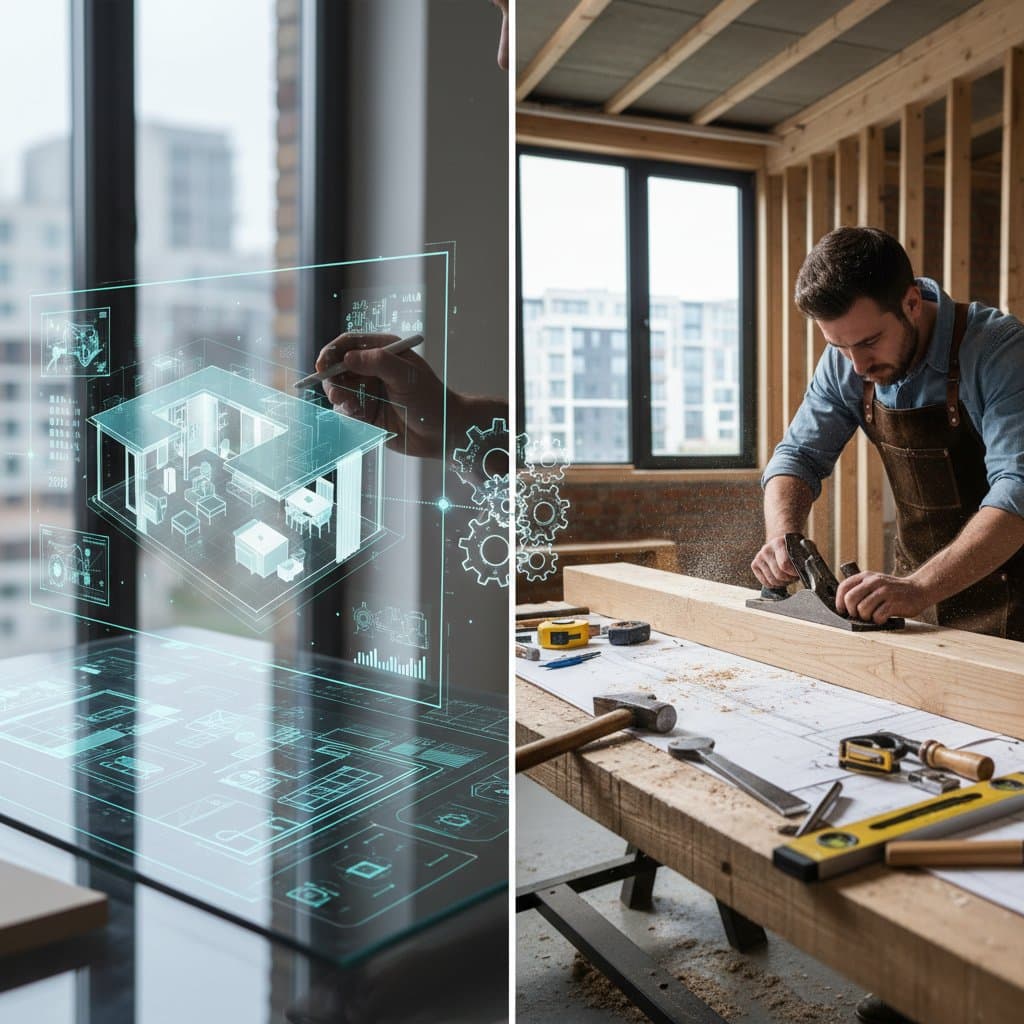
Integrating AI and Traditional Craftsmanship for Superior Remodels
Homeowners achieve the best results by combining artificial intelligence with time-honored building techniques. AI excels at rapid planning, accurate budgeting, and vivid visualizations, while traditional methods provide essential oversight for safety, durability, and regulatory adherence. This integrated strategy minimizes errors, controls expenses, and yields spaces that function well for years.
Core Benefits of a Combined Approach
- AI tools halve initial design time and prevent expensive on-site alterations.
- Seasoned professionals ensure adherence to building codes, superior workmanship, and hazard avoidance.
- Blending both enhances budget control, design precision, and overall project efficiency.
- Savvy owners leverage software for ideation and experts for implementation.
Building a Modern Toolkit
Selecting finishes or fixtures in a store can overwhelm anyone. AI design applications simplify this by analyzing room measurements and style preferences to suggest harmonious materials, lighting, and colors. These programs produce lifelike 3D models, allowing you to preview a transformed kitchen or bathroom without disrupting your space.
Budgeting software powered by AI draws from current local data on labor, supplies, and permits to forecast expenses reliably. Subscription fees range from modest amounts for basic access to higher investments for comprehensive services. Such tools often recoup costs by avoiding revisions and excess purchases during construction.
The Enduring Value of Hands-On Expertise
No software detects hidden dampness or assesses floor stability through touch. Inspectors and contractors apply years of on-site knowledge to identify issues AI overlooks. They understand regional regulations, climate-suited materials, and solutions for surprises like uneven foundations.
Human-led management adds layers of protection. Licensed professionals provide insurance, guarantees, and accountability that digital aids cannot. They handle permits and inspections, ensuring your project complies with laws and prioritizes occupant safety.
Step-by-Step Hybrid Process
Maximize efficiency by assigning tasks to the right tool or expert. Begin with technology for exploration, then transition to physical execution.
- Design Exploration: Employ AI platforms to test layouts, illumination schemes, and surface options. Simulate daylight patterns, traffic flow, and tonal harmony to refine choices upfront.
- Cost Projection: Input design elements into estimation programs, factoring in area-specific wages and approvals. Review the resulting budget outline with potential hires.
- Expert Validation: Consult a certified builder or designer to check plans against codes. They spot overlooked risks in structure, wiring, or piping.
- Construction Phase: Depend on trained workers for precise installation and lasting results. Digital trackers monitor timelines, shipments, and invoices.
- Completion Check: Use AI sensors for post-build assessments of humidity, ventilation, and power use, supplemented by professional sign-off.
This sequence fosters innovation, fiscal stability, and reliable finishes.
Balancing Expenses and Returns
Focus on sustained gains rather than short-term cuts. AI streamlines early stages, potentially trimming design outlays by 10 to 20 percent over traditional sketching. Construction expenses, however, hinge on selections, workforce, and contingencies.
Optimal returns emerge in high-impact areas like kitchens or eco-upgrades, where exact planning pairs with solid execution. Neglecting codes in anscheme risks penalties or do-overs, eroding savings.
Pitfalls of Relying Solely on AI
Accuracy depends on fresh inputs; stale data leads to flawed projections or incompatible choices. Key concerns include:
- Questionable Inputs: Cross-check costs and rules with nearby vendors or authorities.
- Idealized Visuals: Simulations may distort feel, proportions, or glow; insist on tangible swatches.
- Lack of Oversight: Professionals must approve changes to load-bearing elements, circuits, or drains.
Position AI as a supportive guide, not the sole director.
Insights from Industry Experts
Forward-thinking builders integrate AI to streamline operations without supplanting their roles. Platforms automate timelines, quantify needs, and anticipate setbacks, freeing capacity for meticulous oversight and client dialogue.
For you, presenting a prepped AI blueprint accelerates consultations. Contractors quickly address adaptations or compliance needs, fostering trust and hastening progress.
Future-Proofing Homes with Integrated Planning
AI extends beyond ease to promote eco-conscious and low-maintenance living. Models predict utility bills, guiding selections in barriers, glazing, and climate controls for ongoing economies. Some systems log guarantees and service reminders to avert oversights.
Builders translate these concepts into robust builds, selecting proven options resilient to local weather. The synergy yields residences that perform efficiently and withstand time.
Steps to Launch Your Project
Select AI tools suited to your scope and funds to articulate ideas clearly. Share outputs with a qualified specialist for adjustments. Confirm regulations prior to commitments on supplies or start dates. Maintain adaptable finances, precise records, and grounded goals.
This partnership of tech savvy and artisan skill delivers remodels that blend innovation with dependability, transforming houses into lasting havens.