
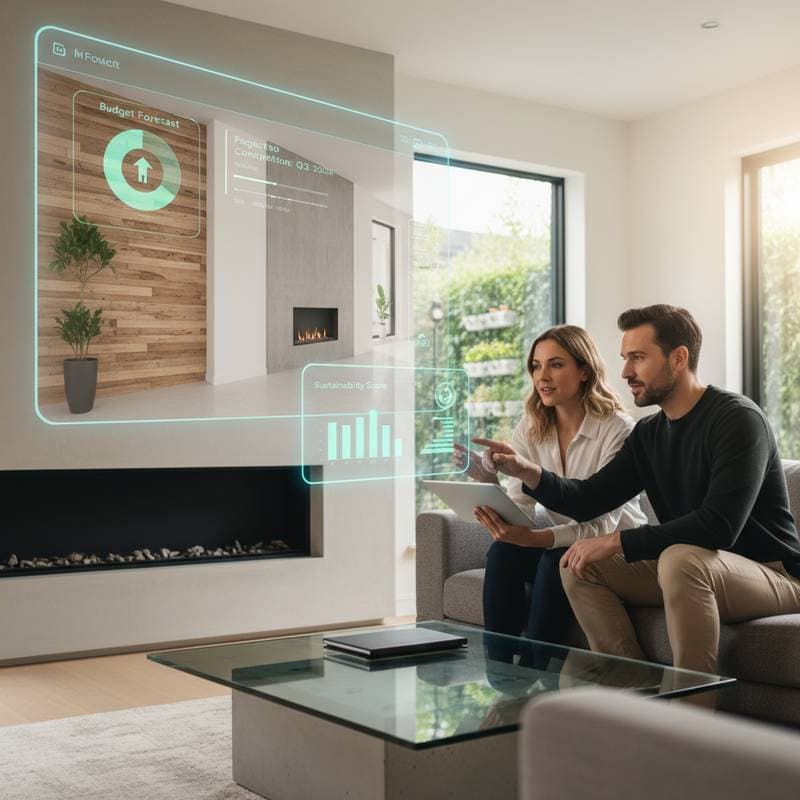
Revolutionizing Home Remodeling with AI Tools by 2026
Home remodeling often involves balancing creative ideas with practical constraints such as budgets and timelines. Homeowners frequently face challenges in visualizing changes, estimating costs accurately, and coordinating execution. AI-powered tools address these issues by providing precise simulations, financial projections, and streamlined workflows, enabling more informed decisions from the initial planning stage.
These technologies integrate seamlessly into the renovation process, whether for a modest room update or a comprehensive home overhaul. By leveraging machine learning and advanced algorithms, AI assists in creating detailed models, optimizing resource allocation, and minimizing errors. As a result, projects complete faster and with greater efficiency, setting the stage for smarter home improvements by 2026.
Step One: Building a Digital Twin of Your Home
A digital twin serves as a virtual replica of your physical space, allowing exploration of potential changes without real-world disruption. Begin by uploading photographs or conducting a room scan with a smartphone application equipped with LiDAR technology. The AI processes this input to construct a three-dimensional model, automatically detecting elements such as door placements, electrical outlets, and structural beams.
With the model in place, experiment with various configurations. Rearrange furniture to assess traffic flow, apply virtual paint colors to evaluate lighting interactions, or simulate natural light variations throughout the day. This approach reveals how modifications influence functionality and aesthetics, helping to refine ideas early.
Cost Range: Consumer-oriented AI modeling applications charge between $50 and $300 for comprehensive features, including export options for professional use. Enterprise versions for architects may exceed $500 annually but provide advanced analytics.
Time Investment: Initial setup requires one to three hours, varying by the complexity and size of the space. Subsequent adjustments take minutes, accelerating iterative design.
Step Two: Forecasting Budgets and Costs with Precision
Accurate budgeting prevents overruns that plague many renovation projects. AI tools analyze historical data, material prices, and labor rates to generate detailed cost estimates tailored to your specific plans. Input details like square footage, preferred materials, and regional factors, and the system outputs a breakdown including contingencies for unexpected expenses.
For example, if planning a kitchen remodel, the AI might calculate costs for quartz countertops versus granite, factoring in installation and maintenance. It also tracks fluctuations in supply chain prices, updating projections in real time to maintain financial control. This transparency empowers homeowners to prioritize elements and negotiate better with suppliers.
Savings Potential: Users report reductions in overall expenses by 15 to 25 percent through optimized material selections and waste minimization. Integrate rebate databases to identify incentives for energy-efficient choices.
Implementation Tip: Review estimates quarterly during planning to account for market shifts, ensuring the budget remains realistic and adaptable.
Step Three: Leveraging Virtual Design Assistance
AI design platforms democratize professional-level creativity, making sophisticated layouts accessible regardless of experience. Provide inputs such as preferred styles, color schemes, or reference images, and the tool generates multiple concept variations. These include floor plans, elevations, and rendered visuals that align with your vision.
The system adapts suggestions to your capabilities. For hands-on projects, it offers step-by-step guides for tasks like building custom cabinetry or installing backsplashes. For complex needs, it produces scaled drawings and material lists compatible with contractor software.
Subscription Costs: Monthly fees range from $10 to $40, offering unlimited designs and revisions, which proves more economical than traditional consultations averaging $200 per hour.
Professional Verification: Confirm any structural alterations, such as removing non-load-bearing walls or rerouting wiring, through inspections by certified experts to ensure compliance and safety.
Step Four: Streamlining Project Management and Scheduling
Effective project management coordinates timelines, teams, and resources to avoid delays. AI applications create dynamic schedules by integrating your digital twin with vendor availability and permitting requirements. Assign tasks, set milestones, and receive automated alerts for potential bottlenecks, such as material delivery lags.
Visualize progress through interactive dashboards that track completion percentages and budget adherence. For instance, if tiling a bathroom exceeds time estimates, the AI suggests adjustments like reallocating labor or sourcing alternatives. This real-time oversight reduces downtime and enhances accountability among contractors.
Efficiency Gains: Projects managed with AI complete up to 30 percent faster, according to industry benchmarks, by optimizing sequences and predicting risks.
Collaboration Feature: Share access with team members via cloud platforms, facilitating remote approvals and updates to keep everyone aligned.
Step Five: Enhancing Sustainability and Energy Efficiency
Sustainability integrates environmental responsibility into renovations, yielding long-term benefits. AI evaluates your home's current energy profile by reviewing utility data, insulation levels, and appliance efficiencies. It recommends targeted improvements, such as upgrading to high-R-value windows or solar-compatible roofing, with projected energy savings.
Consider a scenario where the tool identifies inefficient ductwork in an attic space. It proposes sealing and insulation options, calculating a return on investment within three to five years through reduced heating costs. Additionally, it simulates carbon footprint reductions to support eco-conscious decisions.
Incentive Integration: Built-in tools scan for federal and local programs, potentially offsetting 20 to 50 percent of upgrade costs via tax credits or grants.
Long-Term Impact: Sustainable features increase property value by an average of 5 to 10 percent, appealing to future buyers focused on green living.
Integrating Professional Expertise
AI excels in planning and simulation but requires human oversight for execution. Engage licensed professionals for critical areas including electrical systems, plumbing installations, and load-bearing modifications to mitigate risks. Their on-site assessments ensure designs translate safely into construction.
For extensive projects, appoint a project manager versed in digital tools. This expert bridges the gap between virtual plans and physical work, resolving issues like site-specific variances. Collaborative approaches yield superior outcomes, combining technological precision with practical craftsmanship.
Selection Advice: Choose contractors with portfolios demonstrating AI integration, such as those using BIM software for accurate builds.
Sustaining Value Beyond the Project
Post-renovation, AI tools maintain utility through archived digital models. Access stored data for routine maintenance, like scheduling HVAC filter changes or planning seasonal updates. This repository simplifies future enhancements, from adding smart home integrations to minor refreshes.
Homeowners develop a deeper appreciation for design and operational principles. Understanding cost dynamics and scheduling nuances fosters proactive ownership. AI thus evolves from a project aid into a lifelong asset for home management.
Ongoing Applications: Update models annually to reflect changes, enabling quick evaluations for insurance claims or resale preparations.
Advancing Your Remodel with AI Integration
AI enhances rather than supplants human ingenuity in home remodeling. It clarifies objectives, safeguards finances, and anticipates challenges, leading to smoother executions. Begin with tools aligned to your immediate goals, such as a budgeting app for small updates or a full-suite platform for major overhauls.
By 2026, these innovations will standardize efficient, personalized renovations. Experimentation reveals their transformative potential, turning ambitious visions into achievable realities with minimal frustration.