
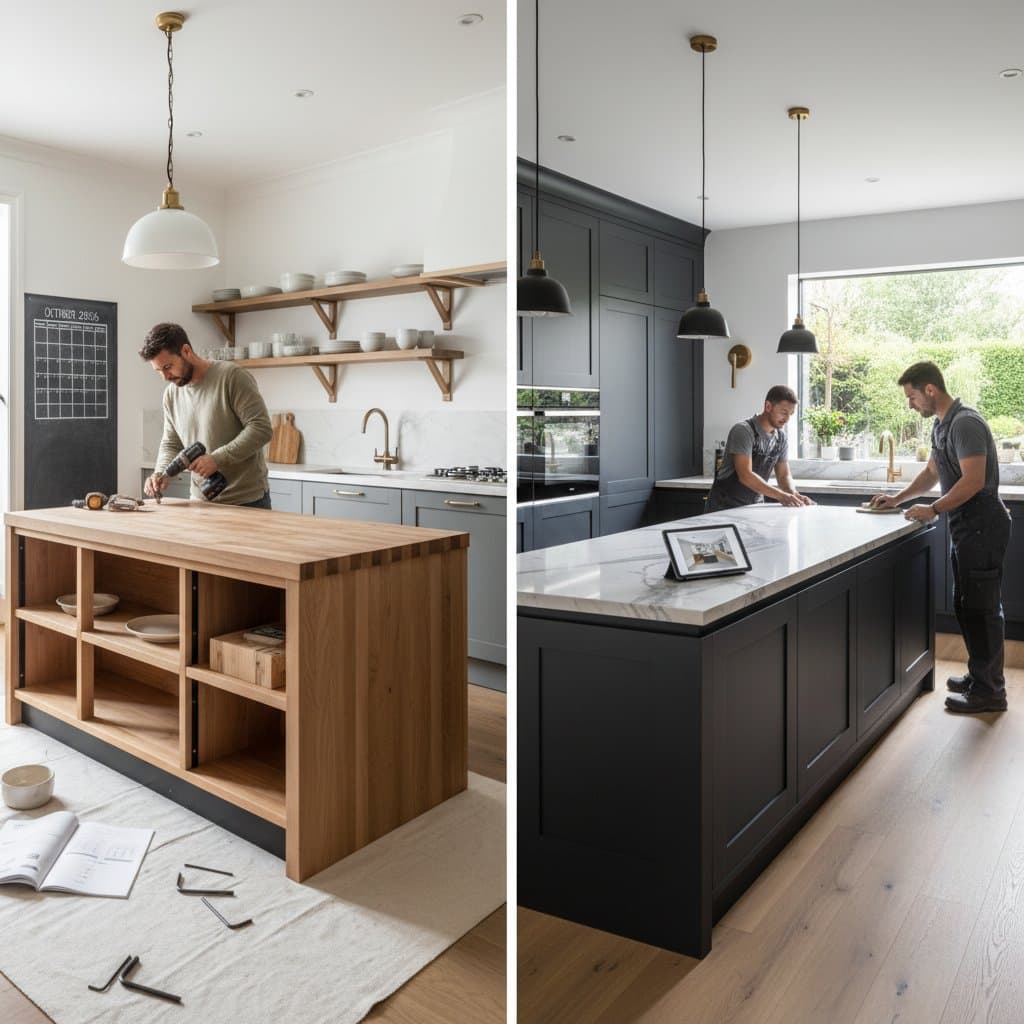
DIY Kitchen Islands vs. Custom Builds: The 2026 Winner
Homeowners often envision a kitchen island as the solution to cluttered counters and limited prep space. This addition streamlines meal preparation and facilitates social gatherings. However, the decision between assembling a DIY kit or commissioning a custom design presents distinct trade-offs in expense, labor, and enduring appeal.
Both approaches yield functional outcomes, yet they differ significantly in execution and results. This analysis examines key factors to determine the superior option for modern kitchens entering 2026.
Advantages of Custom Kitchen Islands
For households where the kitchen serves as a central hub, a custom island delivers tailored performance and aesthetic refinement over decades. Designers craft elements such as optimized storage layouts, ergonomic countertop edges, and embedded illumination to suit specific needs.
Expense Overview: Prices for a complete custom island range from $4,000 to $12,000, influenced by dimensions, material selections, and added functionalities. Expansive units featuring granite surfaces, embedded power sources, or extended seating areas may exceed this bracket.
Timeline Expectations: The process spans four to eight weeks, encompassing initial consultations, material sourcing, fabrication, and on-site assembly.
Key Benefits
- Seamless Integration: Measurements ensure the island aligns precisely with existing architecture, optimizing workflow and visual harmony.
- Superior Longevity: Artisans employ premium woods, metals, and composites that resist wear from daily activities like chopping and cleaning.
- Advanced Incorporations: Options include pull-out pantry shelves, wireless device chargers, under-counter coolers, or concealed waste compartments.
- Enhanced Property Worth: Such installations elevate marketability, potentially increasing home appraisal by 5 to 10 percent in updated spaces.
Potential Drawbacks
Custom projects require substantial upfront planning and financial commitment. Alterations after approval incur additional fees. Coordination among specialists like cabinetmakers, wiring experts, and surface installers adds complexity.
Homeowners frequently report that the customized outcome justifies the effort, transforming routine spaces into personalized retreats.
Essential Safety and Assembly Guidelines
Prioritizing structural integrity remains crucial regardless of the selected method.
Guidelines for DIY Assemblies:
- Position components on level flooring and confirm dimensions prior to any modifications like sawing or fastening.
- Locate wall studs with a detection tool before securing fixtures to prevent instability.
- Seal wooden elements with moisture-resistant coatings to safeguard against humidity and spills.
Guidelines for Custom Installations:
- Confirm that builders adhere to regional regulations, particularly for electrical wiring or water connections.
- Insist on proper sealing for surfaces such as quartz or marble to avoid staining.
- Inquire about airflow needs if integrating heating elements or ventilation-dependent appliances.
Implementing these practices safeguards the structure and ensures reliable operation over time.
Practical Recommendations for Optimal Results
Individuals pursuing DIY projects benefit from beginning with foundational elements. Select modular cabinet bases that complement current cabinet styles, then enhance with durable tops at a later stage. Opt for pre-treated butcher block, which tolerates refinishing through sanding and reapplication of finishes.
For professional engagements, insist on digital visualizations prior to procurement. These models clarify spatial dynamics and minimize revisions during construction.
Account for movement zones in planning. Maintain a minimum of 36 inches clearance around the island for unobstructed navigation. In compact layouts, wheeled mobile units with secure locks offer versatility without permanent alterations.
Consider material synergies for cohesion. Pair stainless steel accents with neutral cabinetry for a contemporary edge, or integrate reclaimed wood for warmth in traditional settings. Test lighting placements early to highlight textures and avoid shadows during tasks.
Budget allocation proves vital. Allocate 20 percent of funds for unforeseen adjustments, such as reinforcing bases for heavy appliances. Research supplier warranties, aiming for at least five years on structural components.
Selecting and Implementing Your Island
The prevailing choice for 2026 hinges on individual circumstances and objectives.
DIY kits excel for budget-conscious creators who value personal involvement. These solutions provide rapid assembly and adaptability, ideal for modest areas or evolving home uses.
Custom constructions dominate when priorities encompass bespoke storage, high-end finishes, and space-specific ergonomics. Although expenses rise, the resultant durability and utility deliver exceptional returns on investment.
Evaluate your kitchen's dimensions, usage patterns, and financial scope. Consult local trends, where sustainable materials like recycled composites gain prominence. With informed decisions, your island becomes a enduring enhancement to daily life.